

Does ashwagandha reduce stress and anxiety? What the trials show
Ashwagandha extracts are sold for stress, anxiety and sleep. Short placebo-controlled trials, most of them small, conducted in India and supplied by the extract makers, report lower stress scores and morning cortisol. The certainty is low, long-term safety is unknown, and liver injury has been reported.
The grade WeakAshwagandha extracts for stress and anxiety
In brief. Several meta-analyses of randomized trials report that ashwagandha extracts lower scores on stress and anxiety questionnaires compared with placebo, but the certainty of this evidence is low.14 The pooled effects vary widely between trials, most trials lasted 6 to 12 weeks, most were run in India with a few dozen participants, and most used a branded extract, often supplied or funded by its manufacturer.5420109 One meta-analysis found no significant effect on perceived stress, and a 120-person Australian trial found none either.311 Small trials report lower morning cortisol, measured once, in a single blood or saliva sample.891012 Sleep scores also improved in five trials, all from India.5 Ashwagandha appears to be tolerated for up to about three months, but its long-term safety is not known, it has been linked to cholestatic liver injury, it may raise thyroid hormone levels, and Denmark has banned its sale in foods and supplements.20222327
Ashwagandha (Withania somnifera) is a shrub in the nightshade family whose root is used in Ayurvedic medicine.2721 It is now sold widely as a supplement for stress and sleep. This article reviews what the human trials measured, how large the effects were, who paid for the studies, and what is known about safety.
What is sold as ashwagandha?
Most clinical trials did not test the dried herb. They tested proprietary extracts, standardized to a stated content of withanolides, which differ in the part of the plant used and in dose.20 KSM-66 is made from the root; Shoden and Sensoril are made from root and leaf.205 Among more recent trials, Witholytin is a root extract and NooGandha a root and leaf extract.1112 Daily doses in the trials ranged from 120 mg of extract to 12,000 mg of whole root granules.2015 Because these preparations differ, a result from one extract cannot be assumed to apply to another, or to an unbranded product.20
Does ashwagandha reduce stress and anxiety? What the meta-analyses show
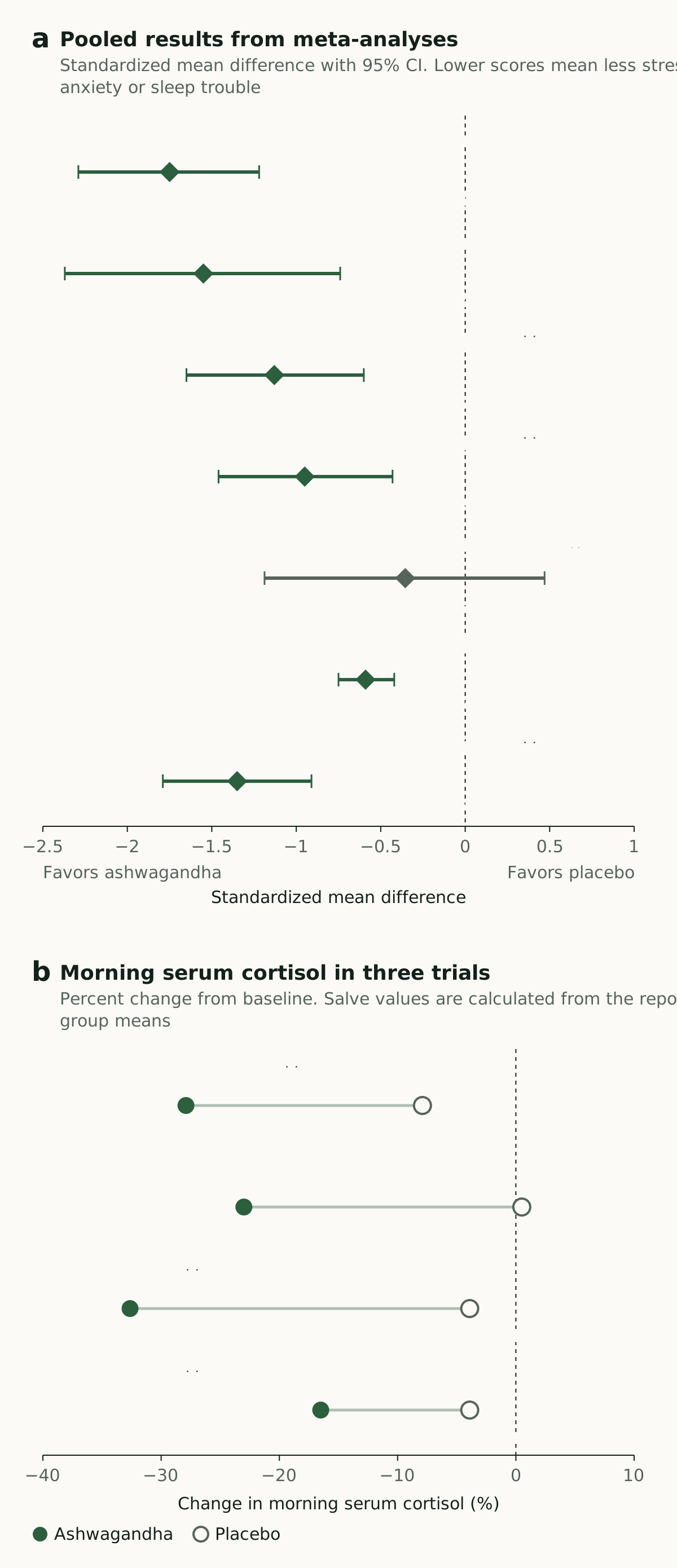
Akhgarjand and colleagues, in 2022, pooled 12 randomized trials with 1,002 participants aged 25 to 48.1 Compared with placebo, ashwagandha lowered anxiety scores (standardized mean difference [SMD] −1.55, 95% CI −2.37 to −0.74) and stress scores (SMD −1.75, −2.29 to −1.22). Heterogeneity was very high for anxiety (I² 93.8%) and high for stress (I² 83.1%), and the authors rated the certainty of the evidence as low for both outcomes.1 With heterogeneity this high, the individual trials disagree substantially about the size of the effect.
Arumugam and colleagues, in 2024, pooled nine trials with 558 participants and found mean reductions of 4.72 points on the Perceived Stress Scale (95% CI −8.45 to −0.99) and 2.19 points on the Hamilton Anxiety Scale (−3.83 to −0.55).2 Albalawi, in 2025, used narrower inclusion criteria, requiring trials to report both cortisol and the Perceived Stress Scale.3 That analysis found no significant effect on perceived stress (SMD −0.355, −1.188 to 0.47; P=0.40), even though cortisol fell.3
The individual trials show the same spread. Chandrasekhar and colleagues randomized 64 adults with chronic stress at a single hospital in Hyderabad to KSM-66, 300 mg twice daily, or placebo for 60 days, and reported large falls in stress and anxiety scores.8 Salve and colleagues randomized 60 stressed adults to 250 or 600 mg a day of KSM-66 or placebo for 8 weeks; Perceived Stress Scale scores fell with both doses compared with placebo.9 Lopresti and colleagues randomized 60 adults at two sites in India to Shoden, 240 mg once daily, or placebo for 60 days. The Hamilton Anxiety score improved more with ashwagandha (P=.040), but the difference on the Depression, Anxiety and Stress Scale did not reach significance (P=.096).10 The largest trial outside India, by Smith and colleagues in Australia, randomized 120 overweight adults aged 40 to 75 with high stress and fatigue to Witholytin, 200 mg twice daily, or placebo for 12 weeks. Perceived stress fell in both groups, with no difference between them (P=0.867); fatigue improved more with ashwagandha (P=0.016).11 A 30-day American trial of NooGandha in 60 adults found improvements over time in anxiety, depression and stress in all groups, with no significant difference between ashwagandha and placebo.12
Does ashwagandha lower cortisol? How it was measured
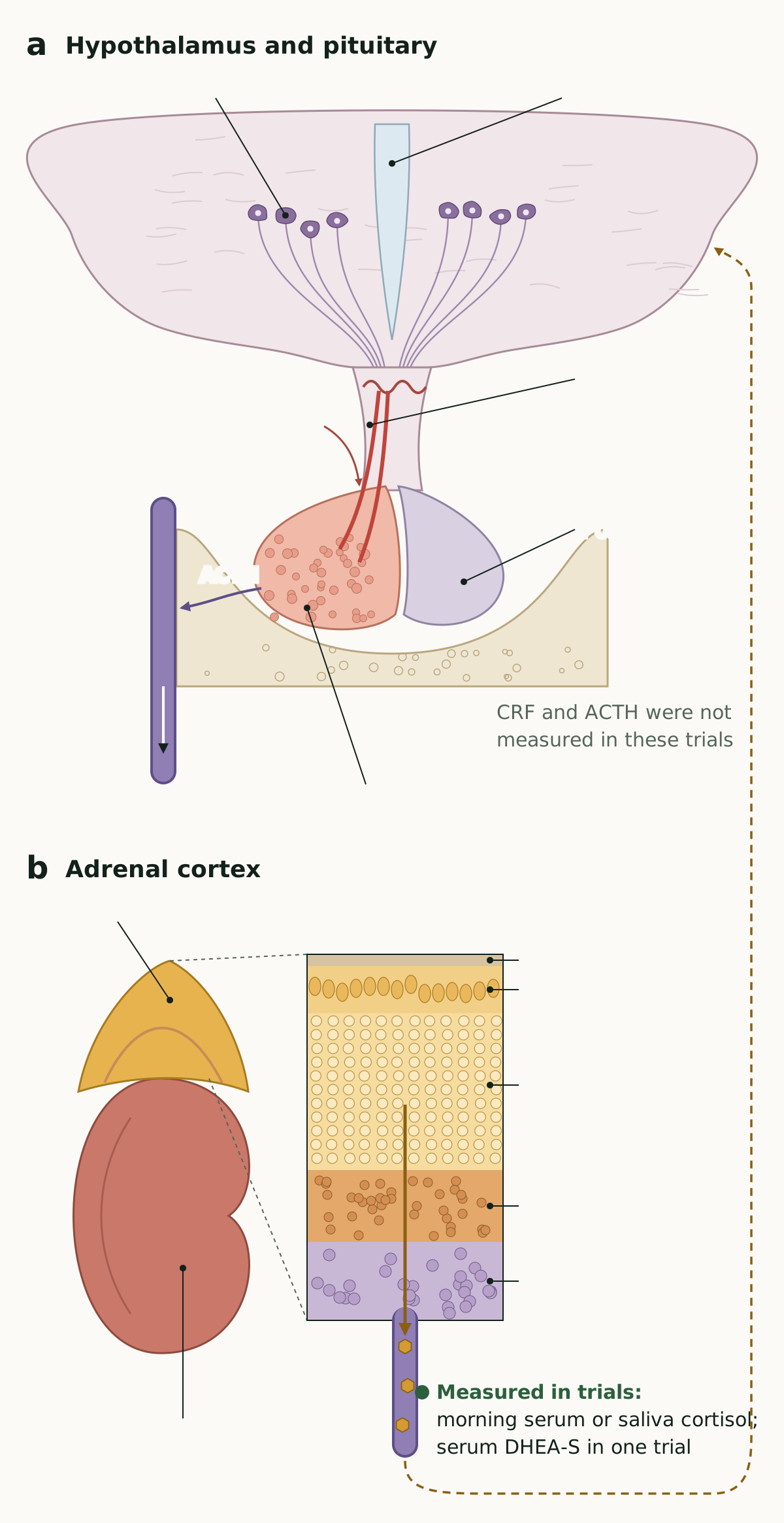
Cortisol is the end product of the hypothalamic–pituitary–adrenal (HPA) axis. Neurons in the paraventricular nucleus of the hypothalamus release corticotropin-releasing factor (CRF) into portal vessels that run to the anterior pituitary, which then releases adrenocorticotropic hormone (ACTH) into the circulation; ACTH stimulates the zona fasciculata of the adrenal cortex to make cortisol, and cortisol in turn inhibits the hypothalamus and pituitary.19 DHEA is made mainly in the adjacent zona reticularis.10
In the trials reviewed here, only the last step was measured. Chandrasekhar’s group measured serum cortisol in the morning at the start and end of the study and reported a fall of 27.9% with ashwagandha and 7.9% with placebo (P=0.002).8 Salve’s group took a morning blood sample at baseline, 4 weeks and 8 weeks. Mean cortisol fell from 16.12 to 10.86 µg/dL with 600 mg a day and from 16.30 to 13.61 µg/dL with 250 mg, compared with 16.15 to 15.52 µg/dL with placebo.9 Lopresti’s group drew fasting blood at about 8 am and measured cortisol by chemiluminescent immunoassay. Cortisol fell 23% with ashwagandha and rose 0.5% with placebo, and DHEA-S fell 8.2% compared with a 2.5% rise.10 The American NooGandha trial measured cortisol in a single morning saliva sample after an overnight fast.12 None of these trials measured CRF or ACTH.
Pooled analyses agree with the direction of these results. Albalawi reported a mean fall of 1.16 µg/dL (95% CI −1.64 to −0.69) across seven trials, Arumugam a mean difference of −2.58 (−4.99 to −0.16), and Fornalik and colleagues, pooling 23 trials of hormone outcomes in 1,706 people, an SMD of −1.18.326 A systematic review of plant products and the HPA axis called a morning cortisol-lowering effect of ashwagandha its “most consistent finding.”7
A single morning value is a limited measure of stress physiology. In their own trial, Smith and colleagues described their measures as indirect and suggested that future studies use hair cortisol, repeated salivary measurements across the day, the cortisol awakening response, or laboratory stress tests.11 None of the trials shows whether a lower morning cortisol translates into better health over the long term.
Does ashwagandha help sleep?
Cheah and colleagues pooled five randomized trials with 400 participants and found a small overall effect on sleep (SMD −0.59, 95% CI −0.75 to −0.42; I² 62%).5 The effect was larger in people with insomnia, at doses of 600 mg a day or more, and with treatment for 8 weeks or longer.5 All five trials were conducted in India. Four used KSM-66 and one, with 150 participants, used Shoden.5 In one KSM-66 trial of 60 people with insomnia, actigraphy showed a sleep onset latency at 10 weeks of 29.0 minutes with ashwagandha and 33.9 minutes with placebo (p=0.019).13 A second trial by the same group, in 80 people, half of them with insomnia, found larger improvements in those with insomnia than in healthy volunteers.14 The Shoden trial gave 120 mg a day for 6 weeks to adults with non-restorative sleep and reported a 72% improvement in self-rated sleep quality compared with 29% with placebo.15 A later meta-analysis by Marchi and colleagues, of four trials in people with mental disorders, reported an SMD of −1.35 (−1.79 to −0.91) for sleep quality.4
What about diagnosed anxiety disorders?
Marchi and colleagues, in 2025, reviewed 14 randomized trials in people with diagnosed mental disorders, mostly anxiety disorders, with 360 people given ashwagandha and 353 controls.4 The median dose was 600 mg a day and the median duration 8 weeks (range 6 to 12). Eight trials were from India, three from Iran, two from the United States and one from Canada. After correction for outlier studies, ashwagandha lowered anxiety scores (SMD −1.13, −1.65 to −0.60), but a Bayesian meta-analysis using the more conservative of two models did not reach significance (SMD −0.95, 95% credible interval −1.96 to 0.24).4 The authors rated the certainty as low for anxiety, stress and sleep, and very low for depression.4 Twelve trials compared ashwagandha with placebo, one with placebo plus cognitive behavioral therapy and one with ongoing phytotherapy. None compared it with a prescribed treatment for anxiety.4 In an Iranian trial of 40 people with generalized anxiety disorder, ashwagandha or placebo was added to the SSRI antidepressant they were already taking, for 6 weeks.16 An earlier Indian trial in 39 people with anxiety disorders reported more responders at 6 weeks with an ethanolic extract.17
The WFSBP and CANMAT taskforce on nutraceuticals rated ashwagandha as “modestly supported” for anxiety disorders. It recommended that such products be used, where evidence supports them, “adjunctively within a standard medical/health professional care model,” especially in more severe illness.18 The trials do not show that ashwagandha can stand in for established treatment of an anxiety disorder.
Who makes the extracts and who paid for the trials?
In the trials described here, the extract was usually supplied by its manufacturer. Ixoreal Biomed, which makes KSM-66, provided the extract for the Chandrasekhar trial and supplied it for the Salve and Langade trials; Chandrasekhar and colleagues reported no source of support, and Salve and colleagues declared no competing interests.8913 Arjuna Natural, which makes Shoden, funded the Lopresti trial and supplied the capsules.10 Verdure Sciences funded the Australian Witholytin trial and supplied the product; one author is managing director of a contract research organization that has received funding from nutraceutical companies.11 Specnova, which makes NooGandha, funded the American trial.12 Cheah and colleagues noted that one of the five sleep trials was partly sponsored by the manufacturer.5 The NIH Office of Dietary Supplements describes a 2021 review of seven stress and anxiety trials in which all 491 participants were from India and six trials used KSM-66, Sensoril, Shoden or an extract of unspecified plant parts.20 Industry funding does not make a result wrong, but it is common enough here that independent replication matters, and the largest trial run outside India, using a different extract, found no effect on its primary outcome.11
Is ashwagandha safe? Liver, thyroid and pregnancy
In trials, ashwagandha has been well tolerated for up to about three months, with mild stomach upset, loose stools, nausea and drowsiness as the common side effects. Safety over many months or years has not been studied.20
Liver injury
LiverTox, the NIH database on drug-induced liver injury, states that ashwagandha has not been implicated in serum enzyme elevations during therapy but has recently been implicated in cases of clinically apparent liver injury.21 Björnsson and colleagues described five cases from Iceland and the US Drug-Induced Liver Injury Network. Patients developed jaundice 2 to 12 weeks after starting the supplement; the injury was cholestatic or mixed, none developed liver failure, and liver tests returned to normal within 1 to 5 months in the four patients followed. Ashwagandha was confirmed chemically in the products, although in one case rhodiola was a possible co-cause.22 In a multicenter series from India, Philips and colleagues reported eight patients with liver injury from single-ingredient ashwagandha products. Five had chronic liver disease; three of them developed acute-on-chronic liver failure, and all three died. Chemical analysis found no adulteration or contamination.23 Case series cannot give an incidence, but they show that the injury can be serious in people with existing liver disease.
Thyroid function
In a single-center trial in Varanasi, 50 adults with subclinical hypothyroidism were randomized to 600 mg a day of ashwagandha root extract or placebo for 8 weeks. TSH fell and T3 and T4 rose with ashwagandha, toward the normal range.24 In an 8-week trial in people with bipolar disorder, all three ashwagandha-treated patients among those with abnormal thyroid tests had rises in T4 of 7% to 24%.25 Fornalik’s meta-analysis found no effect on TSH or T3 and a small rise in T4 (0.61 µg/dL).6 Thyrotoxicosis has been reported, including in a previously healthy 32-year-old Dutch woman whose symptoms resolved after she stopped the supplement.2620 The NIH fact sheet notes that ashwagandha might interact with thyroid hormone medication, and also lists possible interactions with drugs for diabetes and high blood pressure, immunosuppressants and sedatives.20
Pregnancy and sex hormones
Some experts advise against ashwagandha in pregnancy because of reports that it may cause miscarriage; the American Herbal Pharmacopoeia, whose monograph is one source of that concern, has said its report was misrepresented and that there is no evidence that the root causes abortion.20 The French food safety agency ANSES recommended in 2024 against use in pregnancy, while breastfeeding and in people with endocrine disorders.20 Ashwagandha may raise testosterone, and the fact sheet notes advice against its use by men with hormone-sensitive prostate cancer.206
Why did Denmark ban ashwagandha?
The Danish Veterinary and Food Administration states that ashwagandha is illegal to sell as a food in Denmark, which includes supplements, bars and powders.27 It bases this on a risk assessment by the Technical University of Denmark (DTU), which concluded that the plant, including its root, has negative effects on sex hormones and reproduction in men and women and may affect metabolism, the immune system and the central nervous system.27 The DTU assessment, dated May 15, 2020, cites reports that the root has been used to induce abortion, notes that there were no experimental data from which to set a safe level, and describes animal and limited human data on thyroid hormones; it also states that the constituents responsible could not be identified.28 According to the NIH Office of Dietary Supplements, the ban followed in 2023.20
What remains uncertain?
The main gaps are the size of any real effect on stress and anxiety once the most extreme results are set aside, whether the effects hold for extracts other than the two or three most studied, and whether they last beyond 12 weeks. Trials have mostly been small studies at one or two centers in India, with outcomes measured mainly by questionnaires.4520 Cortisol was measured once, in the morning.11 Long-term safety, the frequency of liver injury and the effect on thyroid function in people taking thyroid medication have not been studied in trials.20
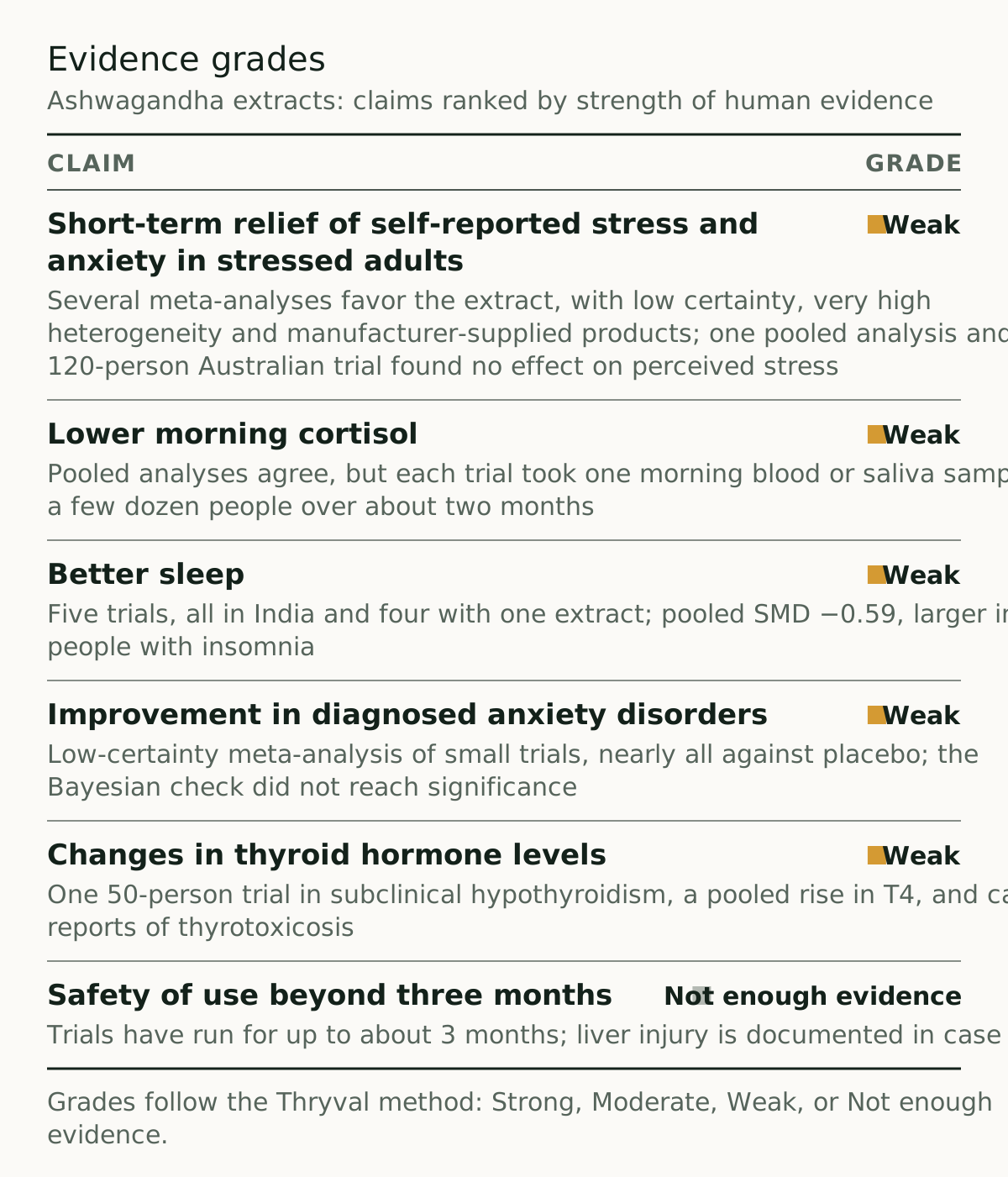
Evidence grades
The grades below are Thryval editorial judgments based on the studies cited in this article. The grading rules are set out on our Research page.
Frequently asked questions
Does ashwagandha work for stress?
Meta-analyses of short trials report lower stress scores with ashwagandha than with placebo, but the evidence is of low certainty, the trials disagree widely, and most were small, conducted in India and supported by extract manufacturers.120 One meta-analysis and a 120-person Australian trial found no effect on perceived stress.311
Does ashwagandha lower cortisol?
In small trials, morning cortisol fell by roughly 16% to 33% with ashwagandha, compared with changes of about −8% to +0.5% with placebo.8910 Each trial measured cortisol once, in the morning, so these results say little about cortisol across the day or over months.11
Does ashwagandha help you sleep?
Five trials from India found a small improvement in sleep compared with placebo, larger in people with insomnia and at doses of 600 mg a day or more.5 The certainty is limited by the small number of trials and by the use of the same extract in four of them.5
Can ashwagandha be used for an anxiety disorder?
The trials in diagnosed anxiety disorders are small, short and mostly placebo-controlled, and the evidence is of low certainty.4 A psychiatric guideline taskforce suggests that, where used at all, such products be taken alongside standard care under a clinician’s supervision.18 People who take prescribed medication for anxiety should not stop or change it without talking to their prescriber.
Is ashwagandha bad for your liver?
Liver injury has been documented. Case series describe jaundice starting 2 to 12 weeks after starting ashwagandha, usually resolving after it is stopped, and deaths in three people with existing chronic liver disease.2223 In the reported cases, liver function generally improved after the supplement was stopped.20
Why is ashwagandha banned in Denmark?
Denmark’s food authority prohibits its sale as a food or supplement, based on a 2020 Technical University of Denmark assessment of possible effects on sex hormones, reproduction, pregnancy and thyroid function.2728 According to the NIH, the ban took effect in 2023.20
Implications for patients and clinicians
For stressed adults, the trials suggest that a branded ashwagandha extract may lower stress questionnaire scores and morning cortisol over a few weeks, but they are too small, short and closely tied to manufacturers to show how large or durable the benefit is.14 The trials cannot be used to choose between ashwagandha and established treatments for anxiety disorders, because they did not make that comparison.4 People who are pregnant or breastfeeding, have liver disease or thyroid disease, take thyroid hormone, or have hormone-sensitive prostate cancer were advised against its use or flagged for caution in the sources reviewed here.2023 Clinicians assessing unexplained cholestatic liver injury or abnormal thyroid tests should ask about ashwagandha.2224
References
-
Akhgarjand C, Asoudeh F, Bagheri A, et al. Does ashwagandha supplementation have a beneficial effect on the management of anxiety and stress? A systematic review and meta-analysis of randomized controlled trials. Phytother Res. 2022;36(11):4115–4124. Systematic review and meta-analysis: 12 randomized trials, 1,002 participants. PubMed 36017529 ↩↩↩↩↩↩
-
Arumugam V, Vijayakumar V, Balakrishnan A, et al. Effects of ashwagandha (Withania somnifera) on stress and anxiety: a systematic review and meta-analysis. Explore (NY). 2024;20(6):103062. Systematic review and meta-analysis: 9 randomized trials, 558 participants. PubMed 39348746 ↩↩
-
Albalawi AA. Dual impact of ashwagandha: significant cortisol reduction but no effects on perceived stress. A systematic review and meta-analysis. Nutr Health. 2025;31(4):1395–1408. Systematic review and meta-analysis: 7 trials on cortisol, 6 on perceived stress (488 participants). PubMed 40746175 ↩↩↩↩↩↩↩
-
Marchi M, Grenzi P, Travascio A, et al. The effect of Withania somnifera (ashwagandha) on mental health symptoms in individuals with mental disorders: systematic review and meta-analysis. BJPsych Open. 2025;11(6):e260. Systematic review and meta-analysis (GRADE): 14 randomized trials, 713 participants. PMC12569615 · PubMed 41140145 ↩↩↩↩↩↩↩↩↩↩↩↩↩
-
Cheah KL, Norhayati MN, Husniati Yaacob L, Abdul Rahman R. Effect of ashwagandha (Withania somnifera) extract on sleep: a systematic review and meta-analysis. PLoS One. 2021;16(9):e0257843. Systematic review and meta-analysis: 5 randomized trials, 400 participants. PMC8462692 · PubMed 34559859 ↩↩↩↩↩↩↩↩↩↩↩
-
Fornalik M, Malkiewicz A, Adamczak D, et al. Hormonal modulation with Withania somnifera: systematic review and meta-analysis of randomized-controlled trials. Planta Med. 2026;92(8):790–805. Systematic review and meta-analysis: 23 trials, 1,706 participants. PubMed 41740946 ↩↩↩↩
-
Lopresti AL, Smith SJ, Drummond PD. Modulation of the hypothalamic-pituitary-adrenal (HPA) axis by plants and phytonutrients: a systematic review of human trials. Nutr Neurosci. 2022;25(8):1704–1730. Systematic review: 52 studies. PubMed 33650944 ↩
-
Chandrasekhar K, Kapoor J, Anishetty S. A prospective, randomized double-blind, placebo-controlled study of safety and efficacy of a high-concentration full-spectrum extract of ashwagandha root in reducing stress and anxiety in adults. Indian J Psychol Med. 2012;34(3):255–262. Randomized controlled trial, n=64; extract provided by Ixoreal Biomed. PMC3573577 · PubMed 23439798 ↩↩↩↩↩↩
-
Salve J, Pate S, Debnath K, Langade D. Adaptogenic and anxiolytic effects of ashwagandha root extract in healthy adults: a double-blind, randomized, placebo-controlled clinical study. Cureus. 2019;11(12):e6466. Randomized controlled trial, n=60; extract supplied by Ixoreal Biomed. PMC6979308 · PubMed 32021735 ↩↩↩↩↩↩↩
-
Lopresti AL, Smith SJ, Malvi H, Kodgule R. An investigation into the stress-relieving and pharmacological actions of an ashwagandha (Withania somnifera) extract: a randomized, double-blind, placebo-controlled study. Medicine (Baltimore). 2019;98(37):e17186. Randomized controlled trial, n=60; funded by Arjuna Natural. PMC6750292 · PubMed 31517876 ↩↩↩↩↩↩↩↩
-
Smith SJ, Lopresti AL, Fairchild TJ. Exploring the efficacy and safety of a novel standardized ashwagandha (Withania somnifera) root extract (Witholytin) in adults experiencing high stress and fatigue in a randomized, double-blind, placebo-controlled trial. J Psychopharmacol. 2023;37(11):1091–1104. Randomized controlled trial, n=120; funded by Verdure Sciences. PMC10647917 · PubMed 37740662 ↩↩↩↩↩↩↩↩↩↩
-
Remenapp A, Coyle K, Orange T, et al. Efficacy of Withania somnifera supplementation on adult’s cognition and mood. J Ayurveda Integr Med. 2022;13(2):100510. Randomized controlled trial, n=60; funded by Specnova. PMC8728079 · PubMed 34838432 ↩↩↩↩↩
-
Langade D, Kanchi S, Salve J, Debnath K, Ambegaokar D. Efficacy and safety of ashwagandha (Withania somnifera) root extract in insomnia and anxiety: a double-blind, randomized, placebo-controlled study. Cureus. 2019;11(9):e5797. Randomized controlled trial, n=60; extract supplied by Ixoreal Biomed. PMC6827862 · PubMed 31728244 ↩↩
-
Langade D, Thakare V, Kanchi S, Kelgane S. Clinical evaluation of the pharmacological impact of ashwagandha root extract on sleep in healthy volunteers and insomnia patients: a double-blind, randomized, parallel-group, placebo-controlled study. J Ethnopharmacol. 2021;264:113276. Randomized controlled trial, n=80. PubMed 32818573 ↩
-
Deshpande A, Irani N, Balkrishnan R, Benny IR. A randomized, double blind, placebo controlled study to evaluate the effects of ashwagandha (Withania somnifera) extract on sleep quality in healthy adults. Sleep Med. 2020;72:28–36. Randomized controlled trial, n=150. PubMed 32540634 ↩↩
-
Fuladi S, Emami SA, Mohammadpour AH, et al. Assessment of the efficacy of Withania somnifera root extract in patients with generalized anxiety disorder: a randomized double-blind placebo-controlled trial. Curr Rev Clin Exp Pharmacol. 2021;16(2):191–196. Randomized controlled trial, n=40. PubMed 32282308 ↩
-
Andrade C, Aswath A, Chaturvedi SK, Srinivasa M, Raguram R. A double-blind, placebo-controlled evaluation of the anxiolytic efficacy of an ethanolic extract of Withania somnifera. Indian J Psychiatry. 2000;42(3):295–301. Randomized controlled trial, n=39. PMC2958355 · PubMed 21407960 ↩
-
Sarris J, Ravindran A, Yatham LN, et al. Clinician guidelines for the treatment of psychiatric disorders with nutraceuticals and phytoceuticals: the World Federation of Societies of Biological Psychiatry (WFSBP) and Canadian Network for Mood and Anxiety Treatments (CANMAT) Taskforce. World J Biol Psychiatry. 2022;23(6):424–455. Guideline. PubMed 35311615 ↩↩
-
Smith SM, Vale WW. The role of the hypothalamic-pituitary-adrenal axis in neuroendocrine responses to stress. Dialogues Clin Neurosci. 2006;8(4):383–395. Review. PMC3181830 · PubMed 17290797 ↩
-
NIH Office of Dietary Supplements. Ashwagandha: fact sheet for health professionals. Updated May 2, 2025. ods.od.nih.gov ↩↩↩↩↩↩↩↩↩↩↩↩↩↩↩↩↩↩↩↩↩
-
LiverTox: Clinical and Research Information on Drug-Induced Liver Injury. Ashwagandha. National Institute of Diabetes and Digestive and Kidney Diseases; updated December 3, 2024. Database entry. PubMed 31643854 ↩↩
-
Björnsson HK, Björnsson ES, Avula B, et al. Ashwagandha-induced liver injury: a case series from Iceland and the US Drug-Induced Liver Injury Network. Liver Int. 2020;40(4):825–829. Case series, n=5. PMC8041491 · PubMed 31991029 ↩↩↩↩↩
-
Philips CA, Valsan A, Theruvath AH, et al. Ashwagandha-induced liver injury: a case series from India and literature review. Hepatol Commun. 2023;7(10):e0270. Case series, n=8 with single-ingredient products. PMC10531359 · PubMed 37756041 ↩↩↩↩↩
-
Sharma AK, Basu I, Singh S. Efficacy and safety of ashwagandha root extract in subclinical hypothyroid patients: a double-blind, randomized placebo-controlled trial. J Altern Complement Med. 2018;24(3):243–248. Randomized controlled trial, n=50. PubMed 28829155 ↩↩↩
-
Gannon JM, Forrest PE, Roy Chengappa KN. Subtle changes in thyroid indices during a placebo-controlled study of an extract of Withania somnifera in persons with bipolar disorder. J Ayurveda Integr Med. 2014;5(4):241–245. Secondary analysis of a randomized trial, n=60. PMC4296437 · PubMed 25624699 ↩
-
van der Hooft CS, Hoekstra A, Winter A, de Smet PA, Stricker BH. Thyrotoxicosis following the use of ashwagandha [in Dutch]. Ned Tijdschr Geneeskd. 2005;149(47):2637–2638. Case report. PubMed 16355578 ↩↩
-
Danish Veterinary and Food Administration (Fødevarestyrelsen). Ashwagandha i kosttilskud og drikkevarer [in Danish]. Web page. foedevarestyrelsen.dk ↩↩↩↩↩
-
National Food Institute, Technical University of Denmark. Risk assessment of Withania somnifera [in Danish]. May 15, 2020. Risk assessment. foedevarestyrelsen.dk (PDF) ↩↩