

Does berberine lower blood sugar? What the trials show
Berberine lowers HbA1c and fasting glucose in short trials of people with type 2 diabetes, most of them run in China and many testing it alongside diabetes drugs. Little of an oral dose reaches the blood, it interacts with several medicines, and the weight loss in trials is a kilogram or two.
The grade ModerateBerberine for blood sugar in type 2 diabetes
In brief. In meta-analyses of randomized trials in people with type 2 diabetes, berberine lowered HbA1c by about 0.4 to 0.7 percentage points and fasting glucose by about 0.5 to 0.8 mmol/L over roughly three months.132 The largest placebo-controlled trial, with 409 newly diagnosed patients at 20 centers in China, found a similar result.9 Almost all of the trials were run in China, most were short, many gave berberine together with diabetes drugs, and only a minority reported how they randomized or blinded participants.12 Less than 1% of an oral dose reaches the bloodstream in animal studies, and much of the proposed mechanism comes from cell and rodent work.222328 Berberine raises blood levels of several drugs, including cyclosporine, causes constipation and diarrhea in some people, and is advised against in pregnancy and in newborns.323384039 Pooled weight loss is about 1 to 2 kg, and no trial has compared berberine with a GLP-1 drug.1718
Berberine is a yellow alkaloid found in several plants, including barberry (Berberis), goldthread (Coptis chinensis) and goldenseal (Hydrastis canadensis).36 It is among the most widely used supplements for metabolic health and has been popularized as “nature’s Ozempic”.36 This article reviews the human trials on blood sugar, cholesterol and weight, the quality of those trials, what is known about absorption and mechanism, and its safety.
Does berberine lower HbA1c and blood sugar in type 2 diabetes?
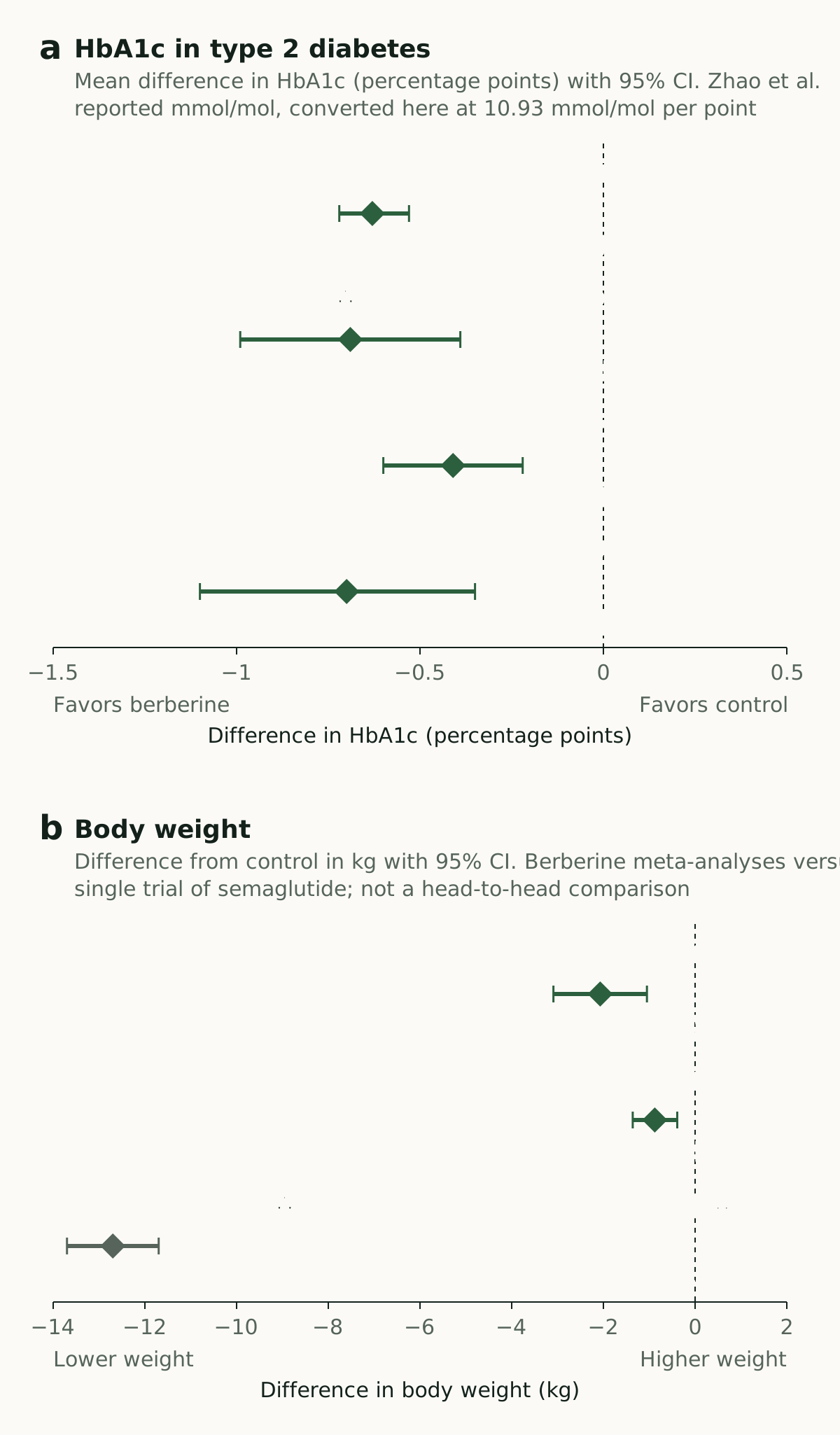
Several meta-analyses have pooled the trials, and they reach similar numbers. Xie and colleagues, in 2022, included 37 randomized trials with 3,048 patients.1 Compared with control treatments, berberine lowered fasting plasma glucose by 0.82 mmol/L (95% CI 0.70 to 0.95), HbA1c by 0.63 percentage points (0.53 to 0.72) and 2-hour postprandial glucose by 1.16 mmol/L. The authors rated the certainty of evidence as moderate for fasting glucose and HbA1c, after downgrading for risk of bias, and low for postprandial glucose because of likely publication bias.1 The effect was larger in people with higher baseline glucose and HbA1c.1
Wang and colleagues, in 2024, pooled 50 studies with 4,150 participants and separated berberine taken alone from berberine added to other treatment.2 Taken alone, it lowered fasting glucose by 0.59 mmol/L (P=0.048). Added to diabetes drugs, it lowered fasting glucose by 0.99 mmol/L and HbA1c by 0.69 points (95% CI 0.39 to 0.99) more than the drugs alone, but heterogeneity was very high (I² 96.7%). Added to insulin, berberine did not lower HbA1c more than insulin alone.2 The usual doses were 0.9 to 1.5 g a day, for one to three months.2
The most conservative pooled estimate comes from Zhao and colleagues, in 2023, who restricted their analysis to placebo-controlled trials.3 In 20 trials with 1,761 participants, berberine lowered fasting glucose by 0.52 mmol/L (95% CI 0.33 to 0.72). In the 7 trials (756 participants) that measured HbA1c, it fell by 4.48 mmol/mol (2.44 to 6.53), which is about 0.4 percentage points. Effects were larger in people with diabetes, in women and in Asian populations, and the authors called berberine a possible complementary intervention with modest benefits.3 Two umbrella reviews, which pooled earlier meta-analyses, reached similar estimates and said the methods of the underlying studies needed improvement.78
The largest single trial is PREMOTE. Zhang and colleagues randomized 409 people with newly diagnosed type 2 diabetes at 20 centers in China to berberine, probiotics, both, or placebo for 12 weeks, after a one-week course of the antibiotic gentamycin in all groups.9 HbA1c fell by 0.99 percentage points with berberine alone and by 0.59 points with placebo, a difference of about 0.4 points; adding probiotics to berberine gave no further benefit. Berberine caused more gastrointestinal side effects.9 An earlier trial by Zhang and colleagues randomized 116 people with type 2 diabetes and abnormal blood lipids to berberine 1 g a day or placebo for three months.10 HbA1c fell from 7.5% to 6.6% with berberine, and fasting glucose from 7.0 to 5.6 mmol/L, both more than with placebo.10
How does berberine compare with metformin and other diabetes drugs?
Head-to-head comparisons are few and small. In a pilot study by Yin and colleagues, 36 adults with newly diagnosed type 2 diabetes took berberine or metformin, 0.5 g three times a day, for three months; HbA1c fell from 9.5% to 7.5% with berberine, and the glucose-lowering effect was similar to that of metformin.11 Dong and colleagues, pooling 14 trials with 1,068 participants in 2012, found berberine no better than metformin, glipizide or rosiglitazone, and better when added to these drugs than the drugs alone; they rated the methodological quality of the trials as generally low.5 Lan and colleagues, in 2015, reported no significant difference between berberine and oral diabetes drugs in 27 trials with 2,569 patients.6 None of these studies was large enough or long enough to show that berberine can replace a prescribed drug, and none measured complications of diabetes.
How reliable are the berberine diabetes trials?
The pooled numbers rest on trials with several shared weaknesses. In the Xie meta-analysis, 36 of the 37 trials were carried out in China and one in Iran, and only three were published in English.1 Of the 37, 12 described how the random sequence was generated, 3 described allocation concealment and 6 described blinding.1 Many trials compared berberine plus a diabetes drug with the drug alone, often without a placebo, so the participants and investigators knew who received berberine.12
The trials were also short. Most lasted one to three months.2 In the Liang meta-analysis of 28 studies with 2,313 patients, the effect on glucose was no longer apparent in trials lasting more than 90 days, at doses above 2 g a day or in patients older than 60.4 Signs of publication bias, in which small negative trials go unpublished, appeared for postprandial glucose in one analysis and for HbA1c and blood lipids in another.12 In the second, a statistical adjustment for the missing trials did not reverse the results.2 The products themselves vary: one review of the interaction literature notes that berberine products are not standardized and that national limits on the permitted dose differ by more than tenfold within Europe.36
Does berberine improve insulin resistance?
Insulin resistance was usually estimated from fasting glucose and insulin using HOMA-IR, a calculated index. In the placebo-controlled meta-analysis by Zhao and colleagues, HOMA-IR fell by 0.85 units (95% CI 0.53 to 1.16) across 12 trials, and fasting insulin fell by 2.36 mU/L.3 The reference method is the hyperinsulinemic–euglycemic clamp, which measures how quickly the body clears glucose under a fixed insulin level. In the 116-person trial by Zhang and colleagues, glucose disposal on the clamp did not differ significantly between berberine and placebo (P=0.063).10
Does berberine help with prediabetes?
The prediabetes trials are small. Panigrahi and Mohanty randomized 34 adults with prediabetes in India to a branded berberine product (HIMABERB), 500 mg three times a day, or placebo for 12 weeks, and reported a fall in HbA1c from 6.40% to 5.43% with berberine.12 Rondanelli and colleagues randomized 49 overweight adults with impaired fasting glucose in Italy to a berberine phospholipid product or placebo for 60 days and reported a small fall in fasting glucose; four of the authors worked in the research department of Indena, which makes the product.13 No large or long trial in prediabetes was found, and none tested whether berberine delays the onset of diabetes.
Does berberine lower cholesterol and triglycerides?
Liu and colleagues, in 2025, pooled 12 placebo-controlled trials with 889 patients with metabolic syndrome or its components, run in China, Mexico and India between 2004 and 2023.14 Berberine lowered triglycerides by 0.37 mmol/L, LDL cholesterol by 0.50 mmol/L and total cholesterol by 0.45 mmol/L, and waist circumference by 3.3 cm, with no effect on HDL cholesterol or blood pressure.14 The work was funded by a Chinese state laboratory for traditional Chinese medicine.14 An earlier meta-analysis of 16 trials with 2,147 participants found similar reductions in total and LDL cholesterol but rated most trials as of low methodological quality, with high clinical heterogeneity.15
The longest placebo-controlled trial, BRAVO, randomized 337 adults with obesity and fatty liver disease but no diabetes at 11 hospitals in China to berberine 1 g a day or placebo for six months.16 Berberine lowered LDL cholesterol by 7.72 mg/dL more than placebo (95% CI 1.93 to 13.13) and apolipoprotein B by 3.42 mg/dL, but did not change triglycerides or other secondary outcomes.16 It was funded by the China Academy of Chinese Medical Sciences, and the tablets were donated by the manufacturer.16
Does berberine cause weight loss, and is it “nature’s Ozempic”?
The weight losses reported in trials are small. Asbaghi and colleagues pooled 12 studies and found a mean loss of 2.07 kg (95% CI 1.05 to 3.09) and a fall in body mass index of 0.47.17 Elahi Vahed and colleagues, in 2026, pooled 23 trial reports and found a mean loss of 0.88 kg (0.39 to 1.36) and a 1.3 cm reduction in waist circumference, and called for better reporting of product purity, blinding and randomization.18 In the six-month BRAVO trial, berberine did not reduce visceral fat or liver fat, and body weight did not differ from placebo.16
Semaglutide, sold as Ozempic and Wegovy, is a GLP-1 drug. In a human intestinal cell line, berberine triggered release of the hormone GLP-1 through a bitter taste receptor.31 No trial reviewed here measured GLP-1 levels in people taking berberine, and none compared berberine with a GLP-1 drug. For scale, semaglutide 2.4 mg weekly reduced body weight by 12.7 kg more than placebo (95% CI 11.7 to 13.7) over 68 weeks in the STEP 1 trial of 1,961 adults with overweight or obesity.19 The berberine meta-analyses report losses of 1 to 2 kg over shorter periods.1718
How much berberine is absorbed, and how might it work?
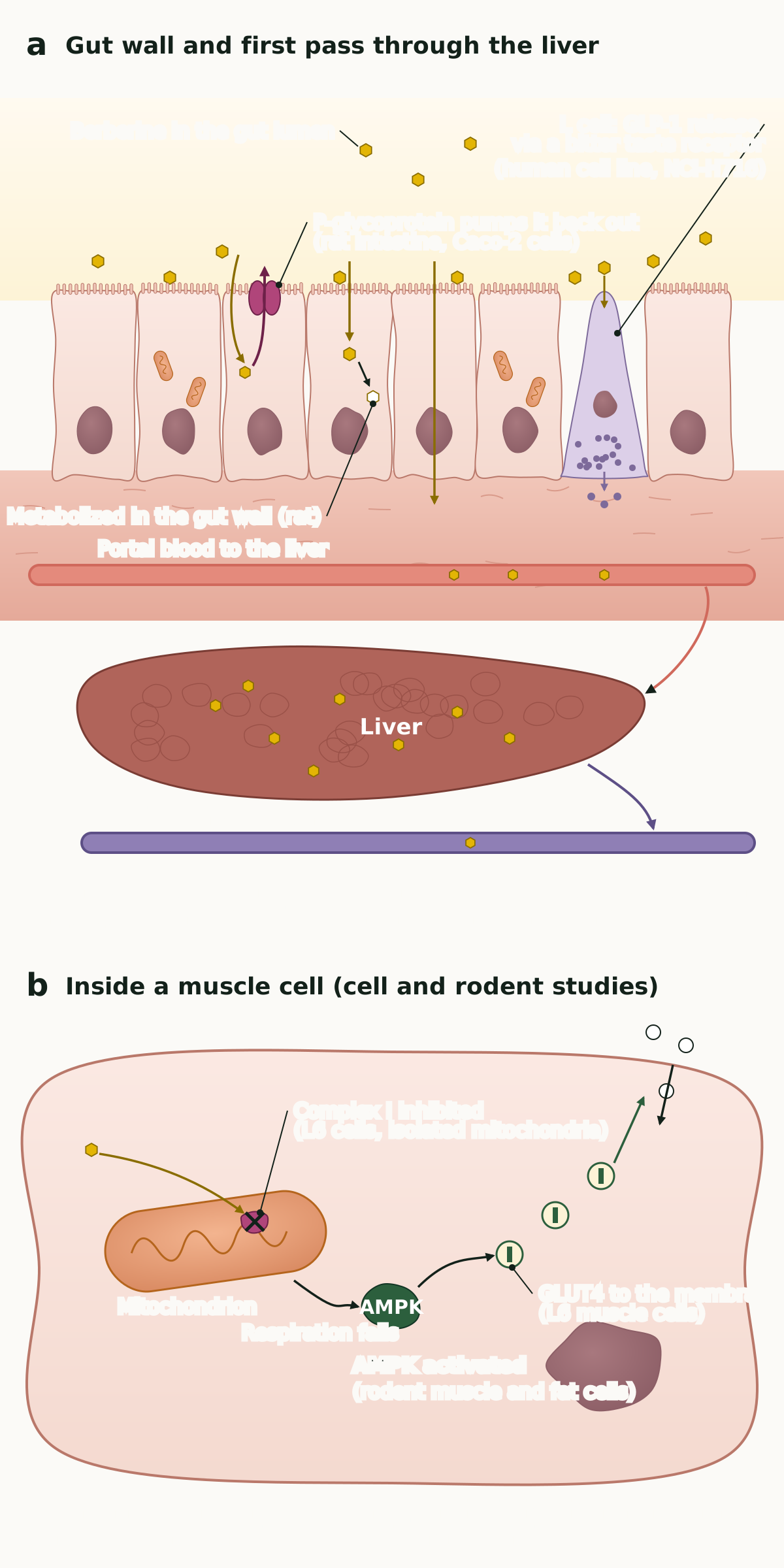
Very little oral berberine reaches the general circulation. In rats, its absolute oral bioavailability was 0.68% in one study and 0.36% in another.2223 Liu and colleagues found that about half of a dose was broken down in the wall of the small intestine, and that berberine levels in the liver were about 70 times those in plasma.23 In rat intestine and in Caco-2 cells, a human intestinal cell line used to model absorption, berberine is pumped back into the gut by the transporter P-glycoprotein; blocking the pump increased absorption about sixfold in rats.2425 In a crossover study of five young men, a 500 mg dose produced a peak plasma level of 0.4 ng/mL.26 In a human pharmacokinetic study, the liver enzyme CYP2D6 was involved in clearing berberine, and women had about 2.8 times the exposure of men.27
The proposed mechanisms come mostly from cell and animal studies. In mouse fat cells and rat muscle cells, berberine activated the enzyme AMPK and moved GLUT4 glucose transporters to the cell surface, and it improved glucose tolerance in diabetic mice and in rats fed a high-fat diet.29 Turner and colleagues found that berberine inhibits complex I of the mitochondrial respiratory chain in muscle cells and isolated mitochondria, which would explain the AMPK activation.30 The PREMOTE investigators linked the glucose effect in their patients to changes in gut bacteria and bile acids.9 Because so little berberine reaches the blood, it is not known how much of the cell findings applies to human muscle after an oral dose.
What are the side effects of berberine?
The most common side effects are digestive. Constipation and diarrhea were the adverse effects most often reported across meta-analyses.8 In Yin’s pilot study, 34.5% of patients had transient gastrointestinal symptoms, and in PREMOTE, berberine caused more gastrointestinal effects than placebo.119 In the Xie meta-analysis, total adverse events were not more frequent with berberine than with control treatments (risk ratio 0.73).1 In BRAVO, over six months, adverse events were similar with berberine and placebo, including hypoglycemia (5.4% and 4.7%) and gastrointestinal events (1.8% and 3.0%).16
Low blood sugar
Berberine did not increase hypoglycemia significantly in the pooled diabetes trials (risk ratio 0.48, 95% CI 0.21 to 1.08), but the authors rated the certainty of this finding as very low.1 A 2025 case report described a man in his 40s, without diabetes, who fainted during exercise with a blood glucose of 0.9 mmol/L while taking berberine as a performance supplement; according to the authors, berberine-related hypoglycemia had previously been reported only in people with diabetes.37 A review of berberine interactions lists additive hypoglycemia with glucose-lowering drugs among its mechanisms of concern.36 People who take metformin, insulin or other glucose-lowering medicines should talk with their physician before using berberine, and should not stop or reduce a prescribed drug on their own.3640
Drug interactions
Berberine changes how the body handles several drugs. In healthy men given 300 mg three times a day for two weeks, it inhibited the liver enzymes CYP2D6, CYP2C9 and CYP3A4: the ratio for the CYP2D6 test drug dextromethorphan rose about ninefold, and exposure to the CYP3A4 test drug midazolam rose by 40%.32 In a clinical study of 104 kidney transplant recipients, those given berberine 0.2 g three times a day for three months had cyclosporine trough levels 29.3% higher than controls, and exposure rose by 34.5% in a pharmacokinetic substudy of six patients.33 A smaller rise was seen in healthy volunteers.34 A 2026 review of berberine interactions treats this as the main clinical example and singles out drugs with a narrow margin between effective and toxic doses.36
The interaction with metformin is less clear. In rats, berberine inhibited the transporters OCT1 and OCT2 that move metformin into cells and raised metformin levels in the blood.35 In healthy adults, an NIH-funded study of goldenseal extract, which contains berberine, found that metformin levels fell by about 25%, enough to potentially hinder glucose control.40 Isolated berberine has not been tested this way in people with diabetes, so the direction of the effect in patients is uncertain. A review of interaction studies concluded that berberine should be treated as an active drug, not an inert supplement, in people taking several medicines.36
Pregnancy, breastfeeding and newborns
The NIH advises that people who are pregnant or breastfeeding should not use goldenseal, that it should not be given to infants, and that its berberine can be harmful to newborns.40 In laboratory work, berberine displaced bilirubin from albumin about ten times more strongly than phenylbutazone and raised bilirubin levels in rats, which raises concern about kernicterus, brain injury from high bilirubin, in jaundiced newborns; the author advised avoiding it in jaundiced newborns and in pregnancy.38 The MotherToBaby fact sheet states that it is not known whether berberine raises the chance of miscarriage and that it may cause uterine contractions. Data on birth defects come from one report of 218 pregnancies exposed to huang lian, a plant that contains berberine. Berberine passes into breast milk in unknown amounts.39
What about berberine ursodeoxycholate?
Berberine ursodeoxycholate (HTD1801) is a salt of berberine and ursodeoxycholic acid that is being tested as an investigational drug. In a 12-week trial in China, 113 adults with type 2 diabetes were randomized to placebo or HTD1801 at 500 mg or 1,000 mg twice a day; HbA1c fell by 0.4 and 0.7 percentage points more than with placebo.20 A phase 2 trial in 100 people with fatty liver disease and type 2 diabetes reported a larger fall in liver fat with HTD1801 than with placebo over 18 weeks (4.8 versus 2.0 percentage points).21 The diabetes trial was sponsored by the developer, Shenzhen HighTide Biopharmaceutical, which designed the protocol and oversaw the analysis; several authors of the liver trial were employees of or consultants to HighTide.2021 These results apply to that compound and not to berberine supplements.
What remains uncertain?
The main open questions concern how long the effects last, whether they hold outside China, and whether they translate into fewer complications of diabetes. Most trials ran for one to three months, and the one longer placebo-controlled trial was done in people without diabetes.216 No trial reviewed here measured heart attacks, kidney disease, eye disease or deaths. Products vary in content and dose, and absorption differs between men and women.3627 The mechanism in people is not settled, and the GLP-1 findings come from a cell line.319
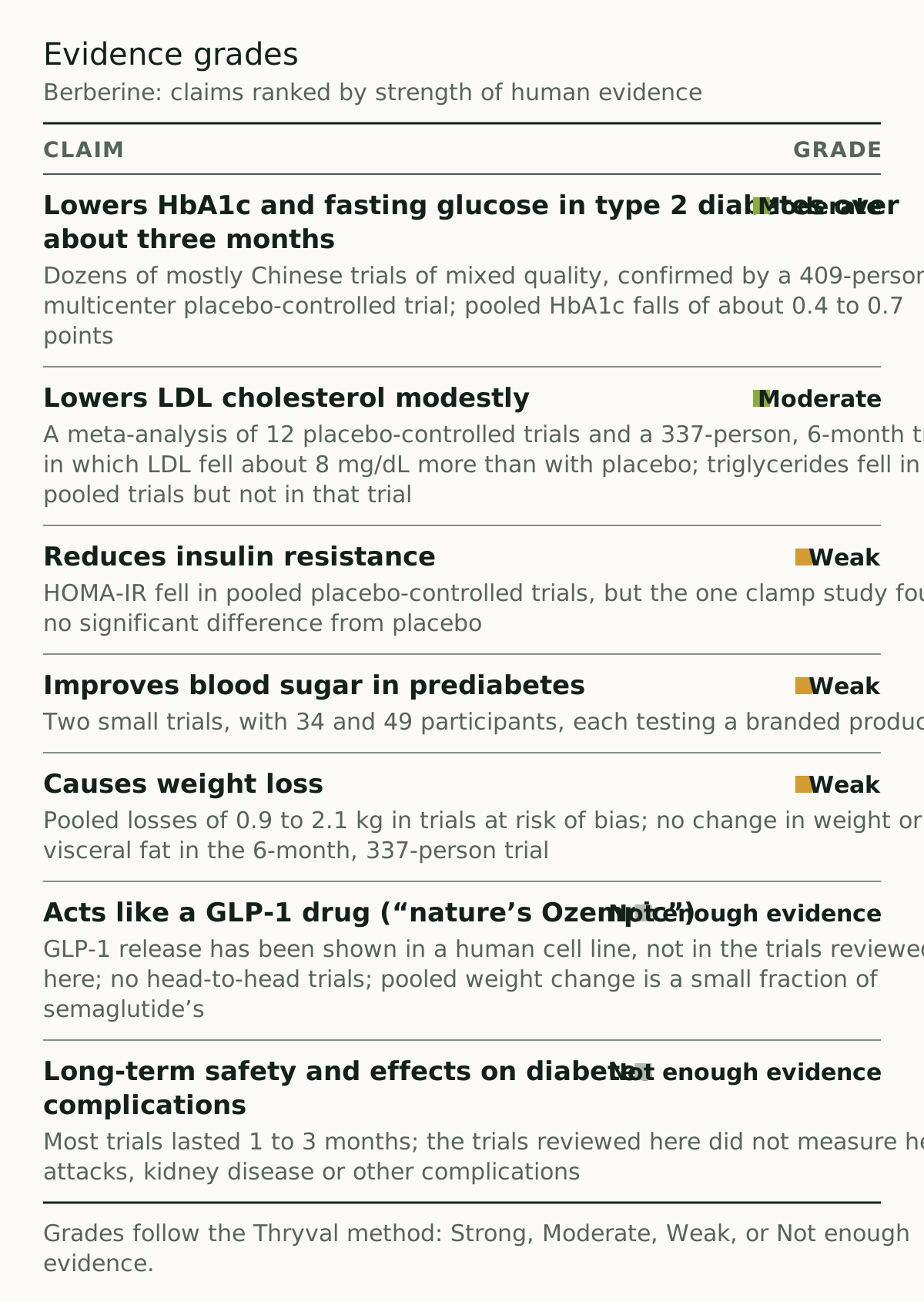
Evidence grades
The grades below are Thryval editorial judgments based on the studies cited in this article. The grading rules are set out on our Research page.
Frequently asked questions
Does berberine lower blood sugar?
In people with type 2 diabetes, trials lasting about three months found that berberine lowered fasting glucose by about 0.5 to 0.8 mmol/L and HbA1c by about 0.4 to 0.7 percentage points.13 Most of these trials were small, run in China and open to bias, and many tested berberine together with diabetes drugs.1
Can berberine replace metformin?
The trials do not show that it can. The head-to-head studies were small and short, were rated as low in quality, and did not measure complications of diabetes.115 People taking metformin or another diabetes drug should not stop or change it without talking to their physician.40
Is berberine “nature’s Ozempic”?
No trial supports the comparison. GLP-1 release has been shown only in a human cell line, and pooled weight loss with berberine is about 1 to 2 kg, compared with 12.7 kg more than placebo with semaglutide in the STEP 1 trial.311719
How much berberine was used in the trials?
Most trials used 0.9 to 1.5 g a day for one to three months.2 One meta-analysis found no clear benefit in trials using more than 2 g a day.4
Who should not take berberine?
The NIH advises against goldenseal, a berberine source, in pregnancy, during breastfeeding and in infants, and laboratory studies suggest berberine may worsen jaundice in newborns.4038 It raises blood levels of cyclosporine and of drugs cleared by CYP2D6, CYP2C9 and CYP3A4.3332 People taking glucose-lowering drugs should talk to their physician first because the effects may add up and cause low blood sugar.3640
What are the common side effects of berberine?
Constipation and diarrhea are the most commonly reported.8 In one pilot study about a third of patients had temporary digestive symptoms.11
Implications for patients and clinicians
For people with type 2 diabetes, the trials suggest that berberine lowers HbA1c by a few tenths of a percentage point over a few months, mostly in Chinese populations and often alongside standard drugs.139 The evidence does not show that it can take the place of metformin, a GLP-1 drug or any other prescribed treatment, because the trials were too small and short and did not measure complications.52 Its weight effect is small.1718 Clinicians should ask about berberine during medication reviews, particularly in patients taking cyclosporine, drugs metabolized by CYP2D6 or CYP3A4, or glucose-lowering medicines, and should consider it when assessing unexplained hypoglycemia.363337 The sources reviewed here advise against berberine in pregnancy, while breastfeeding and in newborns.403839
References
-
Xie W, Su F, Wang G, et al. Glucose-lowering effect of berberine on type 2 diabetes: a systematic review and meta-analysis. Front Pharmacol. 2022;13:1015045. Systematic review and meta-analysis (GRADE): 37 randomized trials, 3,048 patients. PMC9709280 · PubMed 36467075 ↩↩↩↩↩↩↩↩↩↩↩↩↩↩↩
-
Wang J, Bi C, Xi H, et al. Effects of administering berberine alone or in combination on type 2 diabetes mellitus: a systematic review and meta-analysis. Front Pharmacol. 2024;15:1455534. Systematic review and meta-analysis: 50 studies, 4,150 participants. PMC11617981 · PubMed 39640489 ↩↩↩↩↩↩↩↩↩↩↩↩↩
-
Zhao JV, Huang X, Zhang J, et al. Overall and sex-specific effect of berberine on glycemic and insulin-related traits: a systematic review and meta-analysis of randomized controlled trials. J Nutr. 2023;153(10):2939–2950. Systematic review and meta-analysis: 20 placebo-controlled trials, 1,761 participants. PubMed 37598753 ↩↩↩↩↩↩↩↩
-
Liang Y, Xu X, Yin M, et al. Effects of berberine on blood glucose in patients with type 2 diabetes mellitus: a systematic literature review and a meta-analysis. Endocr J. 2019;66(1):51–63. Systematic review and meta-analysis: 28 studies, 2,313 patients. PubMed 30393248 ↩↩
-
Dong H, Wang N, Zhao L, Lu F. Berberine in the treatment of type 2 diabetes mellitus: a systemic review and meta-analysis. Evid Based Complement Alternat Med. 2012;2012:591654. Systematic review and meta-analysis: 14 randomized trials, 1,068 participants. PMC3478874 · PubMed 23118793 ↩↩↩
-
Lan J, Zhao Y, Dong F, et al. Meta-analysis of the effect and safety of berberine in the treatment of type 2 diabetes mellitus, hyperlipemia and hypertension. J Ethnopharmacol. 2015;161:69–81. Systematic review and meta-analysis: 27 randomized trials, 2,569 patients. PubMed 25498346 ↩
-
Nazari A, Ghotbabadi ZR, Kazemi KS, et al. The effect of berberine supplementation on glycemic control and inflammatory biomarkers in metabolic disorders: an umbrella meta-analysis of randomized controlled trials. Clin Ther. 2024;46(2):e64–e72. Umbrella review of meta-analyses. PubMed 38016844 ↩
-
Li Z, Wang Y, Xu Q, et al. Berberine and health outcomes: an umbrella review. Phytother Res. 2023;37(5):2051–2066. Umbrella review of meta-analyses. PubMed 36999891 ↩↩↩↩
-
Zhang Y, Gu Y, Ren H, et al. Gut microbiome-related effects of berberine and probiotics on type 2 diabetes (the PREMOTE study). Nat Commun. 2020;11(1):5015. Randomized controlled trial, n=409, 20 centers in China. PMC7538905 · PubMed 33024120 ↩↩↩↩↩↩↩↩
-
Zhang Y, Li X, Zou D, et al. Treatment of type 2 diabetes and dyslipidemia with the natural plant alkaloid berberine. J Clin Endocrinol Metab. 2008;93(7):2559–2565. Randomized controlled trial, n=116. PubMed 18397984 ↩↩↩↩
-
Yin J, Xing H, Ye J. Efficacy of berberine in patients with type 2 diabetes mellitus. Metabolism. 2008;57(5):712–717. Pilot studies, n=36 and n=48. PMC2410097 · PubMed 18442638 ↩↩↩↩
-
Panigrahi A, Mohanty S. Efficacy and safety of HIMABERB berberine on glycemic control in patients with prediabetes: double-blind, placebo-controlled, and randomized pilot trial. BMC Endocr Disord. 2023;23(1):190. Randomized controlled pilot trial, n=34. PMC10483788 · PubMed 37679692 ↩↩
-
Rondanelli M, Gasparri C, Petrangolini G, et al. Berberine phospholipid exerts a positive effect on the glycemic profile of overweight subjects with impaired fasting blood glucose (IFG): a randomized double-blind placebo-controlled clinical trial. Eur Rev Med Pharmacol Sci. 2023;27(14):6718–6727. Randomized controlled trial, n=49; four authors employed by Indena, the product manufacturer. PubMed 37522683 ↩↩
-
Liu D, Zhao H, Zhang Y, et al. Efficacy and safety of berberine on the components of metabolic syndrome: a systematic review and meta-analysis of randomized placebo-controlled trials. Front Pharmacol. 2025;16:1572197. Systematic review and meta-analysis: 12 placebo-controlled trials, 889 patients. PMC12307485 · PubMed 40740996 ↩↩↩↩
-
Ju J, Li J, Lin Q, Xu H. Efficacy and safety of berberine for dyslipidaemias: a systematic review and meta-analysis of randomized clinical trials. Phytomedicine. 2018;50:25–34. Systematic review and meta-analysis: 16 trials, 2,147 participants. PubMed 30466986 ↩
-
Lei L, Wang B, Zhao L, et al. Berberine and adiposity in diabetes-free individuals with obesity and MASLD: a randomized clinical trial. JAMA Netw Open. 2026;9(1):e2554152. Randomized controlled trial, n=337, 11 hospitals in China; study drug donated by Yunnan Biovalley Pharmaceutical. PMC12811813 · PubMed 41543854 ↩↩↩↩↩↩↩↩
-
Asbaghi O, Ghanbari N, Shekari M, et al. The effect of berberine supplementation on obesity parameters, inflammation and liver function enzymes: a systematic review and meta-analysis of randomized controlled trials. Clin Nutr ESPEN. 2020;38:43–49. Systematic review and meta-analysis: 12 studies. PubMed 32690176 ↩↩↩↩↩↩↩
-
Elahi Vahed I, Shahir-Roudi E, Nojumi S, et al. The effect of berberine on obesity indices: a systematic review and meta-analysis. Int J Obes (Lond). 2026;50(1):53–73. Systematic review and meta-analysis: 23 articles. PubMed 41310257 ↩↩↩↩↩
-
Wilding JPH, Batterham RL, Calanna S, et al. Once-weekly semaglutide in adults with overweight or obesity. N Engl J Med. 2021;384(11):989–1002. Randomized controlled trial, n=1,961; funded by Novo Nordisk. PubMed 33567185 ↩↩↩
-
Ji L, Ma J, Ma Y, et al. Berberine ursodeoxycholate for the treatment of type 2 diabetes: a randomized clinical trial. JAMA Netw Open. 2025;8(3):e2462185. Randomized controlled trial, n=113; sponsored by Shenzhen HighTide Biopharmaceutical. PMC11877176 · PubMed 40029660 ↩↩
-
Harrison SA, Gunn N, Neff GW, et al. A phase 2, proof of concept, randomised controlled trial of berberine ursodeoxycholate in patients with presumed non-alcoholic steatohepatitis and type 2 diabetes. Nat Commun. 2021;12(1):5503. Randomized controlled trial, n=100; several authors employed by or consulting for HighTide Therapeutics. PMC8448729 · PubMed 34535644 ↩↩
-
Chen W, Miao YQ, Fan DJ, et al. Bioavailability study of berberine and the enhancing effects of TPGS on intestinal absorption in rats. AAPS PharmSciTech. 2011;12(2):705–711. Animal study. PMC3134654 · PubMed 21637946 ↩↩
-
Liu YT, Hao HP, Xie HG, et al. Extensive intestinal first-pass elimination and predominant hepatic distribution of berberine explain its low plasma levels in rats. Drug Metab Dispos. 2010;38(10):1779–1784. Animal study. PubMed 20634337 ↩↩↩
-
Pan GY, Wang GJ, Liu XD, Fawcett JP, Xie YY. The involvement of P-glycoprotein in berberine absorption. Pharmacol Toxicol. 2002;91(4):193–197. Animal and cell study. PubMed 12530470 ↩
-
Zhang X, Qiu F, Jiang J, Gao C, Tan Y. Intestinal absorption mechanisms of berberine, palmatine, jateorhizine, and coptisine: involvement of P-glycoprotein. Xenobiotica. 2011;41(4):290–296. Cell study. PubMed 21319959 ↩
-
Moon JM, Ratliff KM, Hagele AM, et al. Absorption kinetics of berberine and dihydroberberine and their impact on glycemia: a randomized, controlled, crossover pilot trial. Nutrients. 2021;14(1):124. Crossover pharmacokinetic study, n=5. PMC8746601 · PubMed 35010998 ↩
-
Blöcher JA, Meyer-Tönnies MJ, Morof F, et al. Sex-dependent effects of CYP2D6 on the pharmacokinetics of berberine in humans. Clin Pharmacol Ther. 2025;117(1):250–260. Human pharmacokinetic study. PMC11652804 · PubMed 39488825 ↩↩
-
Khoshandam A, Imenshahidi M, Hosseinzadeh H. Pharmacokinetic of berberine, the main constituent of Berberis vulgaris L.: a comprehensive review. Phytother Res. 2022;36(11):4063–4079. Review. PubMed 36221815 ↩
-
Lee YS, Kim WS, Kim KH, et al. Berberine, a natural plant product, activates AMP-activated protein kinase with beneficial metabolic effects in diabetic and insulin-resistant states. Diabetes. 2006;55(8):2256–2264. Cell and animal study. PubMed 16873688 ↩
-
Turner N, Li JY, Gosby A, et al. Berberine and its more biologically available derivative, dihydroberberine, inhibit mitochondrial respiratory complex I: a mechanism for the action of berberine to activate AMP-activated protein kinase and improve insulin action. Diabetes. 2008;57(5):1414–1418. Cell and animal study. PubMed 18285556 ↩
-
Yu Y, Hao G, Zhang Q, et al. Berberine induces GLP-1 secretion through activation of bitter taste receptor pathways. Biochem Pharmacol. 2015;97(2):173–177. Cell study (NCI-H716 cells). PubMed 26206195 ↩↩↩↩
-
Guo Y, Chen Y, Tan ZR, et al. Repeated administration of berberine inhibits cytochromes P450 in humans. Eur J Clin Pharmacol. 2012;68(2):213–217. Human drug-interaction study in healthy men. PMC4898966 · PubMed 21870106 ↩↩↩↩
-
Wu X, Li Q, Xin H, Yu A, Zhong M. Effects of berberine on the blood concentration of cyclosporin A in renal transplanted recipients: clinical and pharmacokinetic study. Eur J Clin Pharmacol. 2005;61(8):567–572. Controlled clinical study, n=104, with pharmacokinetic substudy, n=6. PubMed 16133554 ↩↩↩↩↩
-
Xin HW, Wu XC, Li Q, et al. The effects of berberine on the pharmacokinetics of cyclosporin A in healthy volunteers. Methods Find Exp Clin Pharmacol. 2006;28(1):25–29. Human pharmacokinetic study. PubMed 16541194 ↩
-
Kwon M, Choi YA, Choi MK, Song IS. Organic cation transporter-mediated drug-drug interaction potential between berberine and metformin. Arch Pharm Res. 2015;38(5):849–856. Cell and animal study. PubMed 25359200 ↩
-
Dumitru CN, Marcu T, Dumitru AO, et al. Berberine-drug interactions: mechanisms, clinical relevance and risk stratification. A narrative review. Pharmaceuticals (Basel). 2026;19(8):1313. Narrative review. PMC13516377 · PubMed 42653808 ↩↩↩↩↩↩↩↩↩↩
-
Henshall A, Ambrogetti R, Pomeroy R, et al. Berberine-induced hypoglycaemia and electrocardiogram interpretation in athletes. BMJ Case Rep. 2025;18(9):e266876. Case report. PubMed 40903097 ↩↩
-
Chan E. Displacement of bilirubin from albumin by berberine. Biol Neonate. 1993;63(4):201–208. Laboratory and animal study. PubMed 8513024 ↩↩↩
-
MotherToBaby. Berberine. In: MotherToBaby Fact Sheets. Organization of Teratology Information Specialists; May 2025. Fact sheet. PubMed Bookshelf record 38349985 ↩↩↩
-
National Center for Complementary and Integrative Health. Goldenseal: usefulness and safety. Updated February 2025. nccih.nih.gov ↩↩↩↩↩↩↩↩