

Do NAD+ boosters like NMN and nicotinamide riboside work? What the trials show
Nicotinamide riboside and NMN reliably raise NAD+ in the blood. In randomized trials, that rise has produced few consistent changes in insulin sensitivity, muscle, blood pressure or memory, and no trial has tested whether either slows human aging.
The grade WeakNMN and nicotinamide riboside for metabolic health in adults
In brief. Nicotinamide riboside (NR) and nicotinamide mononucleotide (NMN) raise NAD+ in the blood. In one trial of 140 adults, 1,000 mg of NR a day more than doubled whole-blood NAD+ within two weeks.12 Whether that helps anyone is much less clear. In at least four trials that took muscle biopsies, NAD+ inside muscle did not rise.16171819 Meta-analyses of NMN trials found no effect on blood sugar, insulin resistance or cholesterol,24 and no effect on muscle mass, grip strength or walking speed in older adults.27 Pooled trials suggest diastolic blood pressure falls by about 2 mmHg with NMN, but the evidence was rated low certainty.2526 The claim that these supplements slow aging rests on studies in yeast, worms and rodents. No human trial has measured aging outcomes such as disease or death. Most trials ran for 6 to 12 weeks and had fewer than 100 participants, and many were funded by companies that sell the products.
NAD+ (nicotinamide adenine dinucleotide) is a coenzyme found in every cell. Supplements sold to raise it, often marketed as “NAD+ boosters,” include NR, NMN and the older forms of vitamin B3, niacin (nicotinic acid) and nicotinamide. This article sets out how the body makes and uses NAD+, how much of the case for supplements comes from animals, and what human trials found for metabolic health, blood pressure, muscle, walking, cognition and aging. It also covers who paid for the trials, safety, and the US regulatory status of NMN, which changed in 2025.
What is NAD+, and why does it fall with age?
NAD+ carries electrons in hundreds of reactions. In mitochondria it accepts electrons from the breakdown of glucose and fat, becoming NADH, and NADH passes them to the respiratory chain to make ATP.1 NAD+ is also consumed outright by three families of enzymes: the sirtuins (such as SIRT1 in the nucleus and SIRT3 in mitochondria), the PARPs that repair DNA, and CD38 and related enzymes on immune and other cells. Each of these cuts NAD+ and releases nicotinamide (NAM).1
Cells rebuild most of their NAD+ through a salvage loop. The enzyme NAMPT converts nicotinamide to NMN, and the NMNAT enzymes convert NMN to NAD+. Nicotinamide riboside, which was identified as an NAD+ precursor in milk in 2004, enters a cell and is converted to NMN by the NRK enzymes.2 NMN outside the cell is largely converted to NR before it is taken up, although a dedicated NMN transporter has been described in the mouse gut.1 Mitochondria import NAD+ through a transporter, SLC25A51, identified in 2020.3 Excess nicotinamide is methylated by the enzyme NNMT and excreted in urine as methylnicotinamide and its products, 2PY and 4PY.1
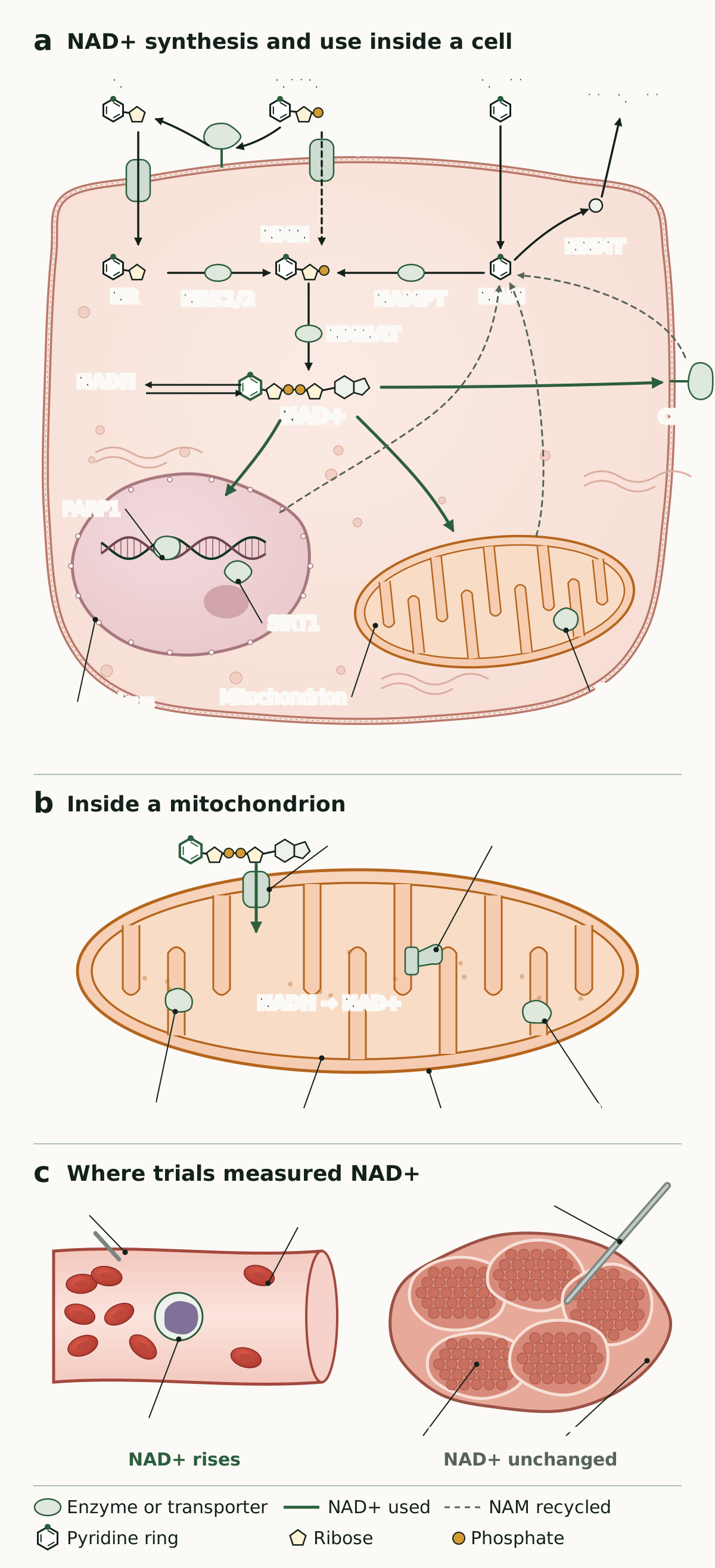
The idea that NAD+ falls with age comes mainly from animals. A review in Nature Reviews Molecular Cell Biology put the decline at 10% to 65% depending on the organ, mostly in rodent tissues.1 In aging mice, rising CD38 activity accounts for much of the fall.4 Human data are fewer and mostly cross-sectional. In skin samples from 49 people, NAD+ fell with age (correlation coefficient −0.706 in males and −0.537 in females),5 and plasma NAD+ was lower in older than in younger adults in a sample aged 20 to 87.6 In a cross-sectional study of muscle biopsies, muscle NAD+ was lower in older adults than in young ones, lowest in older adults with impaired physical function, and close to young levels in older adults who trained regularly.7 Cross-sectional data of this kind cannot show whether low NAD+ causes decline or follows it.
In old or diseased animals, raising NAD+ with precursors improved several measures of health and extended lifespan in some models, according to a 2018 review of the in vivo evidence.8 These findings are why NR and NMN are studied in people. They do not show that the same happens in humans, where trials have so far measured short-term markers.
Do NR and NMN raise NAD+ in people?
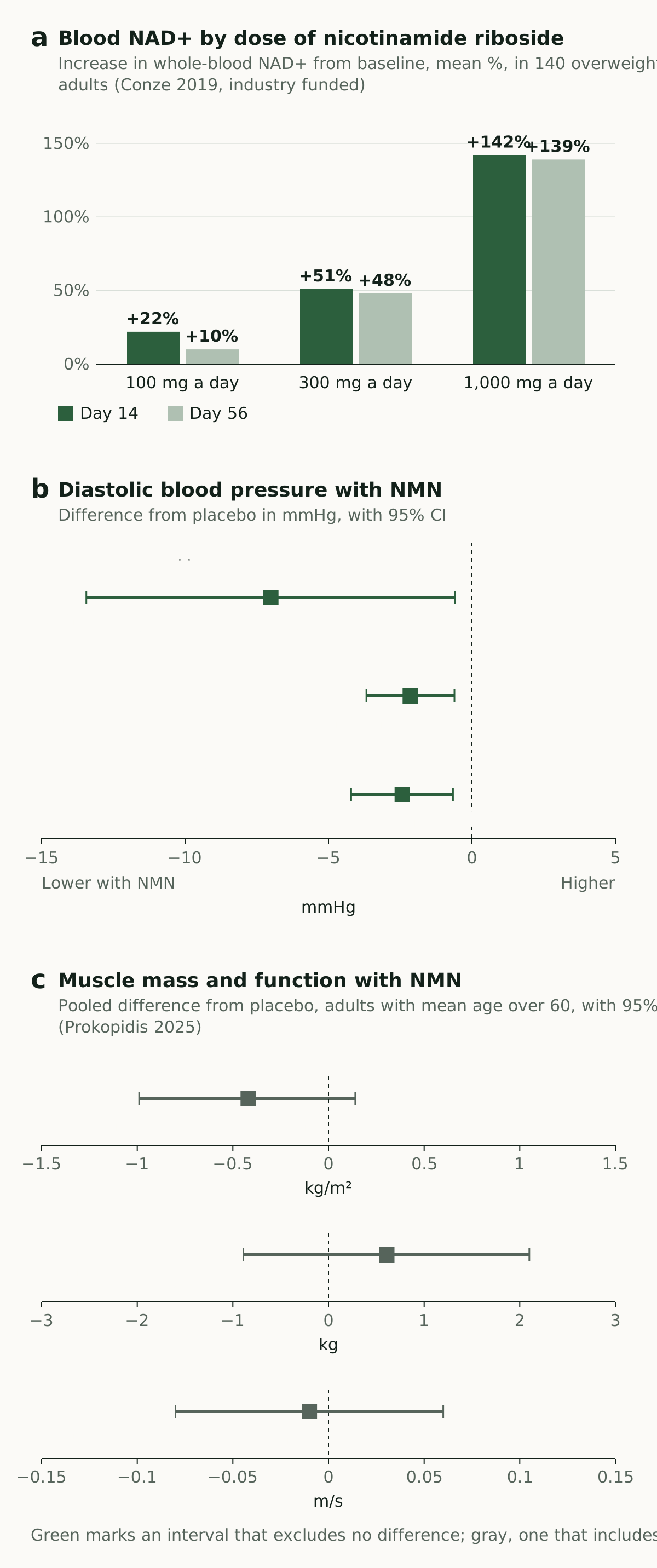
Both raise NAD+ in blood. The first human study gave single doses of 100, 300 and 1,000 mg of NR and found dose-related rises in blood NAD+ and in a related metabolite, NAAD, which proved a more sensitive marker.9 In an open-label study in 8 adults, NR escalating to 1,000 mg twice daily doubled whole-blood NAD+.10 In the largest dose-ranging trial, 140 overweight adults took 100, 300 or 1,000 mg of NR a day or placebo for 8 weeks. Whole-blood NAD+ was 22%, 51% and 142% above baseline at day 14 and stayed near those levels at day 56.12 In 30 healthy adults aged 55 to 79, 1,000 mg of NR a day for 6 weeks raised NAD+ in blood mononuclear cells by about 60%.11 NMN trials report similar dose-related rises, for example in 80 middle-aged adults taking 300, 600 or 900 mg a day for 60 days.21
Levels in blood may not reflect those in muscle, liver or brain. In obese men given 2,000 mg of NR a day for 12 weeks, muscle NAD+ did not change, and the amount of NAMPT protein in muscle fell by 14%.16 In 12 men with a median age of 75, 1,000 mg of NR a day for 21 days raised NAAD and nicotinamide breakdown products in muscle but not NAD+.17 A Dutch trial in 13 overweight or obese adults found no change in muscle NAD+ after 6 weeks of 1,000 mg a day,18 and the NMN trial in 25 women described below found no rise in muscle NAD+ while its breakdown products rose.19 One phase I trial in 30 people with newly diagnosed Parkinson’s disease measured brain NAD+ with magnetic resonance spectroscopy and found a significant but variable rise after 30 days of 1,000 mg of NR.30
Do NAD+ supplements improve insulin sensitivity or blood sugar?
Current evidence suggests they mostly do not. The most careful tests used the hyperinsulinemic-euglycemic clamp, the reference method for measuring insulin sensitivity. In a Danish trial, 40 obese, insulin-resistant men aged 40 to 70 took 1,000 mg of NR twice daily or placebo for 12 weeks. Insulin sensitivity, glucose production by the liver and body composition did not change,14 and neither did insulin secretion or gut hormones.15 Mitochondrial respiration in muscle was also unchanged.16 The Dutch crossover trial of 1,000 mg a day for 6 weeks in 13 overweight or obese adults likewise found no change in insulin sensitivity or muscle mitochondrial function, though lean body mass as a share of body weight rose by 1.34% compared with placebo.18
The one positive clamp result came from NMN. In a trial at Washington University in St. Louis, 25 postmenopausal women with overweight or obesity and prediabetes took 250 mg of NMN a day or placebo for 10 weeks. Insulin-stimulated glucose uptake by muscle rose by 25% (standard error 7%) from baseline in the NMN group and did not change with placebo.19 Insulin sensitivity in the liver and fat tissue did not change, nor did body composition, blood pressure, fasting glucose, blood lipids or muscle mitochondrial capacity. The trial was funded by the NIH, with capsules supplied by Oriental Yeast; one author receives licensing fees related to NMN and another holds an NMN patent application.19
When trials are pooled, the effect largely disappears. A meta-analysis of 8 randomized trials with 342 adults, using 250 to 2,000 mg of NMN a day for 14 days to 12 weeks, found no significant effect on fasting glucose, fasting insulin, HbA1c, insulin resistance (HOMA-IR) or blood lipids.24 A 2026 meta-analysis of 15 NMN trials reached the same conclusion for weight, glucose and lipids.25 In the trial of NMN at 2 g a day in 30 overweight adults described below, insulin sensitivity and liver fat were unchanged, although weight fell by 1.9 kg (95% confidence interval [CI] 0.5 to 3.3) and LDL cholesterol by 18.7 mg/dL (CI 5.6 to 31.9) compared with placebo over 28 days.23 No trial has shown that NR or NMN lowers HbA1c in people with diabetes, and neither should be used in place of glucose-lowering medicine.
Do NMN and NR lower blood pressure?
They may lower it slightly. In the 2018 NR trial in adults aged 55 to 79, systolic pressure was 3.9 mmHg and diastolic pressure 2.0 mmHg lower on NR than on placebo, differences that were not significant after correction for multiple comparisons. A post hoc analysis of the 13 participants with above-normal blood pressure found systolic pressure about 9 mmHg lower, a result the authors treated as a reason for further study rather than a finding.11 The 2026 trial in older adults with mild cognitive impairment found no change in blood pressure.31
For NMN, the largest single effect came from a 28-day trial of MIB-626, a crystalline form of NMN, at 1,000 mg twice daily in 30 overweight or obese adults aged 45 and older. Diastolic pressure fell by 7.0 mmHg more than with placebo (CI 0.6 to 13.4).23 The trial was small and wide in its uncertainty, and it was funded by Metro International Biotech, the company developing MIB-626. Two 2026 meta-analyses pooled this trial with others. One, of 10 trials and 349 participants, estimated diastolic pressure 2.2 mmHg lower (CI 0.6 to 3.7) and found no significant effect on systolic pressure overall, though systolic pressure was 3.9 mmHg lower in participants aged 60 and older.26 The other estimated diastolic pressure 2.4 mmHg lower (CI 0.7 to 4.2) and rated the certainty of the evidence low.25 Because the two analyses draw on largely the same trials, they are not independent confirmation. A 2 mmHg difference would matter across a population if it held up. It is far smaller than the effect of standard antihypertensive drugs, and no NAD+ precursor should replace them.
Do NMN or NR build muscle, strength or endurance?
Present evidence suggests they do not. A 2025 meta-analysis of randomized trials in adults with a mean age of 60 or older found that NMN had no effect on skeletal muscle index (−0.42 kg/m², CI −0.99 to 0.14; 3 trials), handgrip strength (0.61 kg, CI −0.89 to 2.10; 5 trials) or gait speed (−0.01 m/s, CI −0.08 to 0.06; 4 trials).27 For NR, one trial in people with mild cognitive impairment found lower scores on a test of physical performance and slower chair-stand times than with placebo, a result the meta-analysis authors noted as a possible signal of harm needing further study.27
Several individual trials reported positive results that are harder to interpret. In Japan, 42 men aged 65 and older were randomized to 250 mg of NMN a day or placebo for 12 weeks, but 22 were excluded after a distribution error, leaving 20 in the analysis. Gait speed and left-hand grip strength improved nominally, with no change in muscle mass. Three authors were employees of Mitsubishi Corporation Life Sciences.20 In 80 healthy adults aged 40 to 65 given 300, 600 or 900 mg of NMN a day for 60 days, distance walked in 6 minutes on a manual treadmill rose more than with placebo; the trial was funded by two NMN manufacturers, whose employees were among the authors.21 In 48 recreational runners taking 300 to 1,200 mg of NMN a day for 6 weeks alongside training, ventilatory thresholds improved but maximal oxygen uptake did not.22 In the 2018 NR trial in healthy older adults, aerobic capacity and motor function did not change.11
A review of 25 published human studies of NR concluded that it had “few clinically relevant effects” and that the literature tended to describe the results more favorably than the data supported. The authors reported no competing interests.28
Does nicotinamide riboside help peripheral artery disease?
One trial suggests it might help walking distance. The NICE trial randomized 90 people with peripheral artery disease to NR 1,000 mg a day, NR with resveratrol, or placebo for 6 months. Six-minute walk distance rose by 7.0 m with NR and fell by 10.6 m with placebo, a difference of 17.6 m (90% CI 1.8 to infinity). The trial used a one-sided significance threshold of 0.10, which it met. Among participants who took at least 75% of their pills, the difference was 31.0 m. Adding resveratrol did not help.29 The trial was funded by the American Heart Association, and ChromaDex supplied the NR. It is a single phase II trial with a lenient statistical threshold, and its authors called for a larger confirmatory trial.
Do NAD+ boosters help memory, Parkinson’s disease or long COVID?
The trials so far are small and mostly negative on their main outcomes. In 42 older adults with amnestic mild cognitive impairment who completed a 12-week NIH-funded trial, NR doubled blood NAD+ but did not improve cognition, total cerebral blood flow or blood pressure.31 In a crossover trial in 46 adults with subjective cognitive decline or mild cognitive impairment, NR 1,000 mg a day for 8 weeks did not change cognitive test scores. Plasma pTau217, a blood marker of Alzheimer’s disease, fell by 7% on NR and rose by 18% on placebo, an exploratory finding; one author consults for and holds equity in ChromaDex.32 In 58 people with long COVID, NR 2,000 mg a day raised NAD+ 2.6- to 3.1-fold but did not improve cognition, fatigue, sleep or mood compared with placebo, and about half of one group dropped out by 20 weeks. That trial was funded in part by Niagen Bioscience, and two authors hold equity in the company.33 The Parkinson’s phase I trial reported mild clinical improvement in those whose brain NAD+ rose, an exploratory analysis in 30 people; two authors have filed a patent on NR for Parkinson’s disease.30
Do NMN or NR slow aging or extend life?
No human trial has tested this. Lifespan effects come from animal studies,8 and the longest human trials of NR or NMN have run about 6 months.29 One NMN trial reported a lower “biological age” computed by a commercial algorithm from routine blood tests,21 but such scores have not been shown to change in step with disease or death when a treatment alters them. A rise in blood NAD+ shows that the supplement was absorbed and metabolized; it says nothing by itself about the pace of aging.
Who funds NAD+ precursor research?
Much of it is paid for, supplied by or written by companies that sell the products. The 140-person NR dose trial was funded by ChromaDex, and its authors were company employees or advisers.12 A trial of 120 adults aged 60 to 80 that found NAD+ rises of about 40% and 90% at two doses tested NR combined with pterostilbene, sold by Elysium Health, which funded the trial and employed several authors.13 The 2 g NMN trial was funded by Metro International Biotech,23 the 60-day NMN dose trial by two NMN manufacturers,21 and the long COVID trial in part by Niagen Bioscience.33 Other trials were publicly funded but used products donated by manufacturers, such as ChromaDex capsules in the 2018 NR trial and the Dutch trial and Oriental Yeast capsules in the NMN trial in women.111819 The Danish clamp trials were investigator-initiated.14 Industry funding does not make a result wrong, but positive findings from company-funded trials need independent replication.
How do niacin and nicotinamide compare?
Niacin and nicotinamide are older, cheaper forms of vitamin B3 that also raise NAD+, and both have been tested in large trials. The recommended daily intake of niacin is 16 mg for adult men and 14 mg for adult women, and the US upper limit for supplemental niacin is 35 mg a day. Nicotinic acid at 30 to 50 mg can cause flushing; nicotinamide does not.40
At high doses, nicotinic acid was used for decades to raise HDL cholesterol. Two large outcome trials tested it on top of statins. AIM-HIGH randomized 3,414 people with cardiovascular disease to extended-release niacin 1,500 to 2,000 mg a day or placebo; the trial was stopped after a mean of 3 years for lack of benefit (hazard ratio 1.02, CI 0.87 to 1.21).34 HPS2-THRIVE randomized 25,673 high-risk adults to 2 g of extended-release niacin with laropiprant or placebo for a median of 3.9 years. Major vascular events were not reduced (rate ratio 0.96, CI 0.90 to 1.03), and niacin increased serious disturbances of diabetes control, new diagnoses of diabetes, serious infections and serious bleeding.35 Doses of 1,000 to 3,000 mg a day can also damage the liver, especially with extended-release forms.40
A 2024 study linked 4PY, a breakdown product of excess niacin and nicotinamide, to higher cardiovascular risk. In a US cohort of 2,331 cardiac patients and a European cohort of 832, higher serum 4PY was associated with higher 3-year risk of major cardiovascular events (adjusted hazard ratios 1.89, CI 1.26 to 2.84, and 1.99, CI 1.26 to 3.14), and 4PY promoted vascular inflammation in mice.36 These are observational associations and do not show that NR or NMN supplements harm the heart, but NR and NMN also raise these breakdown products.1917
Nicotinamide has one well-supported use. In the ONTRAC trial, 386 people who had had at least two non-melanoma skin cancers in the previous 5 years took nicotinamide 500 mg twice daily or placebo for 12 months; new non-melanoma skin cancers were 23% lower (CI 4% to 38%) with nicotinamide, and the benefit did not persist after it was stopped.37 A later trial in 158 organ transplant recipients found no reduction (rate ratio 1.0, CI 0.8 to 1.3), although it was stopped early for slow recruitment.38
Where NAD+ is clearly deficient, the case is different. In adult-onset mitochondrial myopathy, an inherited disease, niacin raised to 750 to 1,000 mg a day raised blood NAD+ up to 8-fold, brought muscle NAD+ to the level of healthy controls and increased muscle strength in an open-label study with matched controls; one author is chief scientific adviser to ChromaDex.39 This was a rare disease, treated under medical supervision.
Are NMN and NR safe, and are they legal to sell?
In trials of up to about 2 g a day for up to 6 months, adverse events with NR and NMN were similar to placebo.122925 A 2026 meta-analysis of NMN trials found no increase in adverse events or in liver enzymes (ALT and AST).25 NR did not cause flushing or raise LDL cholesterol in the 8-week dose trial.12 Trials have been short and have mostly enrolled healthy or overweight adults, so long-term safety, and safety in pregnancy, in children and in people with cancer, has not been established.
NMN’s legal status in the United States changed twice. In October 2022, FDA said NMN was excluded from the definition of a dietary supplement because it had been authorized for investigation as a new drug. On September 29, 2025, responding to a citizen petition from two supplement industry groups, FDA reversed that position, concluding that NMN had been marketed as a dietary supplement as early as 2017, before the drug authorization, and so is not excluded. The letter notes that NMN and MIB-626 are the same article. It also states that FDA’s acknowledgment of a new dietary ingredient notification is not a finding that the ingredient is safe.41
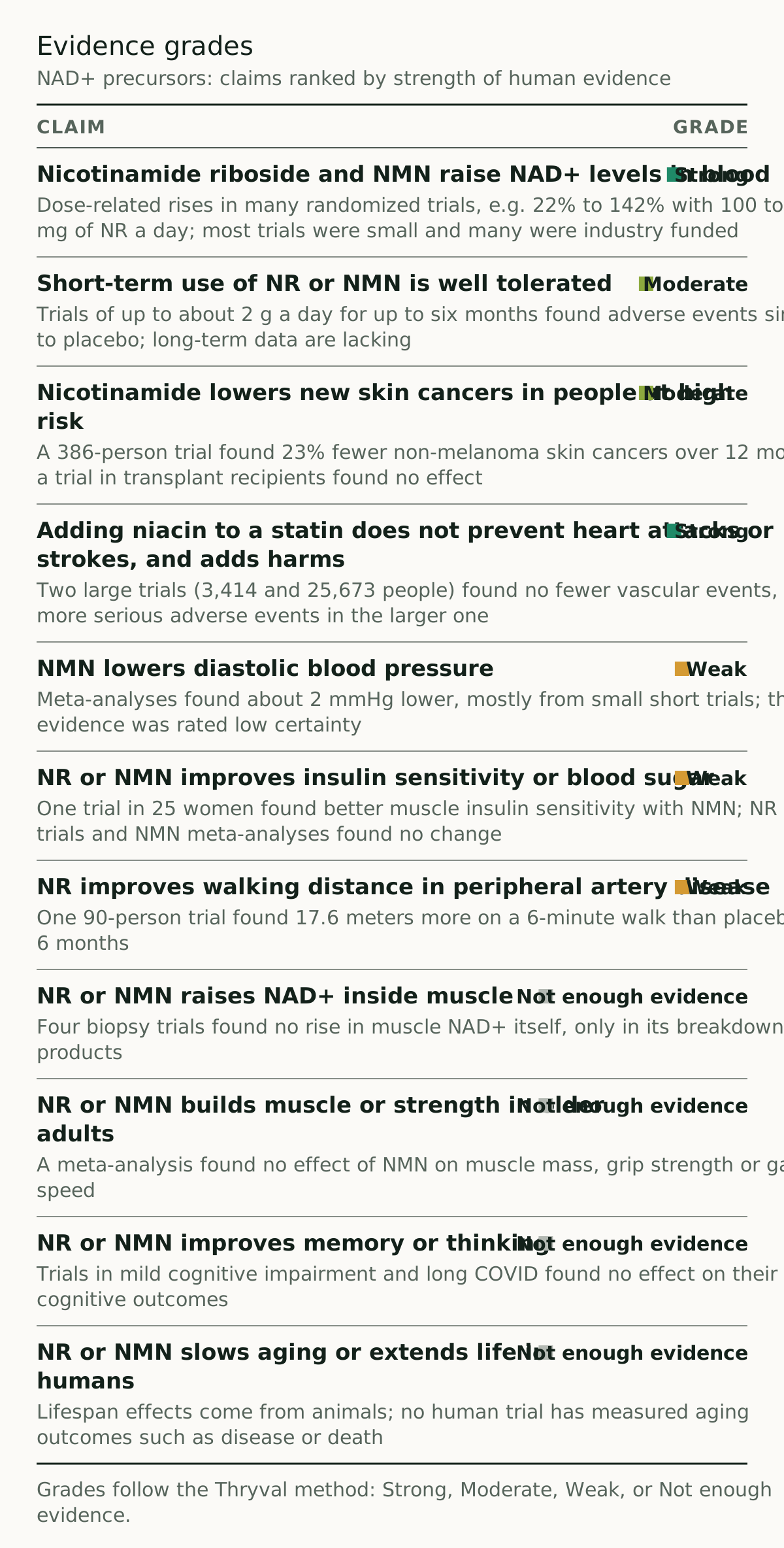
Evidence grades
The grades below are Thryval editorial judgments based on the studies cited in this article. The grading rules are set out on our Research page.
Frequently asked questions
Do NMN and nicotinamide riboside raise NAD+?
Yes, in blood. Randomized trials of both found dose-related rises, with NR at 1,000 mg a day more than doubling whole-blood NAD+ in 2 weeks.12 Trials that sampled muscle found no rise in muscle NAD+ itself.161819
Does NMN slow aging?
There is no human evidence that it does. Lifespan and healthspan effects have been reported in animals,8 while human trials have lasted weeks to months and measured markers such as blood NAD+, insulin sensitivity and walking distance.
Is NMN better than nicotinamide riboside?
No trial has compared them directly. Both raise blood NAD+, and NMN outside cells is largely converted to NR before it is taken up.1 Neither has a clearly established clinical benefit in healthy adults.
Are NAD+ supplements safe?
In trials lasting up to about 6 months, NR and NMN at up to about 2 g a day caused adverse events at rates similar to placebo.122529 Long-term safety is unknown. High-dose niacin is a different matter, with flushing, liver injury and, in a large trial, worse diabetes control and more serious infections and bleeding.4035
Is NMN legal to sell as a supplement in the US?
Yes. In September 2025, FDA concluded that NMN is not excluded from the definition of a dietary supplement, reversing its 2022 position.41 That decision concerns legal status, not safety or effectiveness.
Can niacin or nicotinamide do the same thing?
Both raise NAD+. High-dose niacin did not prevent cardiovascular events in statin users and caused harms,3435 while nicotinamide 500 mg twice daily reduced new non-melanoma skin cancers in people with a history of them.37 Doses above the 35 mg upper limit should be taken only with medical advice.40
Implications for patients and clinicians
NR and NMN reliably raise NAD+ in blood, and short-term use appears well tolerated. Beyond that, the human evidence consists of small, short trials, many funded by manufacturers, that mostly found no effect on insulin sensitivity, muscle, cognition or blood lipids.242728 The most consistent signal is a small fall in diastolic blood pressure with NMN, rated low certainty,25 and a single trial suggests NR may modestly lengthen walking distance in peripheral artery disease.29 The case that these products slow aging rests on animal studies.8 People with high blood pressure, diabetes or vascular disease should not use them in place of prescribed treatment, and anyone considering high-dose niacin or nicotinamide should discuss it with a clinician.
References
-
Covarrubias AJ, Perrone R, Grozio A, Verdin E. NAD+ metabolism and its roles in cellular processes during ageing. Nat Rev Mol Cell Biol. 2021;22(2):119–141. Review; two authors report ties to companies developing NAD+-related products. PMC7963035 · PubMed 33353981 ↩↩↩↩↩↩
-
Bieganowski P, Brenner C. Discoveries of nicotinamide riboside as a nutrient and conserved NRK genes establish a Preiss-Handler independent route to NAD+ in fungi and humans. Cell. 2004;117(4):495–502. Laboratory study. PubMed 15137942 ↩
-
Luongo TS, Eller JM, Lu MJ, et al. SLC25A51 is a mammalian mitochondrial NAD+ transporter. Nature. 2020;588(7836):174–179. Laboratory study. PMC7718333 · PubMed 32906142 ↩
-
Camacho-Pereira J, Tarragó MG, Chini CCS, et al. CD38 dictates age-related NAD decline and mitochondrial dysfunction through an SIRT3-dependent mechanism. Cell Metab. 2016;23(6):1127–1139. Study in mice. PMC4911708 · PubMed 27304511 ↩
-
Massudi H, Grant R, Braidy N, Guest J, Farnsworth B, Guillemin GJ. Age-associated changes in oxidative stress and NAD+ metabolism in human tissue. PLoS One. 2012;7(7):e42357. Cross-sectional study of human skin samples, n=49. PMC3407129 · PubMed 22848760 ↩
-
Clement J, Wong M, Poljak A, Sachdev P, Braidy N. The plasma NAD+ metabolome is dysregulated in “normal” aging. Rejuvenation Res. 2019;22(2):121–130. Cross-sectional study, adults aged 20 to 87. PMC6482912 · PubMed 30124109 ↩
-
Janssens GE, Grevendonk L, Perez RZ, et al. Healthy aging and muscle function are positively associated with NAD+ abundance in humans. Nat Aging. 2022;2(3):254–263. Cross-sectional study of muscle biopsies. PubMed 37118369 ↩
-
Rajman L, Chwalek K, Sinclair DA. Therapeutic potential of NAD-boosting molecules: the in vivo evidence. Cell Metab. 2018;27(3):529–547. Review of animal studies. PMC6342515 · PubMed 29514064 ↩↩↩↩↩
-
Trammell SA, Schmidt MS, Weidemann BJ, et al. Nicotinamide riboside is uniquely and orally bioavailable in mice and humans. Nat Commun. 2016;7:12948. Single-dose human study and mouse studies; supported in part by ChromaDex. PMC5062546 · PubMed 27721479 ↩
-
Airhart SE, Shireman LM, Risler LJ, et al. An open-label, non-randomized study of the pharmacokinetics of the nutritional supplement nicotinamide riboside (NR) and its effects on blood NAD+ levels in healthy volunteers. PLoS One. 2017;12(12):e0186459. Open-label study, n=8; NIH funded. PMC5718430 · PubMed 29211728 ↩
-
Martens CR, Denman BA, Mazzo MR, et al. Chronic nicotinamide riboside supplementation is well-tolerated and elevates NAD+ in healthy middle-aged and older adults. Nat Commun. 2018;9(1):1286. Randomized crossover trial, n=30 (24 completed), 6 weeks; NIH funded, with NR and partial support from ChromaDex. PMC5876407 · PubMed 29599478 ↩↩↩↩↩
-
Conze D, Brenner C, Kruger CL. Safety and metabolism of long-term administration of NIAGEN (nicotinamide riboside chloride) in a randomized, double-blind, placebo-controlled clinical trial of healthy overweight adults. Sci Rep. 2019;9(1):9772. Randomized controlled trial, n=140, 8 weeks; funded by ChromaDex, authors employed by or advising the company. PMC6611812 · PubMed 31278280 ↩↩↩↩↩↩↩↩↩
-
Dellinger RW, Santos SR, Morris M, et al. Repeat dose NRPT (nicotinamide riboside and pterostilbene) increases NAD+ levels in humans safely and sustainably: a randomized, double-blind, placebo-controlled study. NPJ Aging Mech Dis. 2017;3:17. Randomized controlled trial, n=120, 8 weeks; funded by Elysium Health, several authors employees. PMC5701244 · PubMed 29184669 ↩
-
Dollerup OL, Christensen B, Svart M, et al. A randomized placebo-controlled clinical trial of nicotinamide riboside in obese men: safety, insulin-sensitivity, and lipid-mobilizing effects. Am J Clin Nutr. 2018;108(2):343–353. Randomized controlled trial, n=40, 12 weeks; investigator-initiated. PubMed 29992272 ↩↩↩
-
Dollerup OL, Trammell SAJ, Hartmann B, et al. Effects of nicotinamide riboside on endocrine pancreatic function and incretin hormones in nondiabetic men with obesity. J Clin Endocrinol Metab. 2019;104(11):5703–5714. Secondary analysis of the same trial. PubMed 31390002 ↩
-
Dollerup OL, Chubanava S, Agerholm M, et al. Nicotinamide riboside does not alter mitochondrial respiration, content or morphology in skeletal muscle from obese and insulin-resistant men. J Physiol. 2020;598(4):731–754. Muscle biopsy analysis of the same trial. PubMed 31710095 ↩↩↩↩↩
-
Elhassan YS, Kluckova K, Fletcher RS, et al. Nicotinamide riboside augments the aged human skeletal muscle NAD+ metabolome and induces transcriptomic and anti-inflammatory signatures. Cell Rep. 2019;28(7):1717–1728.e6. Randomized crossover trial, n=12, 21 days; NR supplied by ChromaDex, one author holds ChromaDex patents and stock. PMC6702140 · PubMed 31412242 ↩↩↩↩
-
Remie CME, Roumans KHM, Moonen MPB, et al. Nicotinamide riboside supplementation alters body composition and skeletal muscle acetylcarnitine concentrations in healthy obese humans. Am J Clin Nutr. 2020;112(2):413–426. Randomized crossover trial, n=13, 6 weeks; capsules provided by ChromaDex. PMC7398770 · PubMed 32320006 ↩↩↩↩↩↩↩
-
Yoshino M, Yoshino J, Kayser BD, et al. Nicotinamide mononucleotide increases muscle insulin sensitivity in prediabetic women. Science. 2021;372(6547):1224–1229. Randomized controlled trial, n=25, 10 weeks; NIH funded, NMN supplied by Oriental Yeast, authors report NMN-related licensing income and a patent application. PMC8550608 · PubMed 33888596 ↩↩↩↩↩↩↩↩↩
-
Igarashi M, Nakagawa-Nagahama Y, Miura M, et al. Chronic nicotinamide mononucleotide supplementation elevates blood nicotinamide adenine dinucleotide levels and alters muscle function in healthy older men. NPJ Aging. 2022;8(1):5. Randomized controlled trial, n=42 (20 analyzed after a distribution error), 12 weeks; three authors employed by Mitsubishi Corporation Life Sciences. PMC9158788 · PubMed 35927255 ↩↩
-
Yi L, Maier AB, Tao R, et al. The efficacy and safety of β-nicotinamide mononucleotide (NMN) supplementation in healthy middle-aged adults: a randomized, multicenter, double-blind, placebo-controlled, parallel-group, dose-dependent clinical trial. GeroScience. 2023;45(1):29–43. Randomized controlled trial, n=80, 60 days; funded by Aba Chemicals and Abinopharm, with employee authors. PMC9735188 · PubMed 36482258 ↩↩↩↩↩
-
Liao B, Zhao Y, Wang D, Zhang X, Hao X, Hu M. Nicotinamide mononucleotide supplementation enhances aerobic capacity in amateur runners: a randomized, double-blind study. J Int Soc Sports Nutr. 2021;18(1):54. Randomized controlled trial, n=48, 6 weeks. PMC8265078 · PubMed 34238308 ↩
-
Pencina KM, Valderrabano R, Wipper B, et al. Nicotinamide adenine dinucleotide augmentation in overweight or obese middle-aged and older adults: a physiologic study. J Clin Endocrinol Metab. 2023;108(8):1968–1980. Randomized controlled trial of MIB-626 (NMN), n=30, 28 days; funded by Metro International Biotech. PMC11491622 · PubMed 36740954 ↩↩↩
-
Chen F, Zhou D, Kong AP, et al. Effects of nicotinamide mononucleotide on glucose and lipid metabolism in adults: a systematic review and meta-analysis of randomised controlled trials. Curr Diab Rep. 2024;25(1):4. Meta-analysis: 8 randomized trials, 342 participants. PMC11557618 · PubMed 39531138 ↩↩↩↩
-
Yang W, Huang J, Tang Z, Chen C, Sun Y. Safety and metabolism-related outcomes of oral nicotinamide mononucleotide supplementation in adults: a systematic review and meta-analysis. Nutrients. 2026;18(14):2251. Systematic review and meta-analysis: 15 randomized trials. PMC13414721 · PubMed 42514320 ↩↩↩↩↩↩↩↩↩
-
Zhang M, Chen Y, Jiang N, et al. Effects of nicotinamide mononucleotide supplementation on blood pressure: a systematic review and meta-analysis of randomized controlled trials. Nutrients. 2026;18(6):890. Meta-analysis: 10 randomized trials, 349 participants. PMC13028934 · PubMed 41901064 ↩↩↩
-
Prokopidis K, Moriarty F, Bahat G, McLean J, Church DD, Patel HP. The effect of nicotinamide mononucleotide and riboside on skeletal muscle mass and function: a systematic review and meta-analysis. J Cachexia Sarcopenia Muscle. 2025;16(3):e13799. Systematic review and meta-analysis of randomized trials in adults with a mean age of 60 or older. PMC12022230 · PubMed 40275690 ↩↩↩↩↩
-
Damgaard MV, Treebak JT. What is really known about the effects of nicotinamide riboside supplementation in humans. Sci Adv. 2023;9(29):eadi4862. Review of 25 human studies; no competing interests declared. PMC10361580 · PubMed 37478182 ↩↩
-
McDermott MM, Martens CR, Domanchuk KJ, et al. Nicotinamide riboside for peripheral artery disease: the NICE randomized clinical trial. Nat Commun. 2024;15(1):5046. Randomized controlled trial, n=90, 6 months; funded by the American Heart Association, NR supplied by ChromaDex. PMC11176364 · PubMed 38871717 ↩↩↩↩↩↩↩
-
Brakedal B, Dölle C, Riemer F, et al. The NADPARK study: a randomized phase I trial of nicotinamide riboside supplementation in Parkinson’s disease. Cell Metab. 2022;34(3):396–407.e6. Randomized phase I trial, n=30, 30 days; two authors filed a patent application on NR for Parkinson’s disease. PubMed 35235774 ↩↩
-
Martens CR, Decker KP, DeConne TM, et al. A phase-II randomized controlled pilot study of nicotinamide riboside supplementation in older adults with amnestic mild cognitive impairment. Alzheimers Dement. 2026;22(7):e71605. Randomized controlled pilot trial, 42 completed, 12 weeks. PMC13386481 · PubMed 42478598 ↩↩↩
-
Wu CY, Kupferschmid AC, Chen L, et al. Cognitive and Alzheimer’s disease biomarker effects of oral nicotinamide riboside (NR) supplementation in older adults with subjective cognitive decline and mild cognitive impairment. Alzheimers Dement (N Y). 2025;11(1):e70023. Randomized crossover trial, n=46, 8 weeks of NR; one author consults for and holds equity in ChromaDex. PMC11733434 · PubMed 39817194 ↩↩
-
Wu CY, Reynolds WC, Abril I, et al. Effects of nicotinamide riboside on NAD+ levels, cognition, and symptom recovery in long-COVID: a randomized controlled trial. EClinicalMedicine. 2025;89:103633. Randomized controlled trial, n=58; funded in part by Niagen Bioscience, two authors hold equity. PMC12675013 · PubMed 41357333 ↩↩↩
-
AIM-HIGH Investigators; Boden WE, Probstfield JL, Anderson T, et al. Niacin in patients with low HDL cholesterol levels receiving intensive statin therapy. N Engl J Med. 2011;365(24):2255–2267. Randomized controlled trial, n=3,414; funded by NHLBI and Abbott Laboratories. PubMed 22085343 ↩↩↩
-
HPS2-THRIVE Collaborative Group; Landray MJ, Haynes R, Hopewell JC, et al. Effects of extended-release niacin with laropiprant in high-risk patients. N Engl J Med. 2014;371(3):203–212. Randomized controlled trial, n=25,673; funded by Merck and others. PubMed 25014686 ↩↩↩↩
-
Ferrell M, Wang Z, Anderson JT, et al. A terminal metabolite of niacin promotes vascular inflammation and contributes to cardiovascular disease risk. Nat Med. 2024;30(2):424–434. Observational cohorts and mouse studies; several authors hold related patents. PMC11841810 · PubMed 38374343 ↩
-
Chen AC, Martin AJ, Choy B, et al. A phase 3 randomized trial of nicotinamide for skin-cancer chemoprevention. N Engl J Med. 2015;373(17):1618–1626. Randomized controlled trial, n=386, 12 months; funded by the National Health and Medical Research Council of Australia. PubMed 26488693 ↩↩↩
-
Allen NC, Martin AJ, Snaidr VA, et al. Nicotinamide for skin-cancer chemoprevention in transplant recipients. N Engl J Med. 2023;388(9):804–812. Randomized controlled trial, n=158, stopped early. PubMed 36856616 ↩↩
-
Pirinen E, Auranen M, Khan NA, et al. Niacin cures systemic NAD+ deficiency and improves muscle performance in adult-onset mitochondrial myopathy. Cell Metab. 2020;31(6):1078–1090.e5. Open-label study with matched controls; one author is chief scientific adviser to and holds stock in ChromaDex. PubMed 32386566 ↩
-
National Institutes of Health, Office of Dietary Supplements. Niacin: fact sheet for health professionals. Updated November 18, 2022. ods.od.nih.gov ↩↩↩↩
-
US Food and Drug Administration. Response to citizen petitions on the dietary supplement status of β-nicotinamide mononucleotide (NMN), docket FDA-2023-P-0872. September 29, 2025. regulations.gov · PDF ↩↩