

Do omega-3 supplements help depression or anxiety? What the trials show
Fish oil is widely taken for mood. In trials of people with major depression, omega-3 supplements produced small improvements of uncertain size, mostly with EPA-rich products. In older adults without depression, a five-year trial found no protection, and higher doses raise the risk of atrial fibrillation.
The grade WeakOmega-3 supplements for depression
In brief. In people with major depression, a 2021 Cochrane review of 33 placebo-controlled trials found that omega-3 supplements lowered depression scores slightly, by about 2.5 points on the 17-item Hamilton Depression Rating Scale, which is below the 3 points the reviewers took as the smallest meaningful change; the certainty of the evidence was very low.1 Several meta-analyses report that products with mostly EPA work better than those with mostly DHA, but a head-to-head trial of 196 adults found neither better than placebo.234 Evidence for omega-3 alone as a treatment, or as an add-on to antidepressants, rests on small trials.15 Pooled trials suggest a small effect on anxiety, which shrank after a retracted study was removed.67 In a trial of 18,353 older adults without depression, five years of fish oil did not prevent depression.8 Omega-3 supplements raise the risk of atrial fibrillation, especially above 1 g a day.9 Anyone who thinks they may have depression should talk to a health care provider.10
Omega-3 fatty acids are a family of polyunsaturated fats. The two found in fish and fish oil are eicosapentaenoic acid (EPA) and docosahexaenoic acid (DHA); plants supply a shorter one, alpha-linolenic acid.11 Low omega-3 intake and inflammation have both been proposed as contributors to depression, and supplements are widely used for mood.1213 This article reviews the randomized trials on depression and anxiety, the questions of EPA versus DHA and dose, the quality and funding of the research, and the safety findings.
Do omega-3 supplements help major depression?
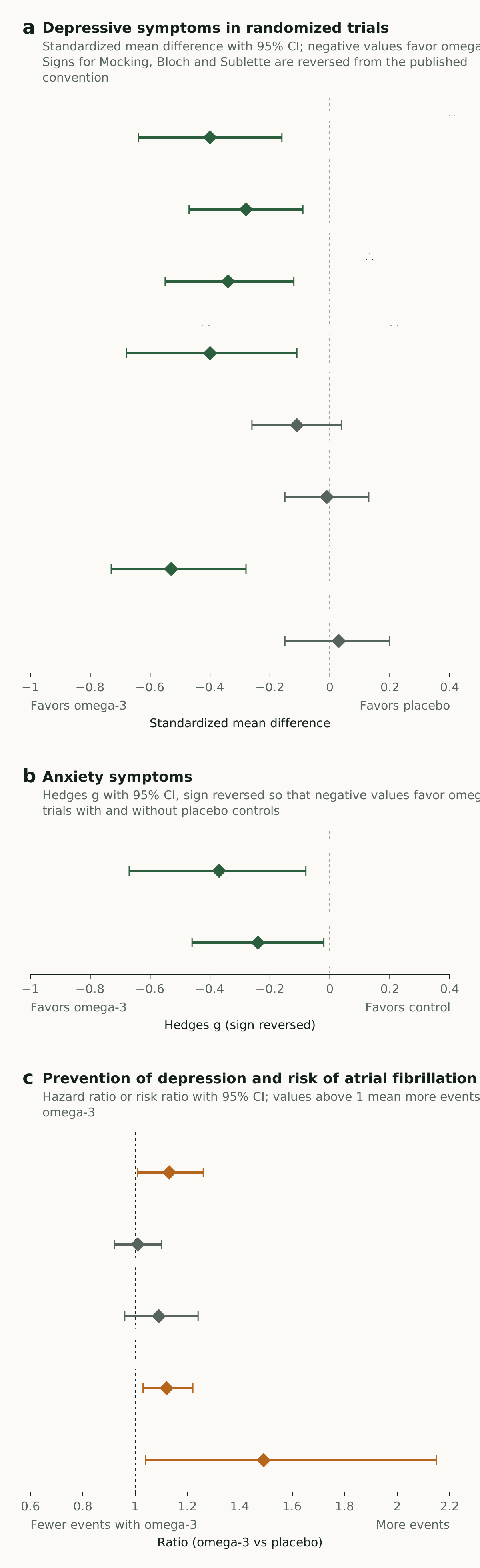
The most recent Cochrane review, by Appleton and colleagues in 2021, included 35 randomized trials in adults with major depressive disorder.1 In 33 trials with 1,848 participants, omega-3 lowered depressive symptoms more than placebo (standardized mean difference [SMD] −0.40, 95% CI −0.64 to −0.16). The authors translated this into about 2.5 points on the 17-item Hamilton Depression Rating Scale, against a minimal clinically important change of 3.0 points, and judged that the effect was unlikely to be clinically meaningful. They rated the certainty of the evidence as very low, and sensitivity analyses, the funnel plot and a comparison with large well-conducted trials suggested that the estimate may be biased toward a positive result.1 Remission and response rates did not differ between omega-3 and placebo.1
Other meta-analyses reach broadly similar pooled estimates. Liao and colleagues, in 2019, pooled 26 double-blind trials with 2,160 participants and found an SMD of −0.28 (−0.47 to −0.09).3 Wolters and colleagues, in 2021, found −0.34 (−0.55 to −0.12) in 20 trials with 5,836 participants, with very high heterogeneity (I² 86%), and said publication bias could not be ruled out.14 Mocking and colleagues restricted their 2016 analysis to 13 trials with 1,233 adults whose depression had been confirmed by a standardized clinical interview, and found a benefit of similar size after accounting for possible publication bias.15
An earlier analysis showed how sensitive these numbers are to missing trials. Bloch and Hannestad, in 2012, pooled 13 placebo-controlled trials with 731 participants and found no significant benefit (SMD 0.11, 95% CI −0.04 to 0.26).16 After they adjusted for publication bias with the trim-and-fill method, the effect fell to almost zero (SMD 0.01). Secondary analyses suggested a trend toward larger effects in trials of lower methodological quality, shorter trials, trials that analyzed only completers, and trials of people with more severe depression at baseline.16
Does EPA work better than DHA?
The most consistent pattern in the meta-analyses is that products containing mostly EPA outperform those containing mostly DHA. Sublette and colleagues, in 2011, analyzed 15 trials with 916 participants and found that supplements in which EPA made up at least 60% of the EPA plus DHA improved depression (effect size 0.53, 95% CI 0.28 to 0.73), while those with less EPA had no effect (−0.03).2 Hallahan and colleagues, analyzing 35 trials in 2016, found benefit in people with diagnosed depression from formulas with more than 50% EPA (Hedges g 0.61) but not from DHA-predominant formulas.17 Liao and colleagues found the same split, with benefit from pure EPA and from formulas with at least 60% EPA, and none from DHA-pure or DHA-major products; only two trials tested DHA-pure products.3 In Mocking’s meta-regression, a higher EPA dose was associated with a larger effect.15
These comparisons are between trials, which differ in many ways besides the product. The only direct comparison found for this article, by Mischoulon and colleagues, randomized 196 adults with major depression to an EPA-enriched or DHA-enriched preparation, each at 1,000 mg a day, or placebo for 8 weeks.4 All three groups improved, and neither omega-3 product separated from placebo; response rates were 40% to 50% in every group.4
How much EPA was used?
The trials do not agree on a dose. Liao and colleagues found benefit for EPA-rich formulas at doses of 1 g a day or less, and no significant effect when they set the boundary at 1.5 or 2 g a day.3 Wolters and colleagues also found differences in favor of the lower EPA dose.14 Sublette’s exploratory analysis placed the effective range at 200 to 2,200 mg a day of EPA in excess of DHA.2 In a 12-week trial of 61 adults with major depression, overweight and raised C-reactive protein, the response rate was higher than with placebo only in the group given 4 g a day of EPA.18 The International Society for Nutritional Psychiatry Research (ISNPR) guideline recommends 1 to 2 g of net EPA a day, from pure EPA or from a product with an EPA-to-DHA ratio above 2.19
Do omega-3s help when added to an antidepressant?
Most trials tested omega-3 alongside existing treatment rather than in its place. In Mocking’s meta-regression, trials with a higher percentage of participants taking antidepressants showed larger effects.15 Grosso and colleagues, in 2014, found that omega-3 given as an adjuvant was effective, while omega-3 given as monotherapy was not.21 In an 8-week trial in Iran, Jazayeri and colleagues randomized 60 outpatients with major depression to EPA 1,000 mg a day, fluoxetine 20 mg a day, or both; in the 48 patients analyzed, EPA and fluoxetine worked equally well, the combination was better than either alone, and response rates were 56%, 50% and 81%, respectively.5 In a 2020 Delphi survey of 14 experts, the statement that omega-3s are “one of the potential adjunctive treatments” for adult depression received the highest agreement; the authors noted that the panelists had a specialized interest in omega-3s.20
Can omega-3 replace an antidepressant?
The trials do not show that it can. In the Cochrane review, only one study, with 40 participants, compared omega-3 with an antidepressant, and its confidence intervals were too wide to rule out important benefit or harm in either direction.1 The 196-person monotherapy trial by Mischoulon and colleagues found no benefit over placebo.4 In the 2020 Delphi survey, the statement that omega-3s are a potential monotherapy for adult depression scored lowest of all.20 The ISNPR guideline advises that clinicians conduct a clinical interview to confirm the diagnosis, check physical conditions and measure symptoms before recommending omega-3s for depression.19 An American Psychiatric Association task force warned that the greatest risk of using a complementary treatment for depression is the possible delay of established treatments.22 People who take an antidepressant should not stop or reduce it without talking to their prescriber.
Do omega-3s reduce anxiety?
Su and colleagues, in 2018, pooled 19 clinical trials with 2,240 participants in 11 countries, including trials with and without placebo controls.6 Omega-3 was associated with reduced anxiety symptoms (Hedges g 0.374, 95% CI 0.081 to 0.666), with very high heterogeneity (I² 89.9%). The effect was larger in people with a specific clinical diagnosis than in those without one, and significant only in trials using at least 2,000 mg a day.6 One of the included trials was retracted in 2023. In a reanalysis without it, the authors reported a smaller effect (Hedges g 0.239, 95% CI 0.023 to 0.455).7 The authors deliberately used broad inclusion criteria, so the trials varied in diagnosis, dose, preparation and type of control, and they called for well-designed studies in populations in whom anxiety is the main symptom.6
Do omega-3 supplements prevent depression?
The largest test is VITAL-DEP, a study within the VITAL trial. Okereke and colleagues followed 18,353 US adults aged 50 or older without clinically relevant depressive symptoms at the start; 16,657 had never had depression and 1,696 had had it in the past.8 Participants were randomized to 1 g a day of fish oil (465 mg EPA and 375 mg DHA) or placebo, with a median treatment time of 5.3 years. Depression or clinically relevant symptoms occurred in 651 people given omega-3 and 583 given placebo (13.9 versus 12.3 per 1,000 person-years; hazard ratio 1.13, 95% CI 1.01 to 1.26), and mood scores did not differ.8 The authors concluded that the findings do not support omega-3 supplements to prevent depression in adults.8
A meta-analysis by Deane and colleagues reached the same conclusion from 31 trials of long-chain omega-3 lasting at least six months, with 41,470 participants.23 Increasing omega-3 probably had little or no effect on the risk of depressive symptoms (risk ratio 1.01, 95% CI 0.92 to 1.10) or on anxiety symptoms, with moderate-quality evidence for both.23 Hallahan and colleagues likewise found that EPA did not prevent depressive symptoms in people without a diagnosis of depression.17
How might omega-3 fatty acids affect the brain?
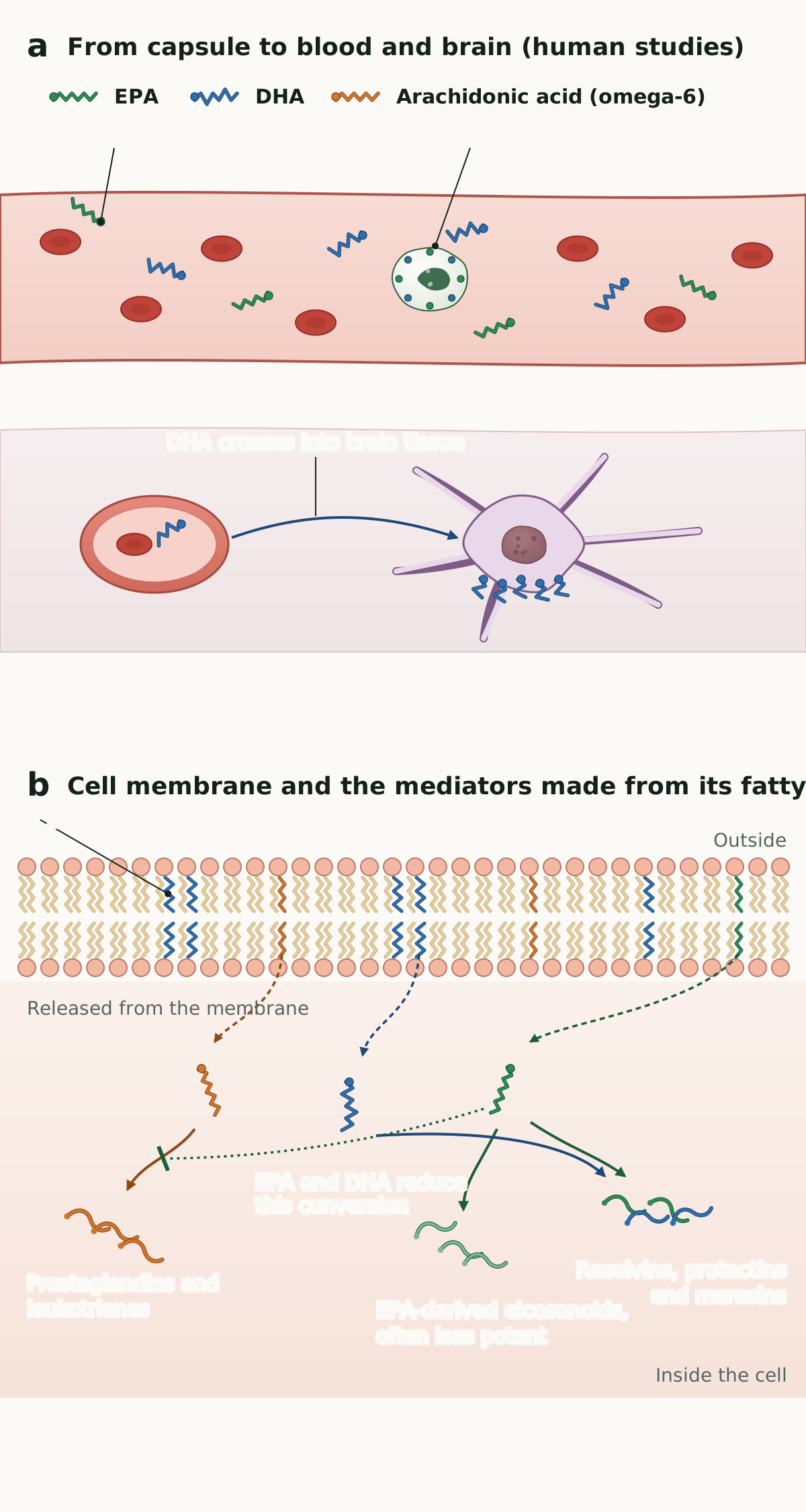
DHA and the omega-6 fatty acid arachidonic acid are concentrated in the phospholipids of brain cell membranes. When they are released from the membrane, they take part in cell signaling directly or are converted into a range of bioactive mediators.12 Most of the detail about those mediators comes from cell and animal studies. EPA and DHA partly inhibit the production of prostaglandins and leukotrienes from arachidonic acid, EPA gives rise to eicosanoids that are often less potent, and both give rise to inflammation-resolving mediators called resolvins, protectins and maresins.13
Human studies show that supplements change tissue levels, slowly. In a 12-month randomized trial of 204 adults, EPA and DHA rose within days in plasma phospholipids, over months in white blood cells, and had not peaked in fat tissue after a year.24 Using positron emission tomography in 14 healthy adults, Umhau and colleagues estimated that the whole brain takes up about 3.8 mg of DHA a day from the blood, which implies a half-life for brain DHA of about 2.5 years.25 In the 61-person trial of EPA in depression with raised C-reactive protein, people who responded to 4 g a day had larger rises in 18-HEPE, an EPA-derived pro-resolving mediator, and the rise tracked falls in C-reactive protein and in depression scores.18 That study was small, and it shows an association rather than a cause.
How good is the evidence, and who paid for it?
The depression trials are mostly small and short, use different products and doses, and enroll different populations, which helps explain the very high heterogeneity in the pooled analyses.114 At least three analyses found signs of publication bias, and one found that adjusting for it removed nearly all of the benefit.11416 Later trials tended to show smaller effects: in Mocking’s meta-regression, an earlier publication year was associated with a better result.15 Benefit also tended to look larger in trials of lower methodological quality.16
Several of the trials reviewed here received products from supplement makers, though the main funding came from public sources. VITAL-DEP was funded by the US National Institutes of Health, and the fish oil and matching placebo were donated by Pronova BioPharma.8 The Mischoulon trial was funded by the NIH, with capsules and placebos provided by Nordic Naturals.4 The Lamon-Fava trial was also NIH-funded, with high-EPA capsules from Nordic Naturals, and one author had received research support from that company.18 In each of these papers the authors stated that the companies had no role in the design or analysis. The ISNPR guideline and the Delphi survey were written by researchers who specialize in omega-3s, as the Delphi authors acknowledged.20
Is it safe to take omega-3 supplements?
Atrial fibrillation
Gencer and colleagues, in 2021, pooled 7 cardiovascular outcome trials with 81,210 participants followed for an average of 4.9 years.9 Omega-3 supplements were associated with a 25% higher risk of atrial fibrillation (hazard ratio 1.25, 95% CI 1.07 to 1.46). The risk was higher in trials testing more than 1 g a day (1.49, 1.04 to 2.15) than in trials testing 1 g a day or less (1.12, 1.03 to 1.22), and it rose by about 11% for each additional gram a day.9 In REDUCE-IT, 4 g a day of the prescription EPA product icosapent ethyl lowered cardiovascular events in people with high triglycerides, but more participants were hospitalized for atrial fibrillation or flutter (3.1% versus 2.1%); that trial was funded by the manufacturer, Amarin.26 In VITAL itself, at 840 mg a day, the increase in atrial fibrillation was not statistically significant (hazard ratio 1.09, 95% CI 0.96 to 1.24).27 These trials enrolled people with or at risk of heart disease, and the depression trials were too short to assess this risk.
Bleeding and anticoagulants
According to the NIH Office of Dietary Supplements, fish oil can have antiplatelet effects at high doses and might raise the international normalized ratio (INR) in people taking warfarin, although most research suggests that 3 to 6 g a day does not significantly change anticoagulant status.11 It advises people who take medicines regularly to discuss possible interactions with their health care providers.11 In REDUCE-IT, serious bleeding occurred in 2.7% of participants on icosapent ethyl and 2.1% on placebo (P=0.06).26 In VITAL-DEP, gastrointestinal bleeding (2.6% versus 2.7%) and easy bruising (24.8% versus 25.1%) were as common with fish oil as with placebo.8
Other side effects
Common side effects are usually mild, and include an unpleasant taste, bad breath, heartburn, nausea, digestive discomfort, diarrhea and headache.11 In the Cochrane review, adverse events were not clearly more frequent with omega-3 than with placebo (odds ratio 1.27, 95% CI 0.99 to 1.64), but the estimate was imprecise.1 The ISNPR guideline advises monitoring for gastrointestinal and skin effects and checking a comprehensive metabolic panel.19 The European Food Safety Authority and the FDA have judged combined EPA and DHA intakes of up to about 5 g a day from supplements to be safe.11
What remains uncertain?
It is not known how large any real benefit is in major depression once small and unpublished trials are taken into account, or which people, if any, benefit most.116 The EPA-versus-DHA finding comes mainly from comparisons between trials, and the dose findings conflict.3184 Well-designed trials in people whose main problem is anxiety are still needed.6 The ISNPR guideline lists tailoring treatment to people with a low Omega-3 Index or high levels of inflammatory markers as an area that deserves future research.19
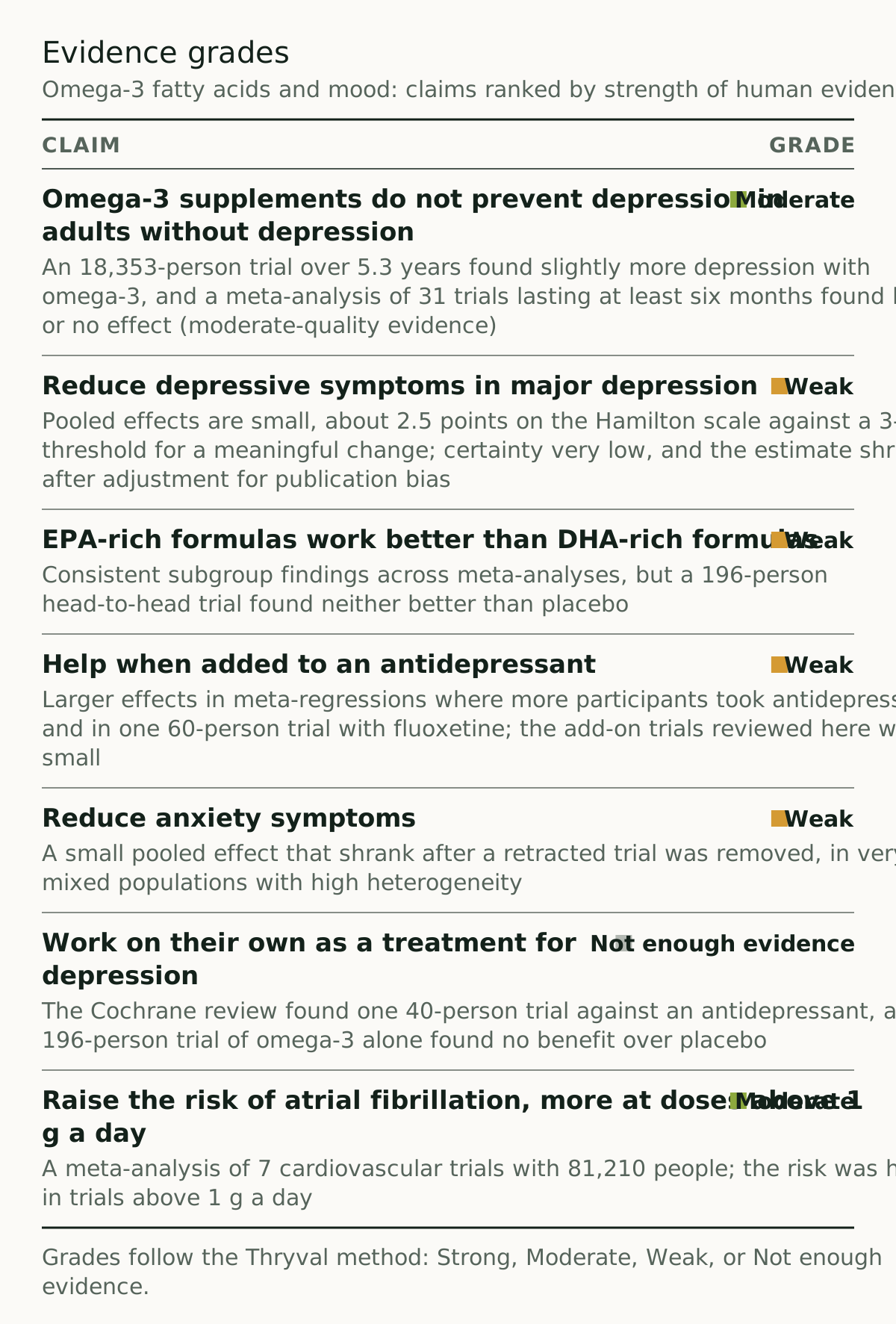
Evidence grades
The grades below are Thryval editorial judgments based on the studies cited in this article. The grading rules are set out on our Research page.
Frequently asked questions
Does fish oil help with depression?
In people with major depression, trials show a small average improvement that may be too small to matter, and the evidence is of very low certainty.1 Most of the benefit was seen with EPA-rich products, often taken alongside an antidepressant.215 If you think you may have depression, talk to a health care provider such as a primary care doctor, psychologist or psychiatrist.10
Is EPA or DHA better for mood?
Meta-analyses find benefit with products in which EPA makes up more than half or at least 60% of the omega-3 content, and not with DHA-rich products.217 The one trial that compared them directly found neither better than placebo.4
How much omega-3 was used for depression?
Trials used a wide range of doses. One meta-analysis found benefit at 1 g a day of EPA or less, and the ISNPR guideline recommends 1 to 2 g of EPA a day.319 Higher doses carry a higher risk of atrial fibrillation.9
Can omega-3 replace antidepressants?
No trial has shown that it can. Only one small trial in the Cochrane review compared omega-3 with an antidepressant, with very uncertain results.1 People taking an antidepressant should not stop or change it without talking to their prescriber.
Does fish oil help anxiety?
A meta-analysis found a small reduction in anxiety symptoms, smaller after a retracted trial was removed, and stronger in people with a specific clinical diagnosis.67 In prevention trials, omega-3 probably had little or no effect on anxiety symptoms.23
Does taking omega-3 prevent depression?
In a five-year trial of 18,353 adults aged 50 or older, 1 g a day of fish oil did not prevent depression, and slightly more people taking it developed depression.8 A meta-analysis of prevention trials found little or no effect.23
Implications for patients and clinicians
For people with major depression, the trials suggest at most a small benefit from omega-3 supplements, most consistently from EPA-rich products used alongside standard treatment, and the true effect may be smaller still.11615 The evidence does not support omega-3 as a replacement for antidepressants, psychotherapy or other care.120 Depression should be assessed by a health care provider, and anyone with thoughts of suicide can call or text the 988 Suicide and Crisis Lifeline in the US.10 For adults without depression, fish oil does not appear to prevent it.823 Clinicians should ask about omega-3 use in patients with atrial fibrillation or its risk factors, and in those taking warfarin or similar anticoagulants.911
References
-
Appleton KM, Voyias PD, Sallis HM, et al. Omega-3 fatty acids for depression in adults. Cochrane Database Syst Rev. 2021;11(11):CD004692. Systematic review and meta-analysis (GRADE): 35 randomized trials. PMC8612309 · PubMed 34817851 ↩↩↩↩↩↩↩↩↩↩↩↩↩↩↩↩
-
Sublette ME, Ellis SP, Geant AL, Mann JJ. Meta-analysis of the effects of eicosapentaenoic acid (EPA) in clinical trials in depression. J Clin Psychiatry. 2011;72(12):1577–1584. Meta-analysis: 15 randomized trials, 916 participants. PMC3534764 · PubMed 21939614 ↩↩↩↩↩↩
-
Liao Y, Xie B, Zhang H, et al. Efficacy of omega-3 PUFAs in depression: a meta-analysis. Transl Psychiatry. 2019;9(1):190. Meta-analysis: 26 randomized trials, 2,160 participants; author-name correction published 2021. PMC6683166 · PubMed 31383846 ↩↩↩↩↩↩↩
-
Mischoulon D, Nierenberg AA, Schettler PJ, et al. A double-blind, randomized controlled clinical trial comparing eicosapentaenoic acid versus docosahexaenoic acid for depression. J Clin Psychiatry. 2015;76(1):54–61. Randomized controlled trial, n=196; NIH-funded, capsules provided by Nordic Naturals. PMC11708509 · PubMed 25272149 ↩↩↩↩↩↩↩↩↩
-
Jazayeri S, Tehrani-Doost M, Keshavarz SA, et al. Comparison of therapeutic effects of omega-3 fatty acid eicosapentaenoic acid and fluoxetine, separately and in combination, in major depressive disorder. Aust N Z J Psychiatry. 2008;42(3):192–198. Randomized controlled trial, n=60. PubMed 18247193 ↩↩↩
-
Su KP, Tseng PT, Lin PY, et al. Association of use of omega-3 polyunsaturated fatty acids with changes in severity of anxiety symptoms: a systematic review and meta-analysis. JAMA Netw Open. 2018;1(5):e182327. Systematic review and meta-analysis: 19 trials, 2,240 participants. PMC6324500 · PubMed 30646157 ↩↩↩↩↩↩↩
-
Reanalysis after retraction of included article. JAMA Netw Open. 2023;6(4):e2310754. Correction notice; the reanalysis is described in the authors’ comment posted with the original article on March 9, 2023. PMC10098978 · PubMed 37043207 ↩↩↩↩
-
Okereke OI, Vyas CM, Mischoulon D, et al. Effect of long-term supplementation with marine omega-3 fatty acids vs placebo on risk of depression or clinically relevant depressive symptoms and on change in mood scores: a randomized clinical trial. JAMA. 2021;326(23):2385–2394. Randomized controlled trial (VITAL-DEP), n=18,353; NIH-funded, fish oil donated by Pronova BioPharma. PMC8693224 · PubMed 34932079 ↩↩↩↩↩↩↩↩↩
-
Gencer B, Djousse L, Al-Ramady OT, et al. Effect of long-term marine omega-3 fatty acids supplementation on the risk of atrial fibrillation in randomized controlled trials of cardiovascular outcomes: a systematic review and meta-analysis. Circulation. 2021;144(25):1981–1990. Systematic review and meta-analysis: 7 trials, 81,210 participants. PMC9109217 · PubMed 34612056 ↩↩↩↩↩↩
-
National Institute of Mental Health. Depression. NIH Publication No. 24-MH-8079, revised 2024. nimh.nih.gov ↩↩↩
-
NIH Office of Dietary Supplements. Omega-3 fatty acids: fact sheet for health professionals. Updated August 22, 2025. ods.od.nih.gov ↩↩↩↩↩↩
-
Bazinet RP, Layé S. Polyunsaturated fatty acids and their metabolites in brain function and disease. Nat Rev Neurosci. 2014;15(12):771–785. Review. PubMed 25387473 ↩↩
-
Calder PC. Omega-3 fatty acids and inflammatory processes: from molecules to man. Biochem Soc Trans. 2017;45(5):1105–1115. Review. PubMed 28900017 ↩↩
-
Wolters M, von der Haar A, Baalmann AK, et al. Effects of n-3 polyunsaturated fatty acid supplementation in the prevention and treatment of depressive disorders: a systematic review and meta-analysis. Nutrients. 2021;13(4):1070. Systematic review and meta-analysis: 25 trials, 7,682 participants. PMC8064470 · PubMed 33806078 ↩↩↩↩
-
Mocking RJ, Harmsen I, Assies J, et al. Meta-analysis and meta-regression of omega-3 polyunsaturated fatty acid supplementation for major depressive disorder. Transl Psychiatry. 2016;6(3):e756. Meta-analysis and meta-regression: 13 randomized trials, 1,233 participants. PMC4872453 · PubMed 26978738 ↩↩↩↩↩↩↩
-
Bloch MH, Hannestad J. Omega-3 fatty acids for the treatment of depression: systematic review and meta-analysis. Mol Psychiatry. 2012;17(12):1272–1282. Meta-analysis: 13 randomized trials, 731 participants. PMC3625950 · PubMed 21931319 ↩↩↩↩↩↩↩
-
Hallahan B, Ryan T, Hibbeln JR, et al. Efficacy of omega-3 highly unsaturated fatty acids in the treatment of depression. Br J Psychiatry. 2016;209(3):192–201. Meta-analysis: 35 randomized trials. PMC9406129 · PubMed 27103682 ↩↩↩↩
-
Lamon-Fava S, Liu M, Dunlop BW, et al. Clinical response to EPA supplementation in patients with major depressive disorder is associated with higher plasma concentrations of pro-resolving lipid mediators. Neuropsychopharmacology. 2023;48(6):929–935. Randomized controlled trial, n=61; NIH-funded, capsules provided by Nordic Naturals. PMC10156711 · PubMed 36635595 ↩↩↩↩
-
Guu TW, Mischoulon D, Sarris J, et al. International Society for Nutritional Psychiatry Research practice guidelines for omega-3 fatty acids in the treatment of major depressive disorder. Psychother Psychosom. 2019;88(5):263–273. Practice guideline (expert consensus). PubMed 31480057 ↩↩↩↩↩
-
Guu TW, Mischoulon D, Sarris J, et al. A multi-national, multi-disciplinary Delphi consensus study on using omega-3 polyunsaturated fatty acids (n-3 PUFAs) for the treatment of major depressive disorder. J Affect Disord. 2020;265:233–238. Delphi consensus study, 14 experts. PubMed 32090746 ↩↩↩↩
-
Grosso G, Pajak A, Marventano S, et al. Role of omega-3 fatty acids in the treatment of depressive disorders: a comprehensive meta-analysis of randomized clinical trials. PLoS One. 2014;9(5):e96905. Meta-analysis of randomized trials. PMC4013121 · PubMed 24805797 ↩↩
-
Freeman MP, Fava M, Lake J, et al. Complementary and alternative medicine in major depressive disorder: the American Psychiatric Association Task Force report. J Clin Psychiatry. 2010;71(6):669–681. Task force report. PubMed 20573326 ↩
-
Deane KHO, Jimoh OF, Biswas P, et al. Omega-3 and polyunsaturated fat for prevention of depression and anxiety symptoms: systematic review and meta-analysis of randomised trials. Br J Psychiatry. 2021;218(3):135–142. Systematic review and meta-analysis (GRADE): 31 trials of long-chain omega-3, 41,470 participants. PubMed 31647041 ↩↩↩↩↩↩
-
Browning LM, Walker CG, Mander AP, et al. Incorporation of eicosapentaenoic and docosahexaenoic acids into lipid pools when given as supplements providing doses equivalent to typical intakes of oily fish. Am J Clin Nutr. 2012;96(4):748–758. Randomized controlled trial, n=204. PMC3441107 · PubMed 22932281 ↩
-
Umhau JC, Zhou W, Carson RE, et al. Imaging incorporation of circulating docosahexaenoic acid into the human brain using positron emission tomography. J Lipid Res. 2009;50(7):1259–1268. PET imaging study, 14 healthy adults (with a preliminary study in monkeys). PMC2694326 · PubMed 19112173 ↩
-
Bhatt DL, Steg PG, Miller M, et al. Cardiovascular risk reduction with icosapent ethyl for hypertriglyceridemia. N Engl J Med. 2019;380(1):11–22. Randomized controlled trial (REDUCE-IT), n=8,179; funded by Amarin Pharma. PubMed 30415628 ↩↩
-
Albert CM, Cook NR, Pester J, et al. Effect of marine omega-3 fatty acid and vitamin D supplementation on incident atrial fibrillation: a randomized clinical trial. JAMA. 2021;325(11):1061–1073. Randomized controlled trial (VITAL Rhythm), n=25,119. PMC7967086 · PubMed 33724323 ↩