

Does fiber reduce inflammation? What human studies show
Higher fiber intake is consistently linked to lower rates of chronic disease. Its measurable effects on the microbiota and on inflammatory markers are smaller, depend on the type of fiber, and differ between people.
The grade ModerateHigher fiber intake and lower chronic disease risk
In brief. Fiber lowers C-reactive protein, a marker of systemic inflammation, but only modestly: in a meta-analysis of 14 randomized trials in overweight and obese adults the reduction was 0.37 mg/L (95% CI −0.74 to 0), and it was seen only where intake rose by at least 8 g/day.7 The stronger case for fiber comes from 185 prospective studies in which the highest intakes were associated with a 15–30% lower risk of all-cause and cardiovascular mortality, with the largest reductions at 25–29 g/day.1
Our previous article on intestinal permeability ended with dietary fiber, which had modest trial evidence for lowering C-reactive protein. Fiber deserves a closer look, because it has both a large body of outcome data and a proposed microbial mechanism. The two are not equally well supported, however, and much of what is said about fiber “feeding” the microbiota goes beyond what human trials have measured.
Does fiber lower the risk of chronic disease?
The largest recent synthesis is a series of systematic reviews and meta-analyses funded in part by the World Health Organization and published in The Lancet in 2019. Reynolds and colleagues pooled just under 135 million person-years of data from 185 prospective studies, together with 58 clinical trials involving 4,635 adults, and excluded studies of people with existing chronic disease.1 In the observational data, people with the highest fiber intakes had a 15–30% lower risk of all-cause and cardiovascular mortality and lower incidence of coronary heart disease, stroke, type 2 diabetes and colorectal cancer than those with the lowest intakes. The trials, which measured risk factors rather than disease, showed lower body weight, systolic blood pressure and total cholesterol with higher fiber intakes.1
The reductions in risk were greatest at intakes of 25–29 g/day, and the dose–response curves suggested that higher intakes might confer further benefit. Using the GRADE system, the authors rated the certainty of evidence for fiber and these outcomes as moderate.1 Most of the outcome evidence is observational, so it cannot exclude confounding by other features of high-fiber diets. The authors nonetheless describe the cohort and trial findings as complementary and the dose–response evidence as striking.1
How does fiber act on the gut? Short-chain fatty acids and the mucus barrier
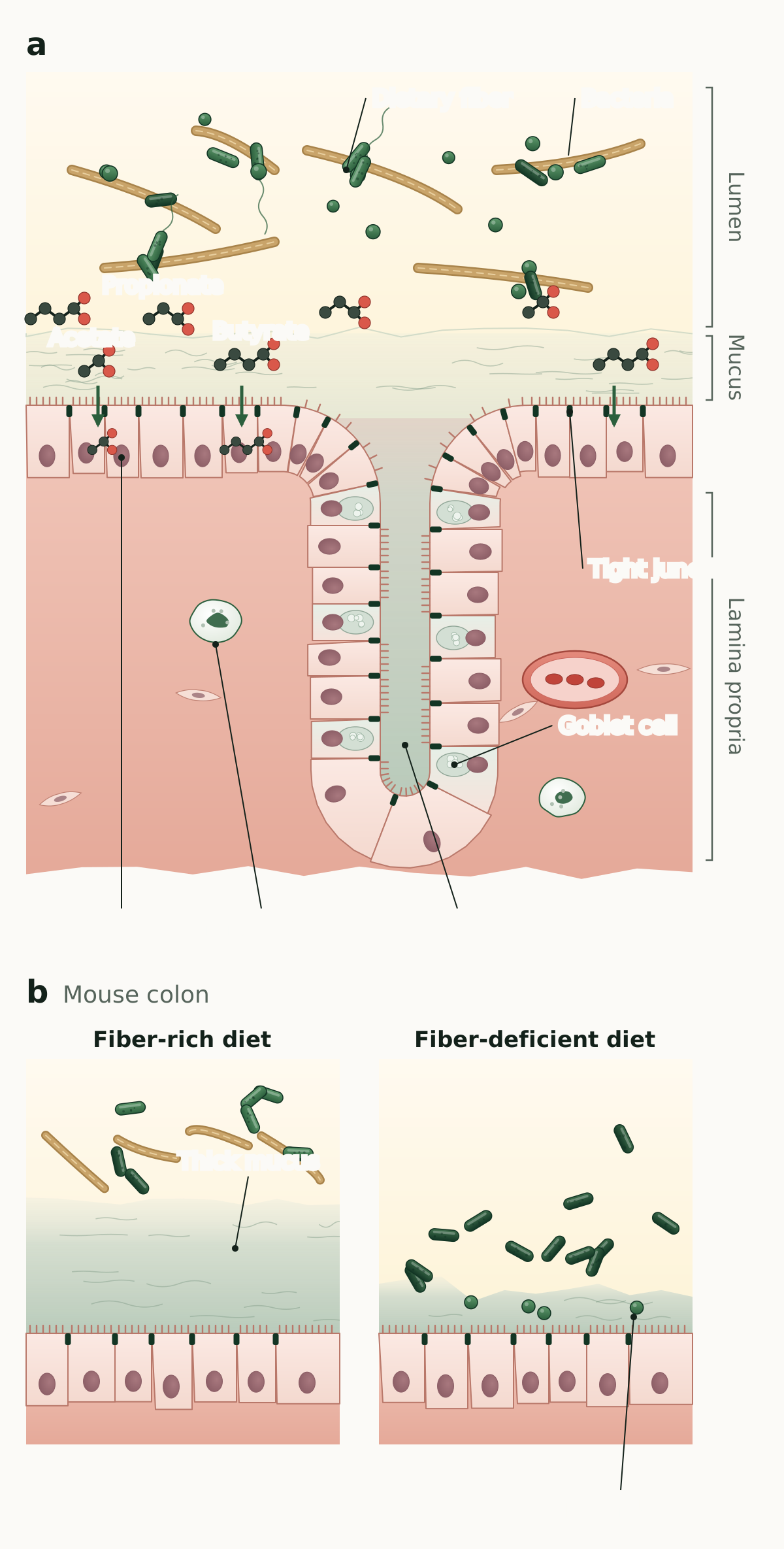
Fiber that escapes digestion in the small intestine is fermented by bacteria in the colon, and the main products of that fermentation are the short-chain fatty acids acetate, propionate and butyrate.2 In a 2016 review in Cell, Koh and colleagues summarized three ways in which these molecules act on the host: they activate G-protein-coupled receptors, they inhibit histone deacetylases, and they serve as energy substrates.2 Through these routes they affect a range of physiological processes, and the authors conclude that they may contribute to health and disease, a deliberately cautious formulation.2
The clearest experimental link to the gut barrier discussed in our previous article comes from mice. Desai and colleagues colonized gnotobiotic mice, raised without a microbiota of their own, with a defined community of sequenced human gut bacteria and then deprived them of fiber. Under chronic or intermittent fiber deficiency, the bacteria turned to the host’s own mucus glycoproteins as a nutrient source, the colonic mucus layer eroded, and the mice became more susceptible to lethal colitis from the pathogen Citrobacter rodentium.3 The experiment is a useful demonstration of mechanism, but it has not been reproduced in humans, and under Thryval’s grading rule evidence from animals alone can support a grade of Weak and no higher.
Does fiber change the gut microbiome?
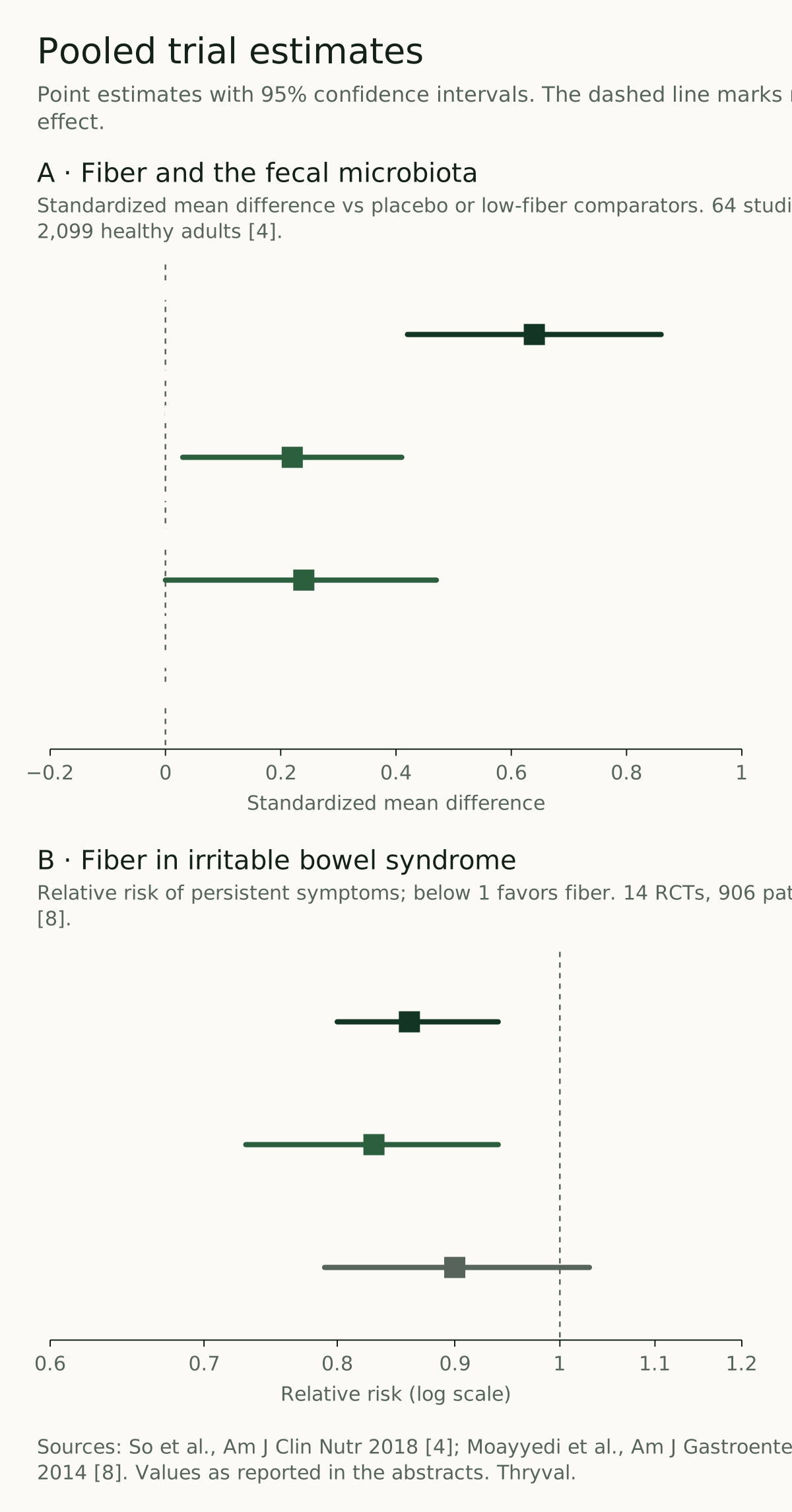
When fiber is given in controlled trials, some changes in the microbiota are reproducible and others are not. So and colleagues pooled 64 randomized studies with 2,099 healthy adults. Compared with placebo or low-fiber diets, fiber interventions increased fecal Bifidobacterium (standardized mean difference 0.64; 95% CI 0.42–0.86) and Lactobacillus (0.22; 0.03–0.41), and produced a borderline increase in fecal butyrate (0.24; 0.00–0.47). The effects on Bifidobacterium and Lactobacillus were largest with fructans and galacto-oligosaccharides. Fiber had no detectable effect on alpha diversity, on the other prespecified bacterial groups, or on other short-chain fatty acids.4
The Stanford diet study discussed in our previous article gave a similar picture at the level of the individual. Participants randomized to the high-fiber arm increased their intake from an average of 21.5 to 45.1 g/day. Their microbiota gained carbohydrate-degrading enzymes, with 11 carbohydrate-active enzymes increasing in relative abundance and none decreasing, but community diversity remained stable and fecal butyrate did not rise. The primary immune outcome was unchanged, and participants followed three distinct immune trajectories that corresponded to the diversity of their microbiota at baseline.5
Fiber structure also influences the result. In a dose–response trial of three chemically distinct resistant starches in healthy adults, Deehan and colleagues found that each starch produced specific changes in microbial composition and directed fermentation toward either propionate or butyrate, with effects plateauing at 35 g/day.6 The study was supported by the manufacturer of the starches tested, and the senior author declared industry funding and a commercial interest in synbiotic products.6
Does fiber lower inflammatory markers such as CRP?
Evidence that fiber lowers systemic inflammation in humans is limited to modest changes in biomarkers. The meta-analysis of 14 randomized trials in overweight and obese adults covered in our previous article found a reduction in C-reactive protein of 0.37 mg/L (95% CI −0.74 to 0), seen only where fiber intake in the intervention group was at least 8 g/day higher than in controls.7 In the Stanford study, a high-fiber diet did not reduce the panel of inflammatory proteins that fell with fermented foods.5
Which fiber helps irritable bowel syndrome?
The clinical evidence for gut symptoms is more direct, and it again depends on fiber type. A meta-analysis of 14 randomized trials with 906 patients with irritable bowel syndrome found that fiber reduced the risk of persistent symptoms (relative risk 0.86; 95% CI 0.80–0.94; number needed to treat 10). The benefit was confined to soluble fiber (RR 0.83; 0.73–0.94; NNT 7), and bran showed no significant effect (RR 0.90; 0.79–1.03).8
Evidence grades
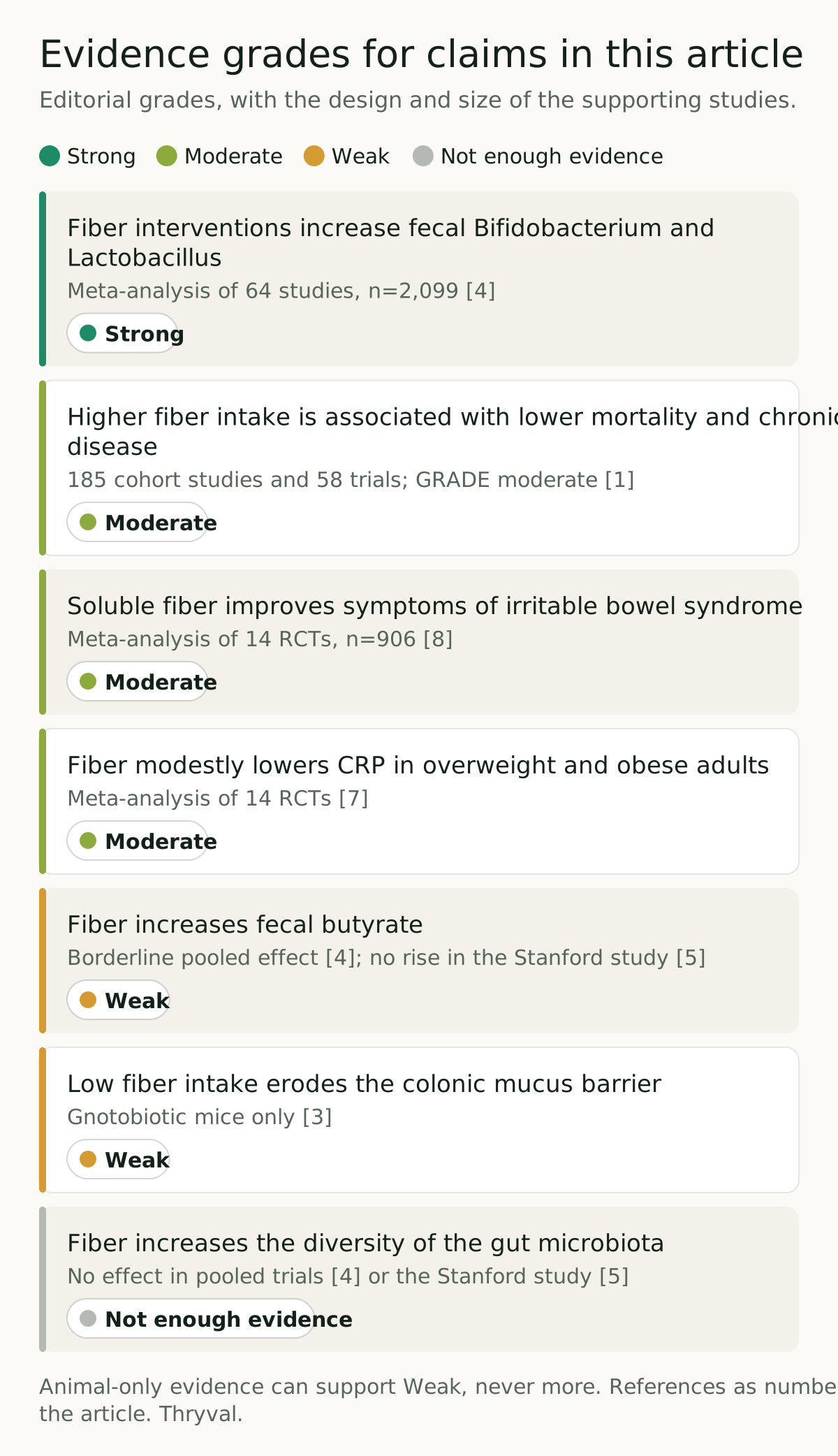
The grades below are Thryval editorial judgments based on the studies cited in this article. The grading rules are set out on our Research page.
What this means in practice
The best-supported reason to eat more fiber is its association with lower rates of cardiovascular disease, type 2 diabetes, colorectal cancer and death, with the largest reductions at around 25–29 g/day.1 The microbial changes that fiber reliably produces are narrower than popular accounts suggest: certain bacterial groups increase, particularly with fructans and galacto-oligosaccharides, while diversity and butyrate often do not change, and responses differ between individuals. For irritable bowel syndrome, the trial evidence favors soluble fiber over bran. People with a diagnosed gastrointestinal condition should discuss changes in fiber intake with their clinician.
Frequently asked questions
How much fiber a day is linked to the greatest benefit?
In the Lancet meta-analyses, reductions in risk were greatest at 25–29 g/day, and the dose–response curves suggested that higher intakes might confer further benefit.1
Which bacteria does fiber increase?
Pooled trials in healthy adults found increases in fecal Bifidobacterium (standardized mean difference 0.64) and Lactobacillus (0.22), largest with fructans and galacto-oligosaccharides.4
Does fiber increase butyrate?
Not consistently. The pooled increase in fecal butyrate was borderline (0.24; 95% CI 0.00–0.47),4 and butyrate did not rise in the Stanford high-fiber arm.5
Does fiber increase the diversity of the gut microbiome?
Pooled trials found no effect on alpha diversity,4 and diversity remained stable when Stanford participants roughly doubled their fiber intake.5
Which type of fiber helps IBS?
In a meta-analysis of 14 randomized trials, soluble fiber reduced the risk of persistent symptoms (RR 0.83; NNT 7), and bran showed no significant effect.8
Do different fibers have different effects?
Yes. In a dose–response trial, three chemically distinct resistant starches each produced specific changes in the microbiota and shifted fermentation toward either propionate or butyrate. The trial was supported by the starches’ manufacturer.6
This article is for education and is not medical advice.
References
-
Reynolds A, Mann J, Cummings J, Winter N, Mete E, Te Morenga L. Carbohydrate quality and human health: a series of systematic reviews and meta-analyses. Lancet. 2019;393(10170):434–445. Systematic reviews and meta-analyses: 185 prospective studies, 58 trials. doi.org/10.1016/S0140-6736(18)31809-9 · PubMed 30638909 ↩↩↩↩↩↩↩↩
-
Koh A, De Vadder F, Kovatcheva-Datchary P, Bäckhed F. From dietary fiber to host physiology: short-chain fatty acids as key bacterial metabolites. Cell. 2016;165(6):1332–1345. Review. doi.org/10.1016/j.cell.2016.05.041 · PubMed 27259147 ↩↩↩
-
Desai MS, Seekatz AM, Koropatkin NM, et al. A dietary fiber-deprived gut microbiota degrades the colonic mucus barrier and enhances pathogen susceptibility. Cell. 2016;167(5):1339–1353.e21. Animal (gnotobiotic mouse) study. doi.org/10.1016/j.cell.2016.10.043 · PubMed 27863247 ↩↩
-
So D, Whelan K, Rossi M, et al. Dietary fiber intervention on gut microbiota composition in healthy adults: a systematic review and meta-analysis. Am J Clin Nutr. 2018;107(6):965–983. Meta-analysis, 64 studies, n=2,099. doi.org/10.1093/ajcn/nqy041 · PubMed 29757343 ↩↩↩↩↩↩↩
-
Wastyk HC, Fragiadakis GK, Perelman D, et al. Gut-microbiota-targeted diets modulate human immune status. Cell. 2021;184(16):4137–4153.e14. Randomized diet study, n=18 per arm. doi.org/10.1016/j.cell.2021.06.019 · PubMed 34256014 ↩↩↩↩↩↩
-
Deehan EC, Yang C, Perez-Muñoz ME, et al. Precision microbiome modulation with discrete dietary fiber structures directs short-chain fatty acid production. Cell Host Microbe. 2020;27(3):389–404.e6. Dose–response trial in healthy adults; industry-supported. doi.org/10.1016/j.chom.2020.01.006 · PubMed 32004499 ↩↩↩
-
Jiao J, Xu JY, Zhang W, Han S, Qin LQ. Effect of dietary fiber on circulating C-reactive protein in overweight and obese adults: a meta-analysis of randomized controlled trials. Int J Food Sci Nutr. 2015;66(1):114–119. Meta-analysis of 14 RCTs. doi.org/10.3109/09637486.2014.959898 · PubMed 25578759 ↩↩↩
-
Moayyedi P, Quigley EM, Lacy BE, et al. The effect of fiber supplementation on irritable bowel syndrome: a systematic review and meta-analysis. Am J Gastroenterol. 2014;109(9):1367–1374. Meta-analysis, 14 RCTs, n=906. doi.org/10.1038/ajg.2014.195 · PubMed 25070054 ↩↩↩