

Is leaky gut real? What the evidence shows
How gut barrier function is measured, where increased permeability is well documented, and what human trials of glutamine, fiber and fermented foods have shown.
The grade Not enough evidenceRestoring barrier function to treat systemic disease
In brief. Increased intestinal permeability is a real and measurable change, and barrier dysfunction is well established in celiac disease, Crohn’s disease and ulceration caused by nonsteroidal anti-inflammatory drugs. It remains unproven that restoring barrier function improves any gastrointestinal or systemic disease.1 A widely used commercial zonulin test, often offered as a blood marker of permeability, does not appear to detect zonulin.3
“Leaky gut” is used online to explain a long list of complaints, from fatigue and eczema to weight gain, and it is usually followed by a test or a supplement. The underlying concept, intestinal permeability, is a legitimate physiological measurement that has been studied for decades, and it is abnormal in several well-characterized gastrointestinal diseases. The difficulty is that the popular claims run well ahead of the data. In a 2019 review for clinicians in Gut, Michael Camilleri of the Mayo Clinic concluded that public information on a “healthy” or “leaky” gut needs confirmation before anyone endorses dietary exclusions, replacement foods or supplements intended to repair the barrier.1 This article summarizes the human evidence on that question as it stands.
What is a leaky gut? The structure of the intestinal barrier
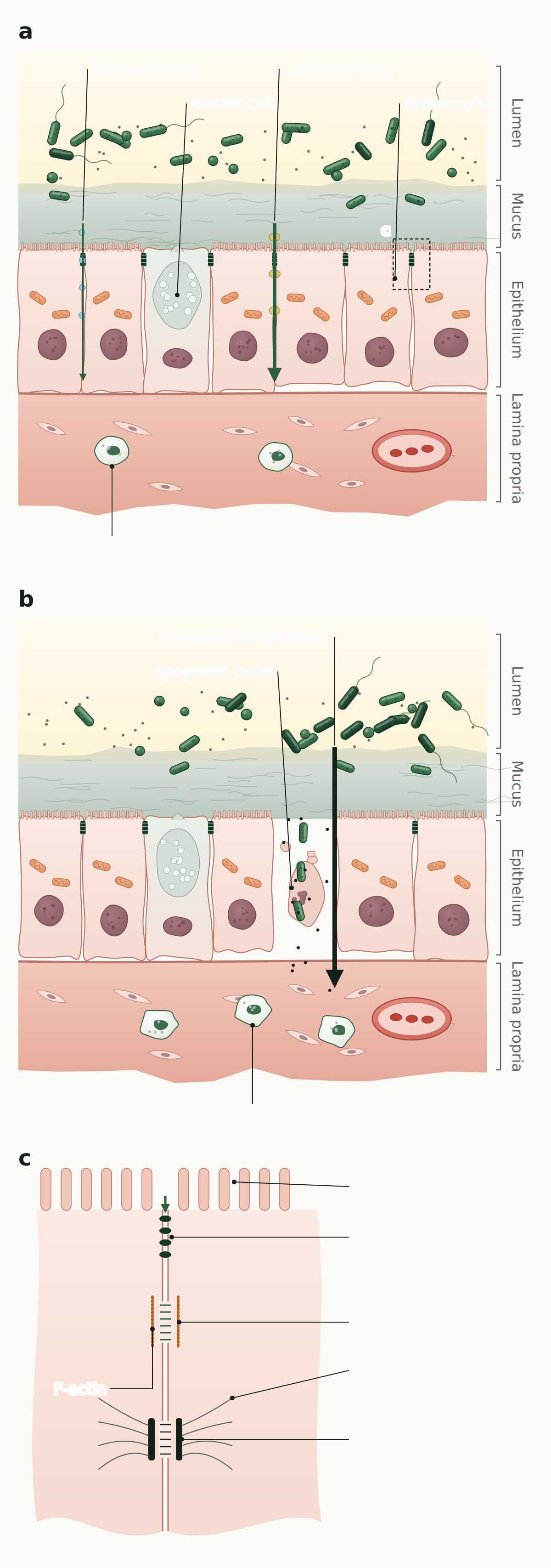
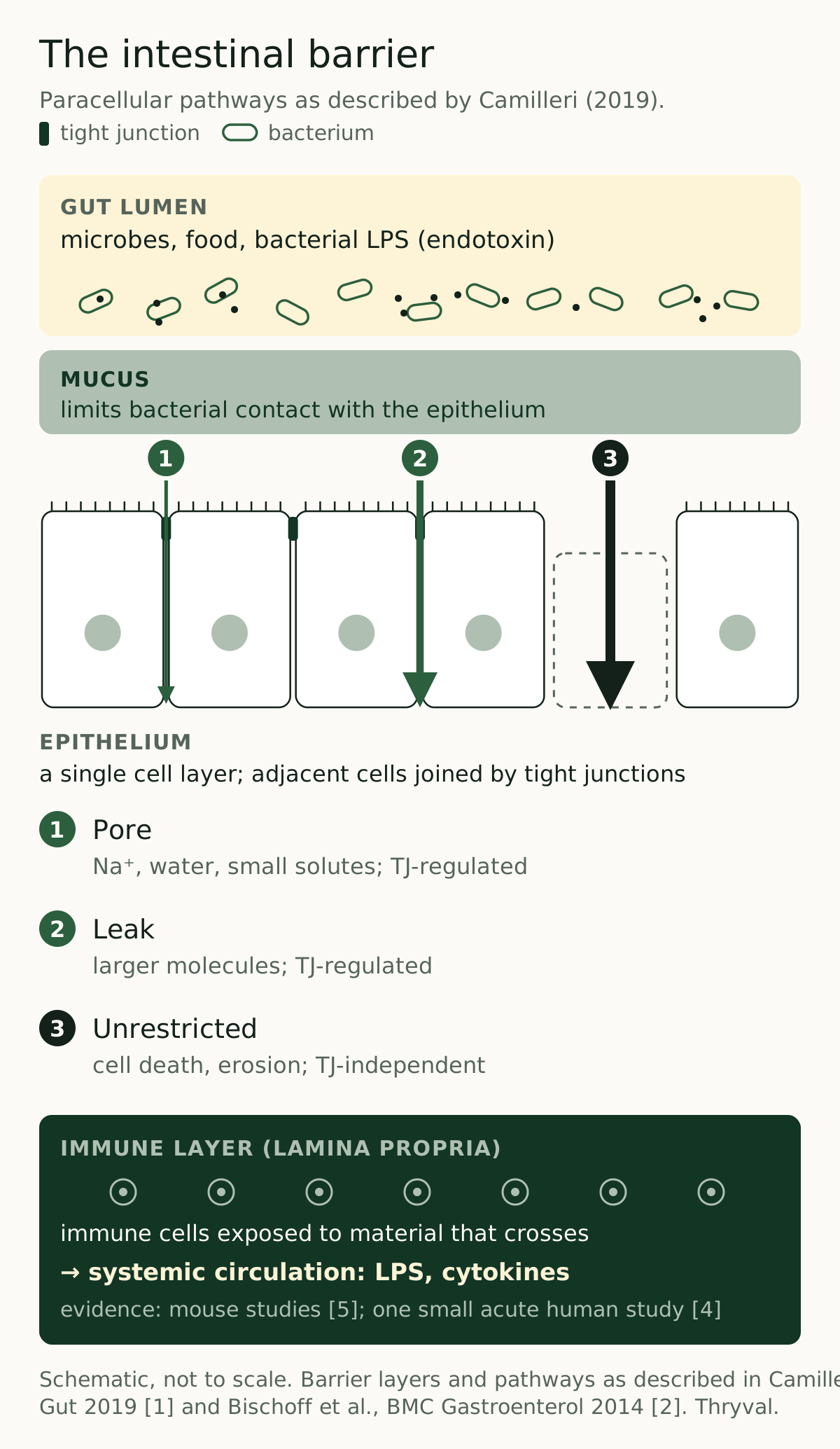
The intestinal lining has to absorb water and nutrients while excluding the very large microbial population of the lumen and the products those microbes release.2 It does this with three components. A surface mucus layer keeps most bacteria away from the epithelium. Beneath it is a single layer of epithelial cells, joined near their luminal surface by tight junctions that regulate passage between adjacent cells. Under the epithelium, the lamina propria contains the immune cells that respond to whatever crosses.1
Camilleri describes three paracellular routes across the epithelium. The pore pathway allows sodium ions, water and small solutes to pass, and the leak pathway admits larger molecules; both are regulated by tight junctions, and together they are what is meant by intestinal permeability in the strict sense. The third, unrestricted pathway is independent of tight junctions. It is associated with epithelial cell death in disease states and gives luminal antigens access to the lamina propria.1 A modest change in tight-junction function and an erosion or ulcer are therefore different lesions, and studies of one should not be read as evidence about the other.
Is there a test for leaky gut? Sugar probes and zonulin
Most human studies use orally administered sugar probes. The subject drinks a solution of sugars that are not metabolized, such as lactulose and mannitol, and urinary excretion is measured over timed collections. Excretion in the first two hours mainly reflects small-intestinal permeability, and excretion between 8 and 24 hours reflects almost exclusively colonic permeability.1 The method has known limitations. Some probe sugars, mannitol and sucralose in particular, are present in ordinary food and can raise background excretion. The traditional interpretation of the lactulose-to-mannitol ratio also assumed that the two sugars cross by different pathways, but Camilleri notes that their molecular diameters are not meaningfully different, which makes that assumption unlikely to hold.1 A consensus review by Bischoff and colleagues reached a similar conclusion about the field as a whole: the available methods “vary enormously and probably assess different functional components of the barrier.”2
Serum zonulin, which is widely offered as a convenient blood marker of permeability, has a more specific problem. In a 2018 study of 376 people, Scheffler and colleagues found that a widely used commercial zonulin ELISA did not detect pre-haptoglobin 2, the protein identified as zonulin. Mass spectrometry and Western blotting suggested that the kit instead captures structurally related proteins, most likely properdin.3 The kit’s readings did rise with obesity and diabetes in that cohort, so it may be measuring something of metabolic interest, but it cannot be interpreted as a validated measure of intestinal permeability. A single result from a test of this kind is not a diagnosis.
Do “leaky gut symptoms” indicate increased permeability?
In a 2024 review for clinicians, Lacy and colleagues at the Mayo Clinic reviewed the most common myths about leaky gut syndrome. The symptoms attributed to it are mainly gastrointestinal: diarrhea, bloating, distension, abdominal pain, and dyspeptic symptoms such as early satiety, nausea and postprandial fullness. The authors note that the syndrome is not accepted as a formal medical diagnosis and that, although patients are often told it can be diagnosed from blood or stool tests, no validated test exists.4 They also point out that everyone has a baseline level of intestinal permeability, that changes in permeability are not always harmful, and that the relationship between permeability and symptoms is unclear. Their conclusion is that the condition cannot be diagnosed accurately from symptoms, blood work or stool studies, and that clinicians should not use the term unless objective testing has documented a change in permeability.4
Can a leaky gut cause inflammation elsewhere in the body?
The most plausible mechanism connecting the gut barrier to inflammation elsewhere in the body involves lipopolysaccharide (LPS), or endotoxin, a component of the outer membrane of many gut bacteria and a potent activator of innate immunity. Human data on this point are limited. In a crossover study of 12 healthy men, Erridge and colleagues found a baseline plasma endotoxin concentration of 8.2 pg/mL, which rose by about 50% after a high-fat meal; no increase followed either no meal or smoking alone.5 In the same paper, endotoxin at 10 pg/mL was enough to activate human monocytes in vitro.5 These findings are consistent with a contribution of endotoxin to postprandial inflammation, but they come from a small, short-term study and say nothing about disease.
Most of the evidence that endotoxin drives metabolic disease comes from mice. Cani and colleagues showed that four weeks of a high-fat diet raised plasma LPS two- to threefold, a state they termed metabolic endotoxemia, and that infusing LPS to similar concentrations reproduced much of the weight gain and the rise in fasting glucose and insulin seen with the diet.6 The experiment is well designed, but under Thryval’s grading rule evidence from animals alone can support a grade of Weak and no higher.
Which conditions involve increased intestinal permeability?
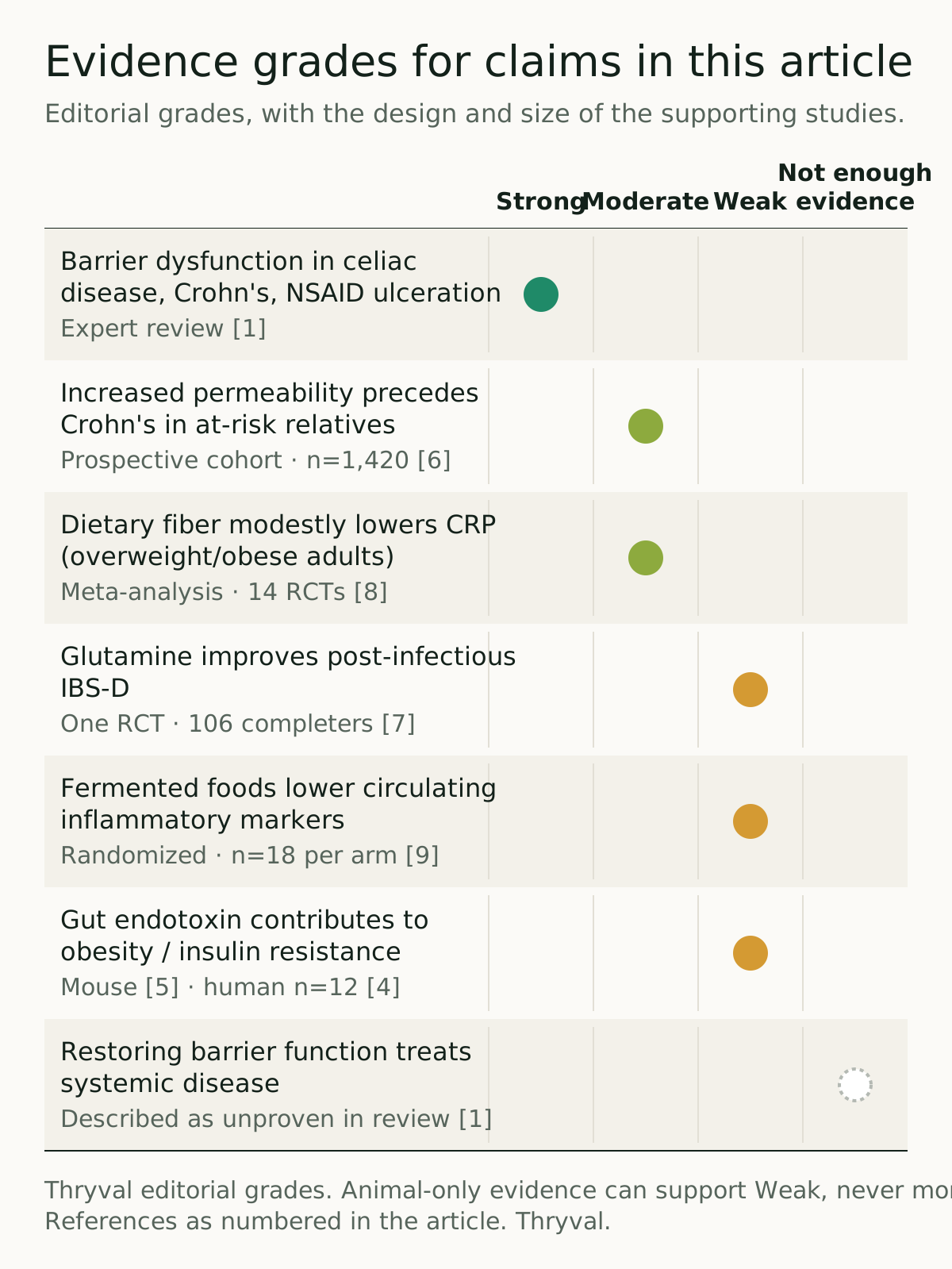
In some settings increased permeability is not in question. Camilleri describes barrier dysfunction as uncontroversial in celiac disease, in Crohn’s disease and in ulceration caused by nonsteroidal anti-inflammatory drugs (NSAIDs).1 Permeability also increases in several non-disease states, including endurance exercise, NSAID use, pregnancy and exposure to surfactants such as bile acids and dietary emulsifiers.1
The question of timing, whether increased permeability precedes disease or only follows it, has been addressed most directly in Crohn’s disease. Turpin and colleagues measured the urinary lactulose-to-mannitol ratio in 1,420 asymptomatic first-degree relatives of patients with Crohn’s disease and followed them for a median of 7.8 years, during which 50 developed the disease. An abnormal ratio at recruitment (above 0.03) was associated with a hazard ratio of 3.03 (95% CI 1.64–5.63) for later diagnosis. The association was weaker but still present when the test had been done more than three years before diagnosis (HR 1.62; 95% CI 1.05–2.50).7
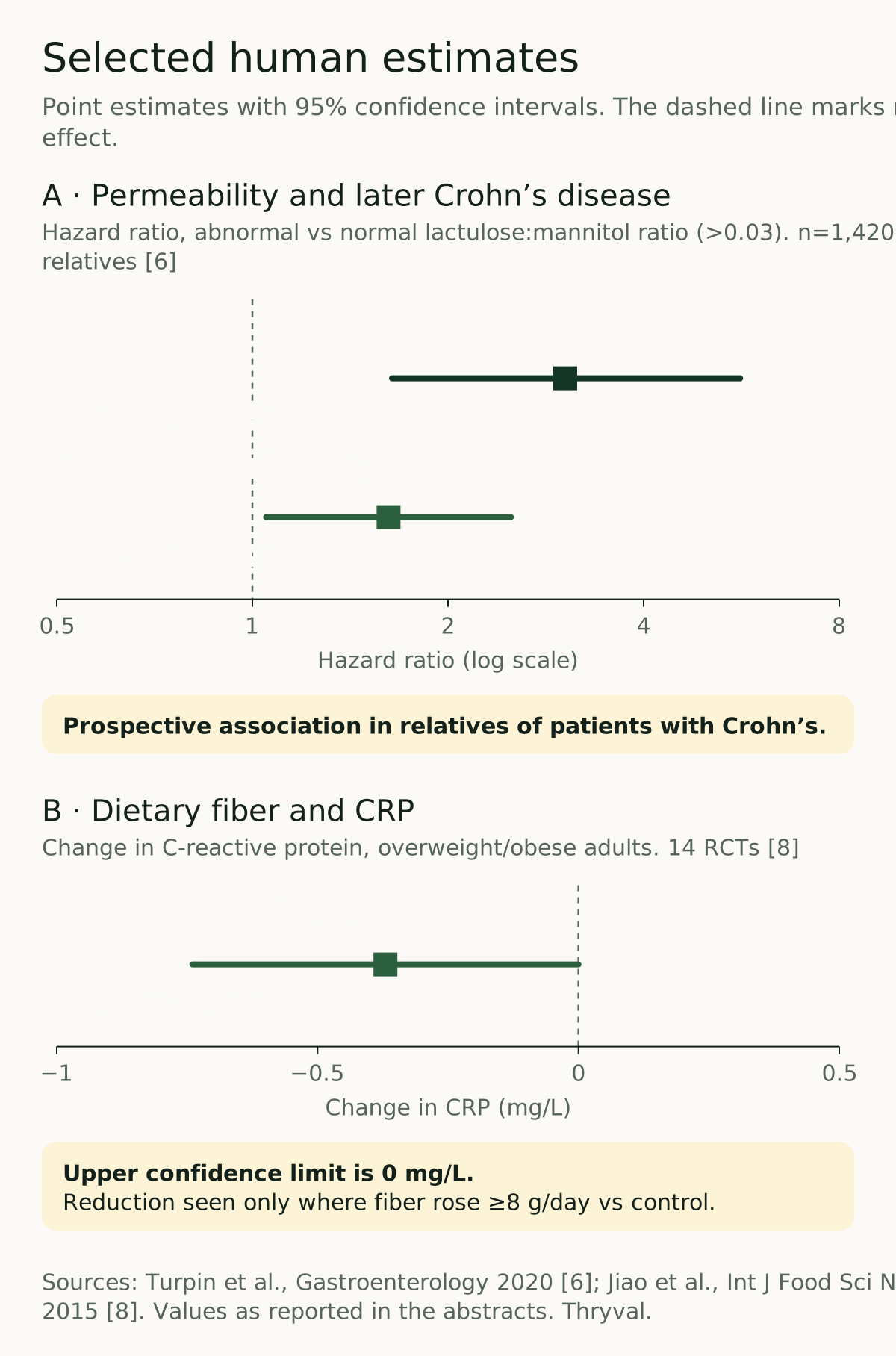
This is a prospective association in one high-risk population, and it supports the view that barrier dysfunction can be part of the early pathogenesis of Crohn’s disease. It does not show that increased permeability causes the many unrelated conditions attributed to it online.
Can a leaky gut be repaired? What human trials show
Camilleri’s review is explicit that it remains unproven that restoring barrier function improves the clinical manifestations of any gastrointestinal or systemic disease.1 A small number of human studies have shown changes in permeability or inflammatory markers, each in a defined population.
The strongest single trial concerns glutamine in post-infectious, diarrhea-predominant irritable bowel syndrome (IBS-D). Zhou and colleagues randomized adults who had developed IBS-D after an enteric infection and who had increased permeability to glutamine 5 g three times daily or placebo for eight weeks. The primary end point, a reduction of at least 50 points on the IBS severity scoring system, was reached by 79.6% of the glutamine group and 5.8% of the placebo group, and the lactulose-to-mannitol ratio normalized with glutamine but not with placebo.8 The effect is large, but it comes from one trial in a narrowly selected group, and the authors themselves call for larger trials to confirm it.8
For dietary fiber, which we review separately in Does fiber reduce inflammation?, a meta-analysis of 14 randomized trials in overweight and obese adults found that fiber or fiber-rich foods lowered C-reactive protein by 0.37 mg/L compared with control (95% CI −0.74 to 0). The reduction was seen only in trials where fiber intake in the intervention group was at least 8 g/day higher than in the control group.9 The upper limit of the confidence interval is zero, so the true effect may be very small.
Fermented foods were studied by Wastyk and colleagues at Stanford in a 17-week randomized study with 18 participants per arm. The high-fermented-food diet increased microbiota diversity and was accompanied by decreases in 19 of 93 circulating inflammatory proteins, including interleukin-6. The high-fiber diet, in which intake rose from about 21 to 45 g/day, did not change the primary immune outcome.10 The study used extensive immune and microbiome profiling, but its sample was small and it did not measure clinical outcomes.
None of these studies tested whether improving barrier function treats eczema, fatigue or autoimmune disease, and none would support such a claim.
Evidence grades
The grades below are Thryval editorial judgments based on the studies cited in this article. Weak indicates a signal from studies that have not yet been replicated. The grading rules are set out on our Research page.
What this means for patients and clinicians
Intestinal permeability is worth taking seriously as a research question, and the commercial claims attached to it deserve much less confidence. A zonulin result from a commercial kit should not be used to make decisions. Where increased permeability is clinically relevant, it is usually in the context of conditions that can be diagnosed directly, such as celiac disease, inflammatory bowel disease or NSAID injury. Dietary fiber and fermented foods have modest human data on inflammatory markers and low risk, although neither has been shown to treat a specific disease. Readers already taking a supplement marketed for gut repair may find it useful to review this evidence with their clinician.
Frequently asked questions
Is leaky gut syndrome a recognized diagnosis?
No. It is not accepted as a formal medical diagnosis, although increased intestinal permeability is documented in specific conditions.4
Is the zonulin blood test accurate?
A widely used commercial zonulin ELISA did not detect pre-haptoglobin 2, the protein identified as zonulin, and appears to capture related proteins instead. Its result cannot be read as a measure of intestinal permeability.3
What does the lactulose–mannitol test measure?
It measures urinary excretion of sugar probes after an oral dose, which reflects small-intestinal permeability in the first two hours and colonic permeability between 8 and 24 hours. The traditional reading of the ratio rests on an assumption that is unlikely to hold.1
What increases intestinal permeability?
Apart from disease, permeability rises with endurance exercise, NSAID use, pregnancy and exposure to surfactants such as bile acids and dietary emulsifiers.1
Can glutamine repair a leaky gut?
One randomized trial in post-infectious IBS-D with increased permeability found a large benefit and normalized permeability with glutamine. It has not been replicated, so the evidence is graded Weak.8
Do fiber or fermented foods lower inflammatory markers?
Fiber lowered C-reactive protein by 0.37 mg/L in a meta-analysis of 14 randomized trials in overweight and obese adults.9 A high-fermented-food diet reduced 19 of 93 inflammatory proteins in one small randomized study.10
This article is for education and is not medical advice.
References
-
Camilleri M. Leaky gut: mechanisms, measurement and clinical implications in humans. Gut. 2019;68(8):1516–1526. Review. doi.org/10.1136/gutjnl-2019-318427 · PubMed 31076401 ↩↩↩↩↩↩↩↩↩↩↩↩↩↩
-
Bischoff SC, Barbara G, Buurman W, et al. Intestinal permeability – a new target for disease prevention and therapy. BMC Gastroenterol. 2014;14:189. Review. doi.org/10.1186/s12876-014-0189-7 · PubMed 25407511 ↩↩
-
Scheffler L, Crane A, Heyne H, et al. Widely used commercial ELISA does not detect precursor of haptoglobin2, but recognizes properdin as a potential second member of the zonulin family. Front Endocrinol (Lausanne). 2018;9:22. Human cohort and lab analysis. doi.org/10.3389/fendo.2018.00022 · PubMed 29459849 ↩↩↩
-
Lacy BE, Wise JL, Cangemi DJ. Leaky gut syndrome: myths and management. Gastroenterol Hepatol (N Y). 2024;20(5):264–272. Review. PMC11345991 · PubMed 39193076 ↩↩↩
-
Erridge C, Attina T, Spickett CM, Webb DJ. A high-fat meal induces low-grade endotoxemia: evidence of a novel mechanism of postprandial inflammation. Am J Clin Nutr. 2007;86(5):1286–1292. Human crossover study, n=12. doi.org/10.1093/ajcn/86.5.1286 · PubMed 17991637 ↩↩↩
-
Cani PD, Amar J, Iglesias MA, et al. Metabolic endotoxemia initiates obesity and insulin resistance. Diabetes. 2007;56(7):1761–1772. Animal (mouse) study. doi.org/10.2337/db06-1491 · PubMed 17456850 ↩↩
-
Turpin W, Lee SH, Raygoza Garay JA, et al. Increased intestinal permeability is associated with later development of Crohn’s disease. Gastroenterology. 2020;159(6):2092–2100.e5. Prospective cohort, n=1,420. doi.org/10.1053/j.gastro.2020.08.005 · PubMed 32791132 ↩↩
-
Zhou Q, Verne ML, Fields JZ, et al. Randomised placebo-controlled trial of dietary glutamine supplements for postinfectious irritable bowel syndrome. Gut. 2019;68(6):996–1002. RCT, 106 completers. doi.org/10.1136/gutjnl-2017-315136 · PubMed 30108163 ↩↩↩↩
-
Jiao J, Xu JY, Zhang W, Han S, Qin LQ. Effect of dietary fiber on circulating C-reactive protein in overweight and obese adults: a meta-analysis of randomized controlled trials. Int J Food Sci Nutr. 2015;66(1):114–119. Meta-analysis of 14 RCTs. doi.org/10.3109/09637486.2014.959898 · PubMed 25578759 ↩↩↩
-
Wastyk HC, Fragiadakis GK, Perelman D, et al. Gut-microbiota-targeted diets modulate human immune status. Cell. 2021;184(16):4137–4153.e14. Randomized diet study, n=18 per arm. doi.org/10.1016/j.cell.2021.06.019 · PubMed 34256014 ↩↩↩