
Does lion's mane mushroom improve memory? What the human trials show
Lion's mane is an edible mushroom sold as a supplement for memory, focus, mood and nerve health. Its compounds stimulate nerve growth factor in cells and rodents, but the human evidence consists of about ten small trials, several run or supplied by manufacturers, with mixed and mostly modest results.
The grade WeakLion's mane for memory and thinking in older adults with or without mild cognitive impairment
In brief. Lion’s mane (Hericium erinaceus) may produce a small improvement on cognitive screening tests in older adults, but the evidence is weak. Two Japanese placebo-controlled trials, with 30 and 31 participants, found higher scores after 12 to 16 weeks of the powdered mushroom, and in the first the gain faded within 4 weeks of stopping.112 In a 49-week pilot trial in 41 people with mild Alzheimer disease, run with a manufacturer, scores on the two main cognitive tests did not differ significantly between the mushroom and placebo groups.10 Trials in healthy young adults have produced isolated results on single tasks, alongside null findings and one task on which performance was worse.121314 The mood trials are small and mostly found changes within groups rather than differences from placebo.16817 The idea that lion’s mane repairs nerves rests on cell and animal studies; we found no trial in people with nerve injury or neuropathy.193 The supplements were well tolerated in trials of up to 49 weeks, but allergic reactions have been reported, including one case of acute lung injury.1023 Lion’s mane is not a substitute for prescribed treatment for memory loss, dementia, depression or nerve disease.
Lion’s mane is a white, shaggy edible fungus that has long been eaten in East Asia and is increasingly eaten and sold in Western countries.114 Supplements contain dried powder or extracts of the fruiting body (the visible mushroom), mycelium (the fungus’s network of threads) grown on grain, or blends of the two.14228 Interest in it for the brain began with laboratory work showing that some of its compounds stimulate the production of nerve growth factor (NGF). This article describes that laboratory evidence, then reviews the human trials of memory, dementia, mood, sleep and nerve health, the safety data, and who paid for the research.
What is lion’s mane, and why is it studied for the brain?
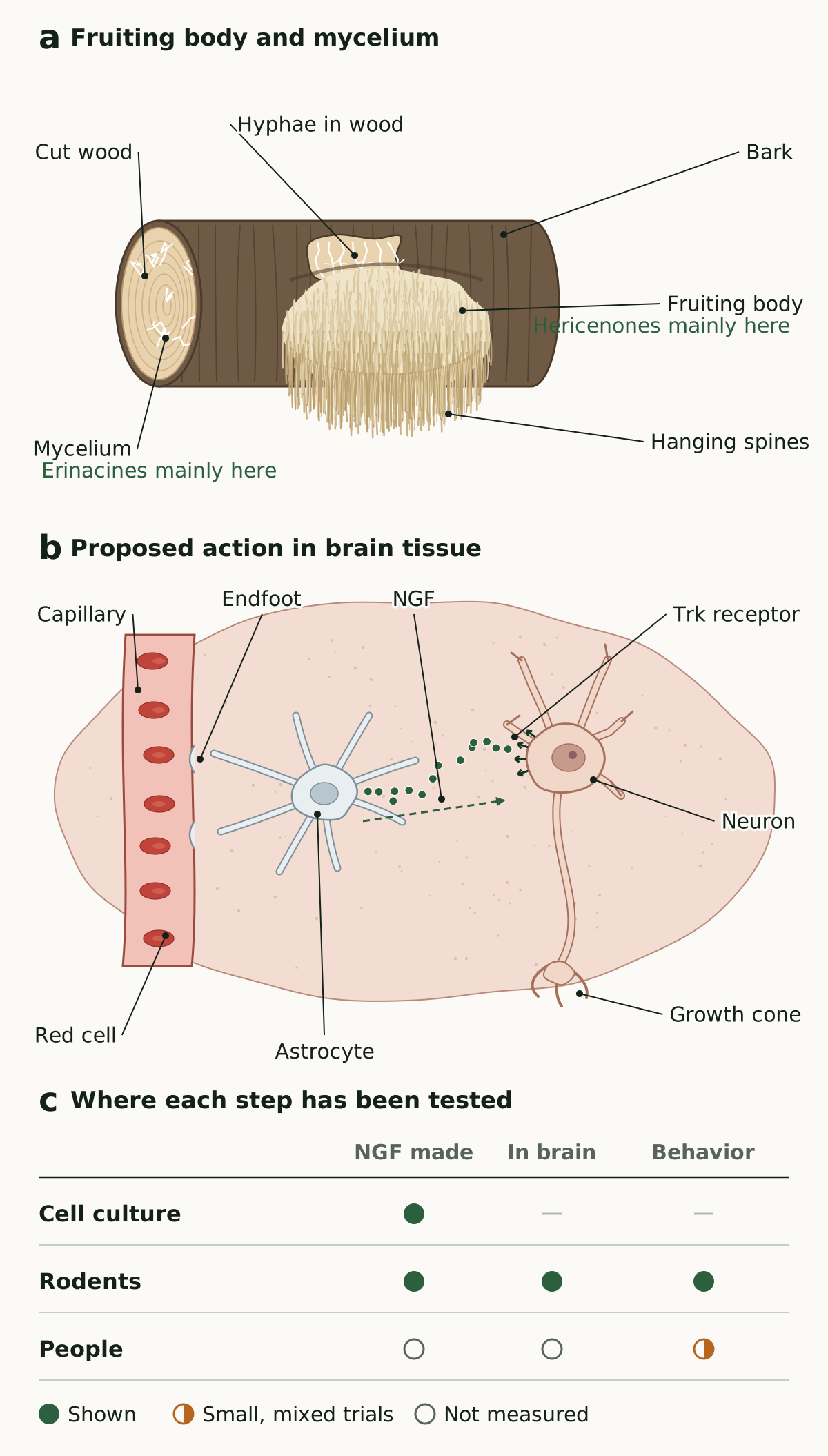
The fruiting body and the mycelium contain different families of small molecules. Hericenones are found mainly in the fruiting body, and erinacines, a group of cyathane diterpenoids, mainly in the mycelium.23 Both families have been reported to stimulate NGF synthesis in laboratory studies.164 NGF is a protein that neurons need to survive and grow. NGF itself does not cross the blood–brain barrier, which is why a compound that prompts the brain to make more of it has attracted interest.2
The laboratory findings are less tidy than marketing suggests. At Tohoku University, an ethanol extract of lion’s mane increased NGF gene expression and NGF secretion in human astrocytoma cells, and mice fed a diet containing 5% lion’s mane powder for 7 days had more NGF messenger RNA in the hippocampus. Purified hericenones C, D and E, however, did not raise NGF gene expression in the same cells, and the authors concluded that the active compounds were not hericenones.5 At the University of Malaya, hericenones did not promote neurite outgrowth in rat PC12 cells on their own; they did so only together with a low concentration of added NGF, and hericenone E increased NGF secretion.6 A 2025 systematic review of cell and rodent studies found that erinacines A and C activated antioxidant and cell-survival pathways and improved motor, cognitive and depression-like behavior in animals.3
Whether these compounds reach the human brain is unknown. In rats given an erinacine A-enriched mycelium extract by mouth, the absolute bioavailability of erinacine A was about 24%, and it was detected in the brain 1 hour after dosing, peaking at 8 hours. The rats received 50 mg of erinacine A per kg of body weight, far more than the roughly 5 mg a day in the human Alzheimer trial. Two of the authors were employed by Grape King Bio, the company that supported the Alzheimer trial described below.7 No equivalent measurement has been published in people. In human trials, blood levels of brain-derived neurotrophic factor (BDNF), another growth factor, did not change consistently, and none of these studies measured anything in the brain.8910
Does lion’s mane improve memory in older adults?
Two small trials from Japan suggest a modest effect on screening tests. The first, published in 2009, enrolled 30 Japanese men and women aged 50 to 80 with mild cognitive impairment. They were randomized to placebo or to four 250 mg tablets, each 96% dried lion’s mane powder, three times a day (about 3 g a day) for 16 weeks. Scores on a cognitive scale based on the revised Hasegawa Dementia Scale were significantly higher than with placebo at weeks 8, 12 and 16. Four weeks after the tablets were stopped, scores in the lion’s mane group fell significantly. Laboratory tests showed no adverse effects.11 The first author’s listed affiliation was the Mushroom Laboratory of Hokuto Corporation in Nagano, Japan. We could not obtain the full text, so the size of the score difference is not reported here.
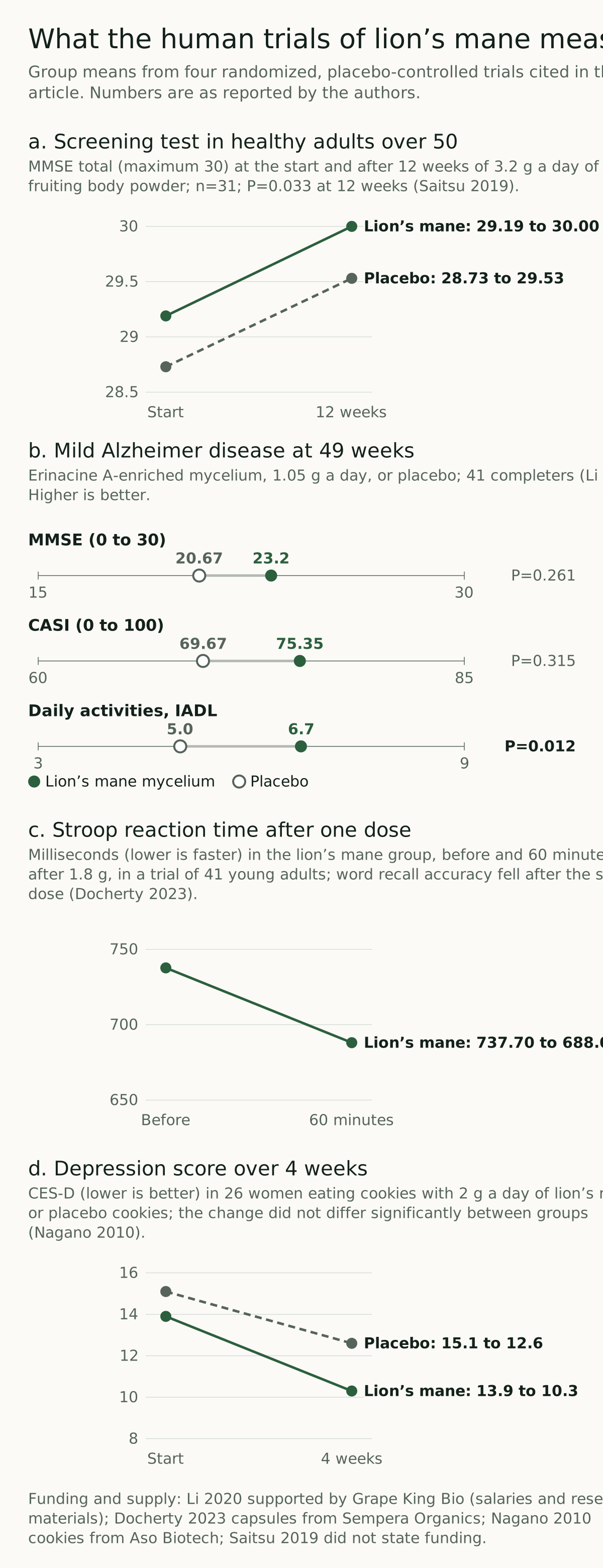
The second trial, published in 2019, enrolled 34 healthy adults over 50 and analyzed 31 of them, with an average age of about 61. Participants took four supplements a day, each containing 0.8 g of powdered fruiting body (3.2 g a day), or placebo for 12 weeks. On the Mini-Mental State Examination (MMSE), a 30-point screening test, the lion’s mane group scored 30.00 at 12 weeks and the placebo group 29.53 (P=0.033), from starting scores of 29.19 and 28.73. Both groups were close to the maximum score throughout. There was no difference between the groups on the Benton visual retention test or on a test of learning word pairs.2 The paper does not state how the study was funded or who made the supplement.
A 2025 systematic review that combined the MMSE results of one randomized trial and one pilot trial reported a weighted mean increase of 1.17 points in the intervention groups.18 Both trials were small, and an increase in a group’s own score is not the same as a difference from placebo.
Can lion’s mane slow Alzheimer disease?
One pilot trial has tested this. At Chung Shan Medical University in Taiwan, 49 people over 50 with mild Alzheimer disease were randomized to three 350 mg capsules a day of erinacine A-enriched mycelium (5 mg of erinacine A per gram) or placebo for 49 weeks, and 41 completed the study. At week 49 the mean MMSE score was 23.2 in the mushroom group and 20.67 in the placebo group, a difference that was not statistically significant (P=0.261). The Cognitive Abilities Screening Instrument showed a similar pattern, 75.35 against 69.67 (P=0.315). Scores on an assessment of everyday activities, the Instrumental Activities of Daily Living scale, were higher in the mushroom group at week 49 (6.7 against 5.0, P=0.012). The headline finding in the abstract, a significant rise in MMSE, was a change within the mushroom group from 21.75 to 23.2.10
The trial also reported differences in contrast sensitivity, several blood markers and brain imaging measures, many of them within-group comparisons in a small sample. Grape King Bio paid the salaries of five of the ten authors and provided research materials.10 A single industry-supported pilot trial of this size cannot show that lion’s mane slows Alzheimer disease. People with dementia or memory loss should keep to the treatment their clinicians have prescribed; our bacopa article reviews another herbal product sold for memory.
Does lion’s mane improve focus or memory in healthy young adults?
The trials in younger people are small and inconsistent. At Northumbria University in the UK, 41 healthy adults aged 18 to 45 took 1.8 g of lion’s mane a day or placebo for 28 days. An hour after the first dose, the lion’s mane group completed the Stroop task faster than before, 688 against 738 milliseconds, but was less accurate on immediate word recall than before the dose.12 After 28 days, the placebo group did better on delayed word recall, and there were no effects on any of the cognitive domain scores. Sempera Organics provided the capsules, and the study had no other external funding.12
Three other trials found little. At the University of North Alabama, 24 college-age participants ate muffins containing 10 g of lion’s mane a day or placebo muffins for 4 weeks, in a single-blind design; there were no effects on any cognitive or metabolic outcome.13 At the University of Surrey, 18 adults aged 18 to 35 took a single 3 g dose of a fruiting body extract and a placebo on separate days. There was no effect on the composite measures of cognition or mood, and performance improved on one manual dexterity task, the grooved pegboard. Two authors were employed by a drinks company that uses lion’s mane in its products and that contributed to the publication fee.14 In a single-arm pilot study of 10 adults who took 2 g a day for 28 days, executive function and plasma BDNF did not change significantly; the product was supplied by M2 Ingredients.9
A crossover trial at the Center for Applied Health Sciences in Ohio, in 40 healthy adults, compared single doses of 1 g of a Nordic-grown lion’s mane extract, a guayusa tea extract and placebo. Lion’s mane improved the number of attempts on a serial subtraction task and reaction times on two computerized tasks over 2 hours. The study was funded in part by Applied Food Sciences, and its senior author has received research funding and fees from dietary supplement companies.15
Does lion’s mane help anxiety, depression or sleep?
The mood evidence rests on small trials with weak designs. In a 2010 Japanese trial, 30 women with an average age of 41 and a range of nonspecific complaints ate four cookies a day, each containing 0.5 g of lion’s mane powder, or placebo cookies for 4 weeks; 26 were analyzed. Depression scores on the Center for Epidemiologic Studies Depression scale (CES-D) fell from 13.9 to 10.3 in the lion’s mane group, a significant change within that group, and from 15.1 to 12.6 with placebo. The change did not differ significantly between the groups for depression, menopausal symptoms, sleep quality or overall complaints, although two individual items on the complaints index, including palpitations, were lower with lion’s mane. The cookies were supplied by Aso Biotech, the listed affiliation of two of the seven authors.16
In Milan, 77 adults with overweight or obesity and symptoms of low mood, poor sleep or binge eating followed a low-calorie diet and were allocated to the diet alone or the diet plus a supplement of 80% mycelium and 20% fruiting body extract for 8 weeks. There was no placebo group, the study was not described as blinded, and the more detailed symptom questionnaire was given only to the supplement group. Zung depression scores did not differ between the groups. Within the supplement group, anxiety, depression and sleep scores improved, and blood pro-BDNF rose in 10 participants tested, while BDNF did not change.8 The supplement was provided by A.V.D. Reform, an Italian company, and the authors declared no conflicts of interest.8
The largest mood trial, published in 2026, randomized 84 women aged 18 to 26 with self-reported stress or anxiety to 1.8 g a day of lion’s mane, a lion’s mane and reishi blend, or placebo for 28 days. Anxiety scores were lower with the blend than with lion’s mane alone, and scores improved in all three groups, including placebo. The lion’s mane group did not separate from placebo in the reported comparisons. The study was funded by Northumbria University and the capsules were provided by Sempera Organics.17 In the 28-day Northumbria trial in younger adults, subjective stress was lower with lion’s mane than with placebo on day 29 on one rating scale (33.02 against 42.53), although the overall treatment-by-time interaction for that scale was not statistically significant (P=0.051), and there was no difference on the Perceived Stress Scale.12
We found no trial of lion’s mane in people diagnosed with major depression or an anxiety disorder, and none that compared it with standard treatment. Sleep was measured in two of these trials, with no difference from placebo in the placebo-controlled one.168 Our rhodiola article reviews another product sold for stress.
Does lion’s mane help nerve damage or neuropathy?
The evidence for nerve repair comes from animals. In a study at the University of Malaya, adult rats with a crushed peroneal nerve, a nerve in the leg, were given an aqueous extract of fresh lion’s mane by mouth each day; walking function returned earlier, and axon regrowth and reinnervation of muscle were better than in untreated rats, as in rats given mecobalamin, the comparison treatment.19 Rodent studies reviewed in 2025 report protective effects of erinacines in models of nervous system injury and disease.3 We found no randomized trial of lion’s mane in people with peripheral neuropathy, nerve injury, multiple sclerosis or Parkinson disease. A 2024 review by ALS specialists found no studies in amyotrophic lateral sclerosis (ALS) cell models, animals or patients and concluded that there was not enough information to support its use for ALS.20
What doses were used in the trials?
The trials used very different products and doses, which makes them hard to compare. Fruiting body powder was given at 2 g a day in cookies, about 3 g a day in tablets and 3.2 g a day in capsules; one trial used 10 g a day in muffins.1611213 Commercial products were given at 1.8 to 2 g a day, and the Alzheimer trial used 1.05 g a day of mycelium standardized to erinacine A.1217910 Of the trials reviewed here, only the Alzheimer trial stated the content of a named compound, and the composition of mushroom powders can vary with where they are grown and how they are processed.1022 These are the amounts tested, not recommended doses.
Is lion’s mane safe, and what are the side effects?
Lion’s mane was generally well tolerated in the trials, which lasted from a single dose to 49 weeks. In the Alzheimer trial, three people in the mushroom group and one in the placebo group left because of side effects; those reported with the mushroom were abdominal discomfort, nausea and skin rash.10 In the 2026 trial in young women, adverse events did not differ between groups, and the one person who stopped because of an adverse event, a headache, was taking placebo.17 A 2025 systematic review listed stomach discomfort, headache and allergic reactions as possible side effects and noted that side effects were often not reported.18 Two rat toxicity studies, including a 13-week feeding study, found no toxic effects at the doses tested; both were carried out with companies whose products were tested.2122
Allergic reactions are uncommon but have been serious. A 63-year-old man in Japan developed acute respiratory distress syndrome after taking a lion’s mane extract sold as a diet food; his lymphocytes reacted strongly to the extract in laboratory testing, and he recovered after high-dose steroids and mechanical ventilation.23 A Dutch report described occupational allergic contact dermatitis from the mushroom, and the ALS review cited a case of anaphylaxis after eating fresh lion’s mane.2420 People with known mushroom allergy should avoid it; two trials excluded people with mushroom or food allergy for that reason.28
There are no long-term safety data in people beyond 49 weeks, and two trials excluded people who were pregnant, one of them also excluding those who were breastfeeding.28 We found no clinical studies of interactions between lion’s mane and prescription medicines, which means the question is unstudied rather than settled. Anyone taking prescription medicines, including those for dementia, depression, diabetes or blood clotting, should talk to their clinician or pharmacist before adding it.
How good is the evidence, and who paid for it?
The human evidence is thin. We found about ten controlled trials, none with more than 84 participants, and only three lasting longer than 8 weeks.1121017 Each tested a different product and dose, and several reported many outcomes and emphasized changes within a group rather than differences from placebo.101612 The 2025 systematic review pooled MMSE results from only two studies.18
Industry involvement is common. The first author of the 2009 trial in mild cognitive impairment worked at a corporate mushroom laboratory, the Alzheimer trial was supported by Grape King Bio, which provided research materials and paid five authors, the 2010 mood trial was supplied by and partly authored by a lion’s mane producer, and the products in the Northumbria, Surrey and pilot trials were supplied by their manufacturers or linked to companies selling lion’s mane.1110161214917 The Ohio trial was funded in part by Applied Food Sciences.15 The rodent bioavailability and toxicity studies of erinacine A were carried out with Grape King Bio, and a second toxicity study by M2 Ingredients.72122 We found no funding statement for the 2019 Japanese trial or the North Alabama trial in the records we could access.213
What remains uncertain?
It is not known whether lion’s mane changes memory in a way people would notice, because the positive trials used screening tests on which healthy participants scored close to the maximum, or found differences on one task among many.212 Whether any hericenone or erinacine reaches the human brain, and whether it changes NGF there, has not been measured.75 No adequately powered trial has tested lion’s mane in mild cognitive impairment, Alzheimer disease, diagnosed depression or anxiety, or nerve injury.181020 Larger, independently funded trials with standardized products and prespecified outcomes would be needed to answer these questions.
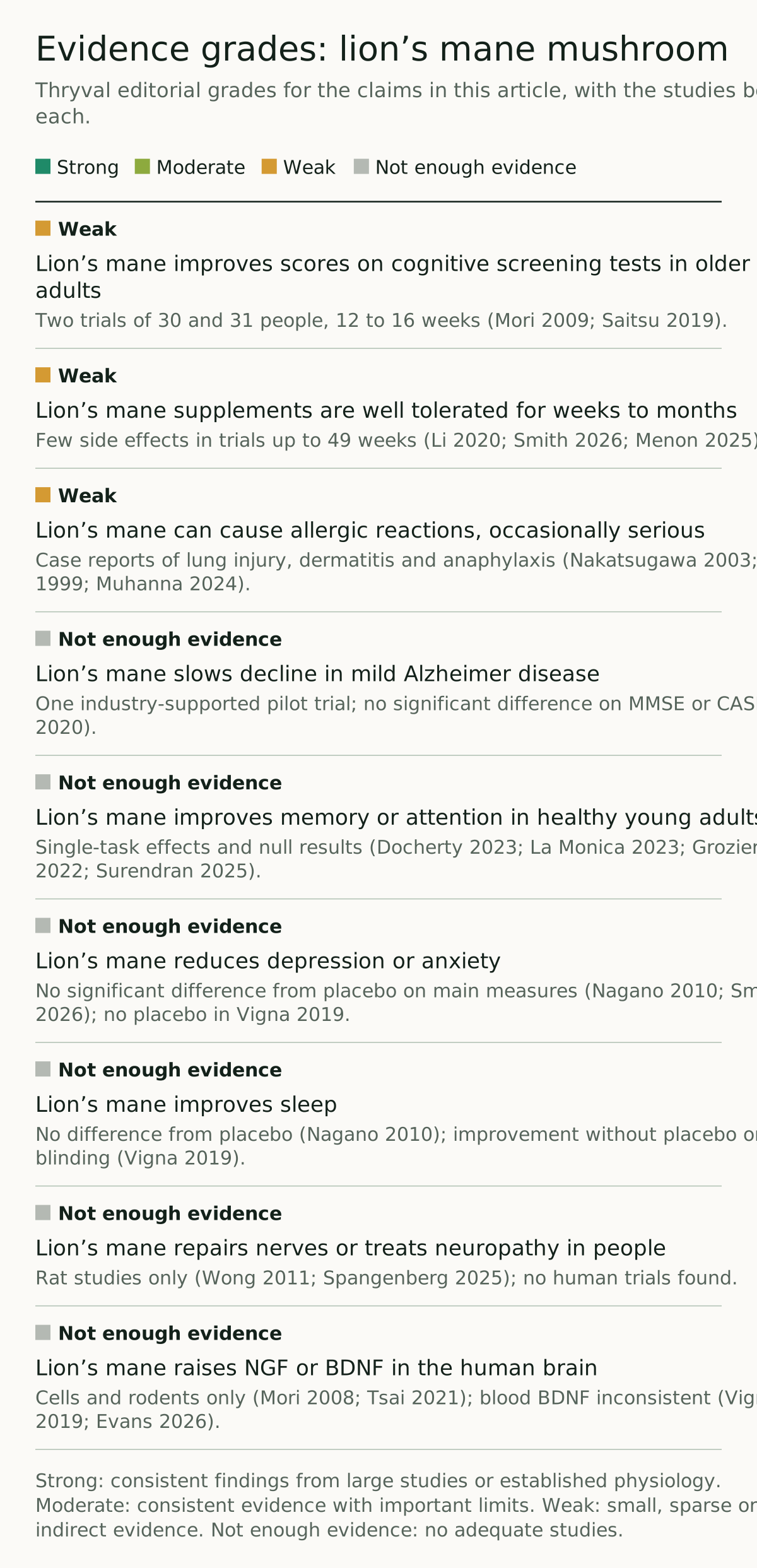
Evidence grades
The grades below are Thryval editorial judgments based on the studies cited in this article. The grading rules are set out on our Research page.
Frequently asked questions
Does lion’s mane improve memory?
Two small Japanese trials in older adults found slightly higher scores on cognitive screening tests after 12 to 16 weeks, and in one the gain faded within 4 weeks of stopping.112 Trials in healthy young adults have not shown consistent effects on memory.121314
Can lion’s mane help dementia or Alzheimer disease?
One 49-week pilot trial in 41 people with mild Alzheimer disease, supported by a company that provided the study materials, found no significant difference from placebo on its two main cognitive tests.10 Lion’s mane is not a treatment for dementia, and people with dementia should continue the care their clinicians have prescribed.
Does lion’s mane help anxiety or depression?
Small trials have reported improvements within the lion’s mane groups, but in the placebo-controlled trials the changes did not differ significantly from placebo on the main measures.1617 No trial has studied people diagnosed with depression or an anxiety disorder, and it should not replace their treatment.
Does lion’s mane repair nerve damage?
Lion’s mane extracts helped injured nerves regrow in rats, and its compounds stimulate nerve growth factor in cell culture.195 We found no human trials in nerve injury or neuropathy.20
How much lion’s mane was used in the studies?
Fruiting body powder was tested at about 2 to 3.2 g a day for 4 to 16 weeks, proprietary blends at 1.8 to 2 g a day, and an erinacine A-enriched mycelium at 1.05 g a day for 49 weeks.161121210 These are the doses tested, not recommendations.
Is lion’s mane safe, and what are the side effects?
It was generally well tolerated in trials of up to 49 weeks; reported side effects included stomach discomfort, nausea, headache and rash.1018 Allergic reactions, including one case of acute lung injury, have been reported, and there are no long-term or pregnancy safety data.2320 Anyone taking prescription medicines should check with a clinician or pharmacist first.
Implications for patients and clinicians
For older adults concerned about memory, the evidence for lion’s mane consists of two small trials with modest changes on screening tests and one industry-supported pilot trial in Alzheimer disease that did not meet its main comparisons.11210 For mood and focus in younger people, results are inconsistent and mostly within-group.121617 Products differ widely, and only one trial reported the content of a named active compound.1022 Clinicians asked about lion’s mane can reasonably describe it as an edible mushroom with interesting laboratory biology and little human evidence, ask about mushroom allergy, and make sure it is not delaying the assessment of new memory problems or the treatment of depression or neuropathy.2310
This article is for education and is not medical advice.
References
-
Friedman M. Chemistry, nutrition, and health-promoting properties of Hericium erinaceus (lion’s mane) mushroom fruiting bodies and mycelia and their bioactive compounds. J Agric Food Chem. 2015;63(32):7108–7123. Narrative review; US Department of Agriculture author. PubMed 26244378 ↩
-
Saitsu Y, Nishide A, Kikushima K, Shimizu K, Ohnuki K. Improvement of cognitive functions by oral intake of Hericium erinaceus. Biomed Res. 2019;40(4):125–131. Randomized, double-blind, placebo-controlled trial, n=31 analyzed, 12 weeks, 3.2 g/day fruiting body powder; funding and supplement source not stated. PubMed 31413233 ↩↩↩↩↩↩↩↩↩↩↩↩↩↩
-
Spangenberg ET, Moneypenny A, Bozzo GG, Perreault ML. Unveiling the role of erinacines in the neuroprotective effects of Hericium erinaceus: a systematic review in preclinical models. Front Pharmacol. 2025;16:1582081. Systematic review of cell and rodent studies; no commercial conflicts declared. PMC12230622 · PubMed 40626304 ↩↩↩↩↩
-
Li IC, Lee LY, Tzeng TT, et al. Neurohealth properties of Hericium erinaceus mycelia enriched with erinacines. Behav Neurol. 2018;2018:5802634. Narrative review; most authors employed by Grape King Bio. PMC5987239 · PubMed 29951133 ↩
-
Mori K, Obara Y, Hirota M, et al. Nerve growth factor-inducing activity of Hericium erinaceus in 1321N1 human astrocytoma cells. Biol Pharm Bull. 2008;31(9):1727–1732. Cell culture and mouse study. PubMed 18758067 ↩↩↩↩
-
Phan CW, Lee GS, Hong SL, et al. Hericium erinaceus (Bull.: Fr) Pers. cultivated under tropical conditions: isolation of hericenones and demonstration of NGF-mediated neurite outgrowth in PC12 cells via MEK/ERK and PI3K-Akt signaling pathways. Food Funct. 2014;5(12):3160–3169. Cell culture study. PubMed 25288148 ↩
-
Tsai PC, Wu YK, Hu JH, et al. Preclinical bioavailability, tissue distribution, and protein binding studies of erinacine A, a bioactive compound from Hericium erinaceus mycelia using validated LC-MS/MS method. Molecules. 2021;26(15):4510. Rat pharmacokinetic study; two authors employed by Grape King Bio. PMC8347307 · PubMed 34361662 ↩↩↩↩
-
Vigna L, Morelli F, Agnelli GM, et al. Hericium erinaceus improves mood and sleep disorders in patients affected by overweight or obesity: could circulating pro-BDNF and BDNF be potential biomarkers? Evid Based Complement Alternat Med. 2019;2019:7861297. Open-label controlled study without placebo, n=77, 8 weeks; supplement provided by A.V.D. Reform; no conflicts declared. PMC6500611 · PubMed 31118969 ↩↩↩↩↩↩↩↩↩↩↩
-
Evans C, Kalman D, Goodrich J, et al. A pilot proof-of-concept study to evaluate the physiological and cognitive impacts of Hericium erinaceus on healthy adults. Nutrients. 2026;18(19):3177. Single-arm pilot study, n=10, 28 days; funded by an unrestricted International Society of Sports Nutrition grant, whose CEO is a co-author; product supplied by M2 Ingredients; three authors affiliated with Substantiation Sciences. PMC13666732 · PubMed 42884628 ↩↩↩↩↩↩
-
Li IC, Chang HH, Lin CH, et al. Prevention of early Alzheimer’s disease by erinacine A-enriched Hericium erinaceus mycelia pilot double-blind placebo-controlled study. Front Aging Neurosci. 2020;12:155. Randomized pilot trial, n=49 randomized, 41 completed, 49 weeks; Grape King Bio paid salaries of five authors and provided research materials; NCT04065061. PMC7283924 · PubMed 32581767 ↩↩↩↩↩↩↩↩↩↩↩↩↩↩↩↩↩↩↩↩
-
Mori K, Inatomi S, Ouchi K, Azumi Y, Tuchida T. Improving effects of the mushroom Yamabushitake (Hericium erinaceus) on mild cognitive impairment: a double-blind placebo-controlled clinical trial. Phytother Res. 2009;23(3):367–372. Randomized, double-blind, placebo-controlled trial, n=30, 16 weeks; first author affiliated with the Mushroom Laboratory, Hokuto Corporation. PubMed 18844328 ↩↩↩↩↩↩↩↩↩
-
Docherty S, Doughty FL, Smith EF. The acute and chronic effects of lion’s mane mushroom supplementation on cognitive function, stress and mood in young adults: a double-blind, parallel groups, pilot study. Nutrients. 2023;15(22):4842. Randomized, double-blind, placebo-controlled pilot trial, n=41, 28 days; capsules provided by Sempera Organics; no other external funding. PMC10675414 · PubMed 38004235 ↩↩↩↩↩↩↩↩↩↩↩↩↩
-
Grozier CD, Alves VA, Killen LG, Simpson JD, O’Neal EK, Waldman HS. Four weeks of Hericium erinaceus supplementation does not impact markers of metabolic flexibility or cognition. Int J Exerc Sci. 2022;15(2):1366–1380. Single-blind, placebo-controlled trial, n=24, 4 weeks, 10 g/day; funding not found in the record. PMC9762243 · PubMed 36582308 ↩↩↩↩↩↩
-
Surendran G, Saye J, Binti Mohd Jalil S, et al. Acute effects of a standardised extract of Hericium erinaceus (lion’s mane mushroom) on cognition and mood in healthy younger adults: a double-blind randomised placebo-controlled study. Front Nutr. 2025;12:1405796. Randomized crossover trial, n=18, single dose; two authors employed by Beyond Alcohol Ltd, which uses lion’s mane in its products and contributed to the publication fee. PMC12018234 · PubMed 40276537 ↩↩↩↩↩↩↩
-
La Monica MB, Raub B, Ziegenfuss EJ, et al. Acute effects of naturally occurring guayusa tea and Nordic lion’s mane extracts on cognitive performance. Nutrients. 2023;15(24):5018. Randomized crossover trial, n=40, single doses; funded in part by Applied Food Sciences Inc.; senior author has received funding and fees from supplement companies. PMC10745489 · PubMed 38140277 ↩↩↩
-
Nagano M, Shimizu K, Kondo R, et al. Reduction of depression and anxiety by 4 weeks Hericium erinaceus intake. Biomed Res. 2010;31(4):231–237. Randomized, double-blind, placebo-controlled trial, n=30 (26 analyzed), 4 weeks; cookies supplied by Aso Biotech, which employed two authors. PubMed 20834180 ↩↩↩↩↩↩↩↩↩↩↩↩
-
Smith EF, Docherty S. The effects of four-week supplementation of lion’s mane and a lion’s mane and reishi blend on prioritised mood and wellbeing measures in young women. Front Nutr. 2026;13:1887408. Randomized, double-blind, placebo-controlled three-arm trial, n=84, 28 days; Northumbria University internal funding; capsules provided by Sempera Organics; NCT06406946. PMC13727649 · PubMed 42978868 ↩↩↩↩↩↩↩↩↩↩
-
Menon A, Jalal A, Arshad Z, Nawaz FA, Kashyap R. Benefits, side effects, and uses of Hericium erinaceus as a supplement: a systematic review. Front Nutr. 2025;12:1641246. Systematic review of 5 randomized and 3 pilot trials plus laboratory studies; no commercial conflicts declared. PMC12434001 · PubMed 40959699 ↩↩↩↩↩↩↩
-
Wong KH, Naidu M, David P, et al. Peripheral nerve regeneration following crush injury to rat peroneal nerve by aqueous extract of medicinal mushroom Hericium erinaceus (Bull.: Fr) Pers. (Aphyllophoromycetideae). Evid Based Complement Alternat Med. 2011;2011:580752. Rat study; erratum published 2018. PMC3176599 · PubMed 21941586 ↩↩↩↩
-
Muhanna M, Lund I, Bromberg M, et al. ALSUntangled #73: lion’s mane. Amyotroph Lateral Scler Frontotemporal Degener. 2024;25(3-4):420–423. Evidence review by ALS clinicians. PubMed 38141002 ↩↩↩↩↩↩↩
-
Lee LY, Li IC, Chen WP, Tsai YT, Chen CC, Tung KC. Thirteen-week oral toxicity evaluation of erinacine A-enriched lion’s mane medicinal mushroom, Hericium erinaceus (Agaricomycetes), mycelia in Sprague-Dawley rats. Int J Med Mushrooms. 2019;21(4):401–411. Rat toxicity study; authors include Grape King Bio staff. PubMed 31002635 ↩↩
-
Mahadevan K, Daoust J, Brendler T, Chaudhary A, Saifi A, Garg VK. A toxicological assessment of Hericium erinaceus (lion’s mane) and Trametes versicolor (turkey tail) mushroom powders. Front Toxicol. 2025;7:1651442. Rat toxicity and genotoxicity studies; two authors employed by M2 Ingredients. PMC12603391 · PubMed 41230556 ↩↩↩↩↩
-
Nakatsugawa M, Takahashi H, Takezawa C, et al. Hericium erinaceum (yamabushitake) extract-induced acute respiratory distress syndrome monitored by serum surfactant proteins. Intern Med. 2003;42(12):1219–1222. Case report. PubMed 14714963 ↩↩↩↩↩
-
Maes MF, van Baar HM, van Ginkel CJ. Occupational allergic contact dermatitis from the mushroom White Pom Pom (Hericium erinaceum). Contact Dermatitis. 1999;40(5):289–290. Case report. PubMed 10344494 ↩↩