
Does rhodiola reduce stress and fatigue? What the trials show
Rhodiola rosea extracts are sold for stress, fatigue and burnout. Small placebo-controlled trials of branded extracts report mixed results, open-label burnout studies lack controls, and an independent Canadian trial found worse vitality than placebo. Certainty is low.
The grade WeakRhodiola rosea extracts for stress-related fatigue
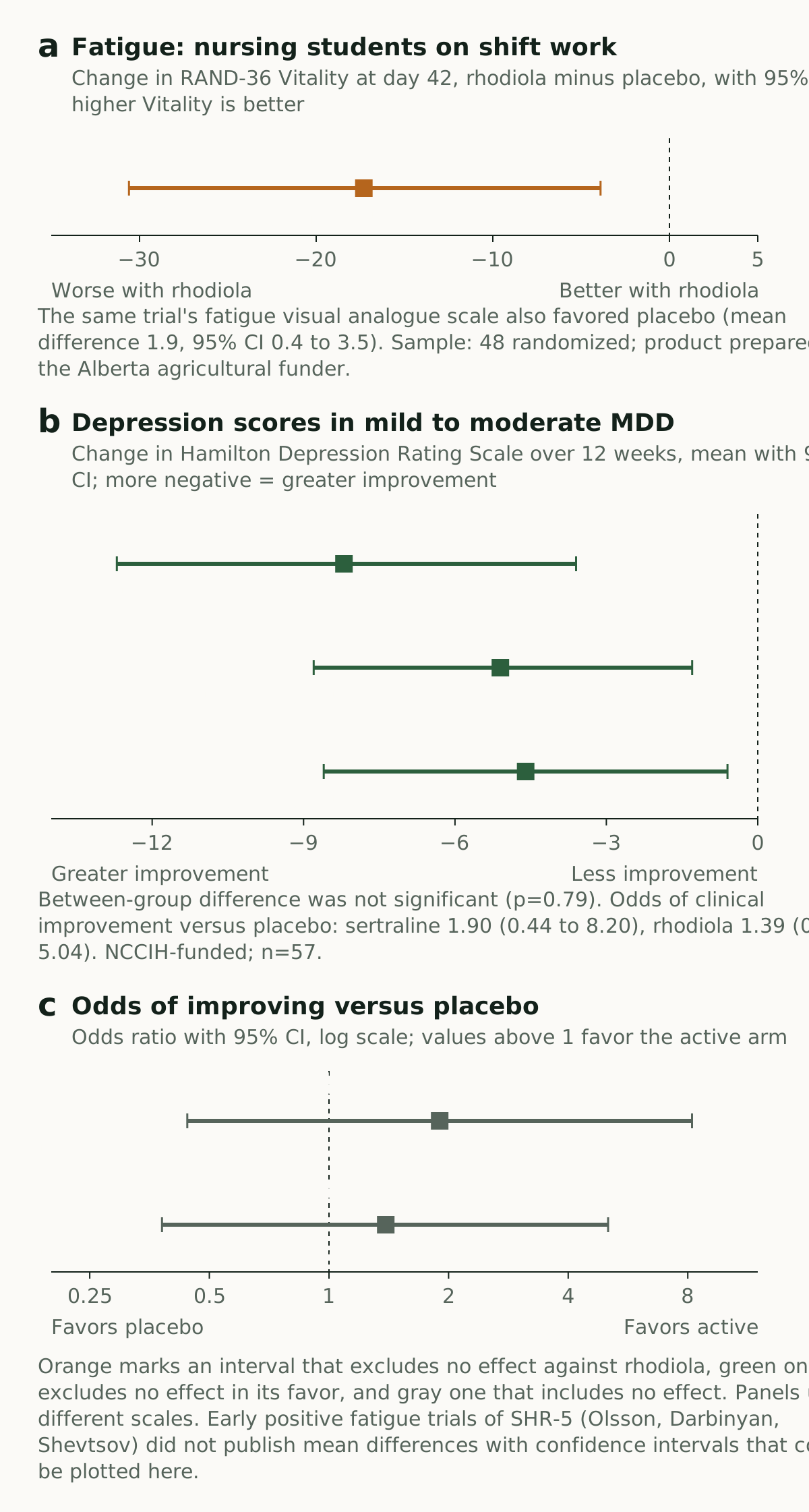
In brief. Rhodiola rosea root extracts are sold for stress, fatigue and burnout. Systematic reviews of randomized trials find the evidence contradictory and often at high or unclear risk of bias.12 Several small trials of the standardized extract SHR-5 reported better fatigue or attention scores than placebo over days to four weeks, including a 60-person Swedish trial in stress-related fatigue and older studies in night-duty physicians, military cadets and students.3456 A Canadian randomized trial in nursing students on shift work found the opposite: after 42 days, Vitality scores were worse with rhodiola than with placebo (mean difference −17.3, 95% CI −30.6 to −3.9).7 Open-label studies of another extract, WS® 1375, in life-stress and burnout lack a placebo arm.89 For major depression, a National Institutes of Health–funded trial found no significant difference from placebo, and a 2022 WFSBP/CANMAT taskforce did not support rhodiola for mood disorders.1315 Short-term use appears reasonably tolerated; interactions with the blood-pressure drug losartan via CYP2C9 inhibition have been reported.1617
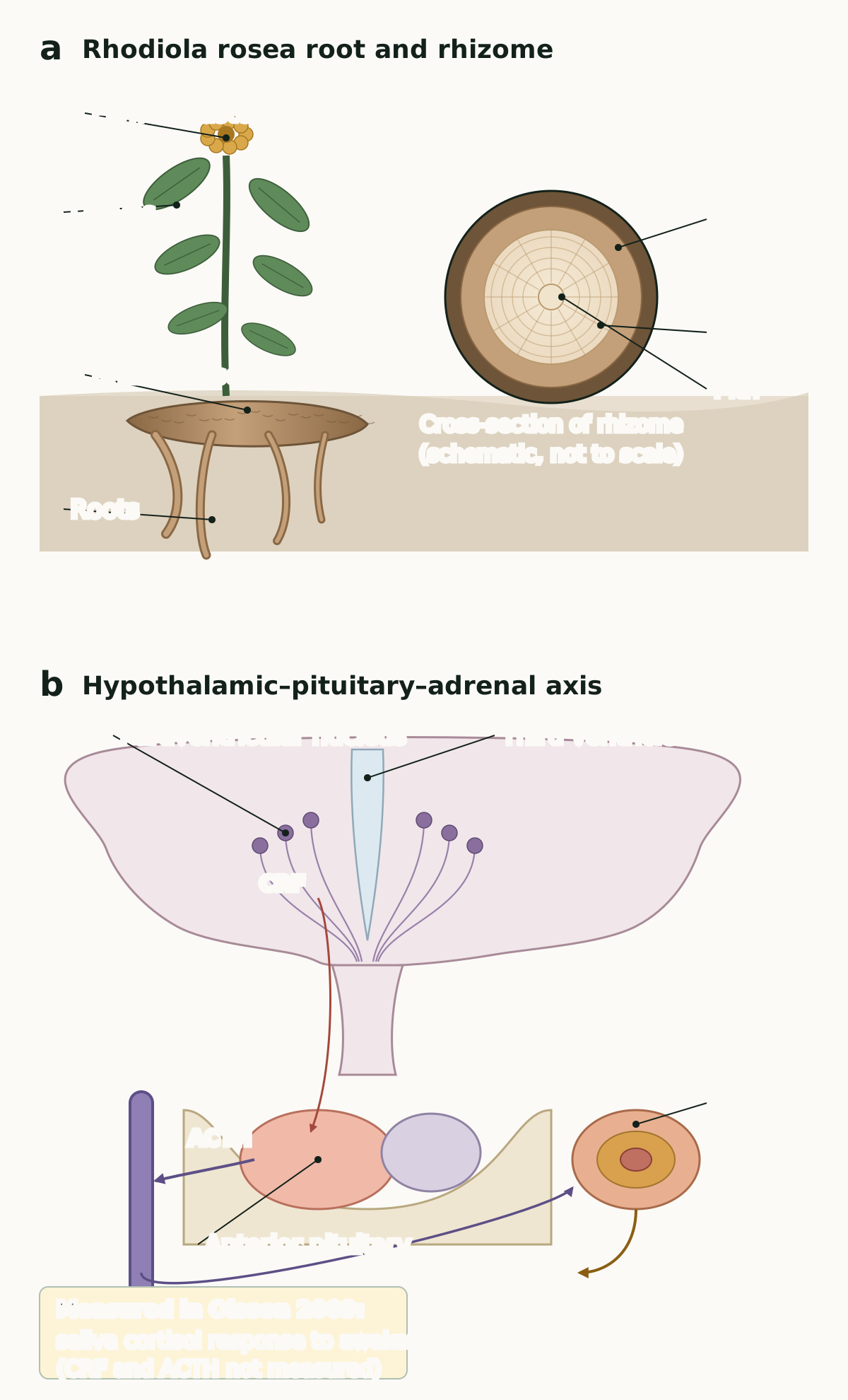
Rhodiola rosea (golden root, arctic root) is a Crassulaceae plant that grows at high altitudes. Its roots and rhizomes have a long history of use in northern and mountain traditional medicine for fatigue and work capacity.116 This article reviews what human trials measured for stress, fatigue, burnout and mood, how large the effects were, which extracts were tested, who paid for the studies, and what is known about safety. Related Resources posts cover ashwagandha, L-theanine and omega-3 fats for depression and anxiety.
What is sold as rhodiola?
Most clinical trials did not test raw dried herb. They tested standardized extracts of root and rhizome. SHR-5 (also sold as Arctic Root) is a Swedish Herbal Institute extract used in several early fatigue and depression trials; tablets in those studies delivered on the order of 170 mg to about 680 mg of extract a day.34125 WS® 1375 (the active substance in Vitango® / Vitano® products from Dr Willmar Schwabe) was studied at 200 mg twice daily in open-label life-stress and burnout cohorts.8910 Extracts are often described as standardized to phenylpropanoids (rosavins) and the phenylethanoid salidroside, but product labels and trial reports do not always give the same assay targets.114 Because preparations differ, a result from one extract cannot be assumed to apply to another, or to an unbranded product.
Does rhodiola reduce stress-related fatigue?
Hung and colleagues, in 2011, systematically reviewed 11 placebo-controlled randomized trials of mono-preparations of R. rosea.1 Six trials addressed physical performance, four mental performance, and two mental-health conditions. Methodological quality was judged moderate or good in most, but few findings had been independently replicated, and the authors wrote that more research was warranted.1
Ishaque and colleagues, in 2012, reviewed 11 controlled trials of rhodiola for physical or mental fatigue.2 Two of six physical-fatigue trials and three of five mental-fatigue trials were reported as positive. All included studies had high risk of bias or reporting flaws that left risk of bias unclear, and the authors called for a rigorously designed trial.2
Among the better-described positive trials, Olsson and colleagues randomized 60 adults aged 20 to 55 with stress-related fatigue (Swedish diagnostic criteria for fatigue syndrome) to SHR-5, 576 mg a day, or placebo for 28 days.3 Compared with placebo, the extract improved scores on Pines’ burnout scale (p=0.047) and several continuous-performance indices of attention; the saliva cortisol response to awakening also differed between groups.3 One coauthor, Alexander Panossian, has been affiliated with the Research and Development Unit of the Swedish Herbal Institute, which makes SHR-5.14
Darbinyan and colleagues gave SHR-5 or placebo in a double-blind crossover to 56 healthy physicians on night duty and reported a significant improvement in a composite fatigue index during the first two-week active period.4 Shevtsov and colleagues randomized 161 young military cadets to a single dose of SHR-5 (two or three capsules) or placebo (with an untreated control arm) and reported higher antifatigue-index values with both active doses than with placebo (means 1.0385 and 1.0195 versus 0.9046; p<0.001).5 Spasov and colleagues, in a 20-day exam-period pilot in students, reported improvements in physical fitness, mental fatigue and neuromotor tests with a low repeated dose of SHR-5, and judged the dose probably suboptimal.6
These early positive results sit beside a clear negative finding. Punja and colleagues randomized 48 nursing students on shift work in Alberta to 364 mg of R. rosea (with an optional second capsule) or identical placebo for 42 days.7 The primary outcome, change in the RAND-36 Vitality subscale, favored placebo (mean difference −17.3, 95% CI −30.6 to −3.9; p=0.011), as did a fatigue visual analogue scale.7 The Alberta agricultural funder prepared the trial product but, according to the authors, had no role in design or analysis.7 The intended sample of 64 was not reached.7
Taken together, the fatigue literature does not support a confident claim of benefit. Small manufacturer-linked trials point one way; an independent shift-work trial points the other; and the systematic reviews refuse to settle the question.127
Does rhodiola help with burnout or life stress?
Evidence for burnout is weaker still. Edwards and colleagues enrolled 101 people with life-stress symptoms in a multicenter, open-label, single-arm study of WS® 1375, 200 mg twice daily for four weeks, and reported improvements across stress, fatigue and disability questionnaires starting within days.8 Without a placebo arm, those changes cannot be separated from regression to the mean, natural recovery or expectancy.
Kasper and Dienel ran a 12-week open-label exploratory trial of the same daily dose of WS® 1375 in 118 outpatients with burnout symptoms.9 Many rating scales improved from week 1 onward, and adverse-event rates were low, but again there was no control group.9 Angelika Dienel is an employee of Dr Willmar Schwabe GmbH & Co. KG, and Siegfried Kasper has disclosed relationships with Schwabe among other companies.9 Lekomtseva and colleagues similarly reported open-label improvement over eight weeks with WS® 1375 in 100 people with prolonged or chronic fatigue symptoms.10
Cropley and colleagues compared Vitano® (WS® 1375), 200 mg twice daily, with no treatment in 80 mildly anxious adults over 14 days and found lower self-reported anxiety, stress, anger, confusion and depression in the treated group, without cognitive differences.11 The absence of a placebo control limits causal inference, as the authors noted.11
Does rhodiola help depression or mood disorders?
Darbinyan and colleagues randomized 89 adults with mild to moderate DSM-IV depression and Hamilton Depression Rating Scale (HAMD) scores of 21 to 31 to SHR-5 at 340 mg a day, SHR-5 at 680 mg a day, or placebo for six weeks.12 Both active arms improved overall HAMD and several symptom subgroups relative to baseline in a way the placebo arm did not, with no serious adverse effects reported.12 The trial was small, used an extract linked to the Swedish Herbal Institute, and has not been confirmed by a large independent replication.
Mao and colleagues conducted a National Center for Complementary and Integrative Health–funded phase II trial in 57 adults with mild to moderate major depressive disorder, randomized to standardized R. rosea, sertraline, or placebo for 12 weeks.13 HAM-D scores fell in all three arms (sertraline −8.2, 95% CI −12.7 to −3.6; rhodiola −5.1, −8.8 to −1.3; placebo −4.6, −8.6 to −0.6), with no significant between-group difference (p=0.79).13 Odds of improvement versus placebo were 1.90 (0.44 to 8.20) for sertraline and 1.39 (0.38 to 5.04) for rhodiola; more people on sertraline reported adverse events (63.2%) than on rhodiola (30.0%) or placebo (16.7%).13 The authors declared no financial interest in any herbaceutical company.13
Amsterdam and Panossian’s 2016 review summarized two randomized depression trials and several open-label series and judged a possible antidepressant action, while noting limited evidence.14 The 2022 WFSBP and CANMAT nutraceutical taskforce, grading phytoceuticals for psychiatric disorders, stated that rhodiola use was not supported for mood disorders.15
Who makes the extracts and who paid for the trials?
Industry links are common. SHR-5 / Arctic Root is a Swedish Herbal Institute product; Panossian has listed an SHI research affiliation, and SHI-linked authors appear on several positive SHR-5 papers.1434 WS® 1375 studies are tied to Dr Willmar Schwabe, including employee authorship and disclosed speaker or advisory relationships.9 Punja’s product was prepared by an Alberta agricultural innovation funder.7 Mao’s depression trial was funded by NCCIH grants (SHI supplied the extract) and is an important counterweight because it was not manufacturer-funded.13 Ishaque’s systematic review was supported by Canadian public and agricultural innovation funders without personal competing interests declared by the authors.2 Industry funding does not make a result wrong, but independent replication is scarce, and the best-controlled North American fatigue trial was negative.7
Is rhodiola safe? Side effects and drug interactions
NCCIH summarizes that rhodiola is possibly safe for up to 12 weeks, with side effects that may include dizziness, headache, insomnia, and dry mouth or excess saliva, and that little is known about use in pregnancy or while breastfeeding.16 The trials reviewed here generally reported few serious adverse events over days to 12 weeks.39137
A randomized crossover study in 13 healthy volunteers found that 14 days of Arctic Root reduced the EXP-3174/losartan metabolic ratio by 21% (p=0.023), indicating lower CYP2C9 activity, without significant effects on the other CYP enzymes tested.17 The authors noted that the effect might matter for CYP2C9 substrates with a narrow therapeutic index, such as warfarin or phenytoin.17 An in vitro follow-up with the same commercial product showed noncompetitive CYP2C9 inhibition.18 NCCIH also notes reported interactions with losartan.16 People taking CYP2C9 substrates or antidepressants should discuss rhodiola with a clinician; this article does not claim that rhodiola substitutes for any prescribed medicine.
What remains uncertain
No large, independently funded, multi-week trial has confirmed a benefit of a clearly specified rhodiola extract for stress-related fatigue against a well-matched placebo. Burnout and chronic-fatigue claims rest on open-label data.8910 Mean differences with confidence intervals are missing from several early positive abstracts, which limits pooling. Long-term safety beyond about three months, use in pregnancy, and clinically important drug–herb interactions outside the CYP2C9 signal are not established.1617 Whether any effect depends on baseline stress, extract standardization, or dose has not been settled in head-to-head trials.
Evidence grades
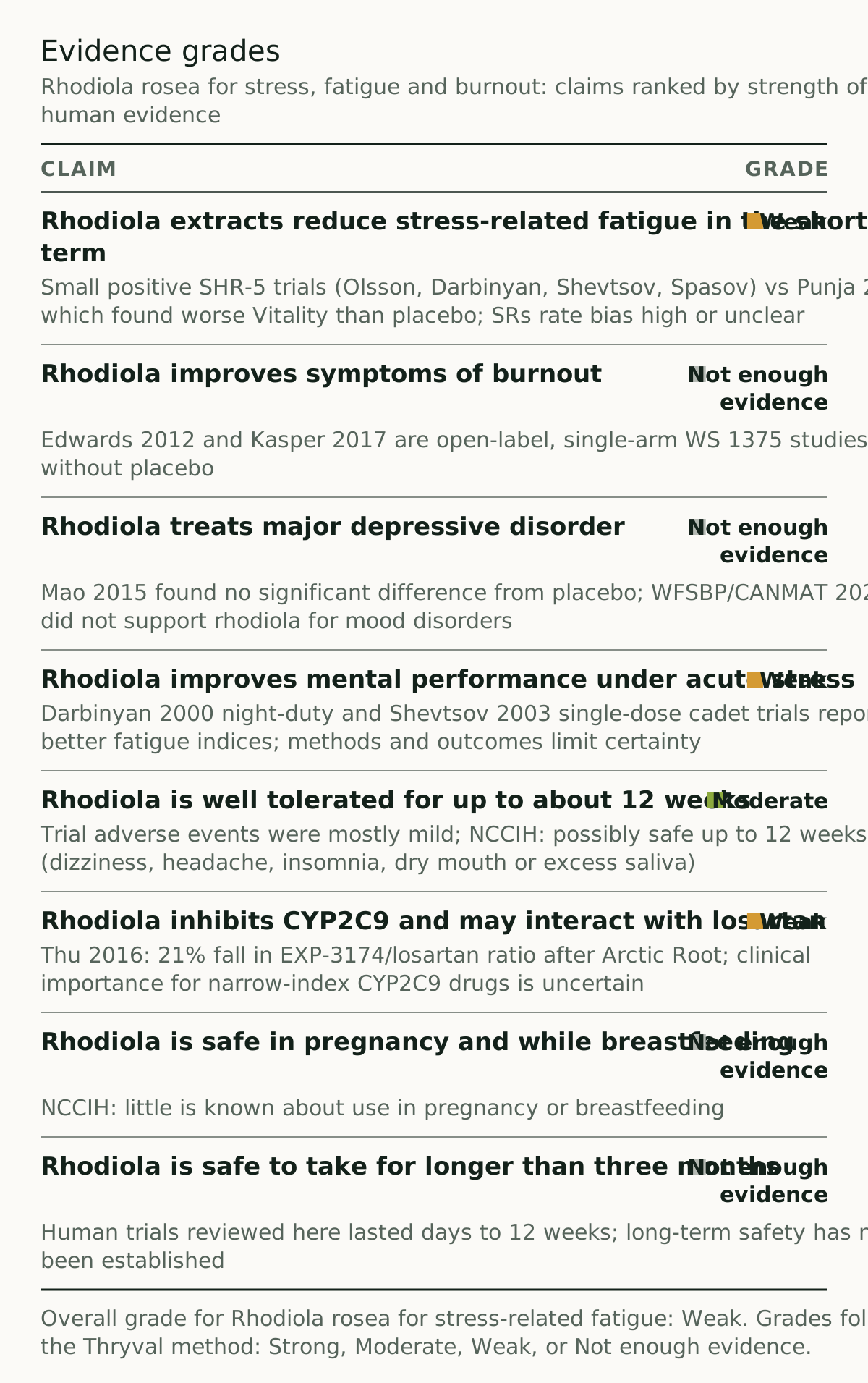
The grades below are Thryval editorial judgments based on the studies cited in this article. The grading rules are set out on our Research page.
Frequently asked questions
Does rhodiola reduce stress and fatigue?
Some small trials of SHR-5 report less fatigue or better attention than placebo over days to four weeks, but systematic reviews find the evidence contradictory and often poorly protected against bias, and a Canadian shift-work trial found worse Vitality with rhodiola than with placebo.1237
Does rhodiola help with burnout?
The main clinical studies in burnout and life-stress symptoms used WS® 1375 without a placebo group, so any improvement could reflect the passage of time or expectancy rather than the extract.89
Can rhodiola treat depression?
A small SHR-5 trial reported benefit in mild to moderate depression, but an NIH-funded trial found no clear advantage over placebo, and a major psychiatric guideline taskforce did not support rhodiola for mood disorders.121315 People with depression should seek clinical care; rhodiola is not a substitute for prescribed treatment.
Which rhodiola extract was studied?
Many positive fatigue trials used SHR-5 (Swedish Herbal Institute). Open-label stress and burnout studies often used WS® 1375 (Schwabe). Results from one branded extract should not be assumed to apply to every product on the shelf.391
Is rhodiola safe to take with blood-pressure or other medicines?
A human cocktail study found modest CYP2C9 inhibition with Arctic Root, measured as a lower losartan metabolite ratio, and NCCIH notes reported interactions with losartan.1716 Anyone taking prescription medicines, including antidepressants or narrow-index CYP2C9 substrates such as warfarin, should ask a clinician or pharmacist before using rhodiola.
How long can you take rhodiola?
NCCIH describes rhodiola as possibly safe for up to 12 weeks.16 Safety over many months has not been established in the trials reviewed here.
Implications for patients and clinicians
For adults seeking a supplement for stress-related fatigue, the human evidence for rhodiola is weak and inconsistent: early small positive trials of SHR-5 have not been confirmed by an independent shift-work RCT, and burnout claims rest on uncontrolled studies.179 Rhodiola should not replace evaluation of sleep, mood disorders, medical illness or workplace factors that drive fatigue, and it does not replace prescribed treatment for depression or anxiety.1315 Short courses appear reasonably tolerated for many people, with attention to CYP2C9 drug interactions and to pregnancy as an evidence gap.1617 Clinicians can tell patients that NCCIH’s summary still holds: there is not enough reliable evidence to say rhodiola is useful for any health-related purpose.16
References
-
Hung SK, Perry R, Ernst E. The effectiveness and efficacy of Rhodiola rosea L.: a systematic review of randomized clinical trials. Phytomedicine. 2011;18(4):235–244. Systematic review: 11 placebo-controlled RCTs. PubMed 21036578 ↩↩↩↩↩↩↩↩↩↩
-
Ishaque S, Shamseer L, Bukutu C, Vohra S. Rhodiola rosea for physical and mental fatigue: a systematic review. BMC Complement Altern Med. 2012;12:70. Systematic review: 11 controlled trials; funded by Canadian Foundation for Innovation, AVAC, ACIDF and Alberta Agriculture; authors declared no personal competing interests. PMC3541197 · PubMed 22643043 ↩↩↩↩↩↩↩
-
Olsson EM, von Schéele B, Panossian AG. A randomised, double-blind, placebo-controlled, parallel-group study of the standardised extract SHR-5 of the roots of Rhodiola rosea in the treatment of subjects with stress-related fatigue. Planta Med. 2009;75(2):105–112. Randomized controlled trial, n=60; SHR-5 extract. PubMed 19016404 ↩↩↩↩↩↩↩↩↩↩
-
Darbinyan V, Kteyan A, Panossian A, Gabrielian E, Wikman G, Wagner H. Rhodiola rosea in stress induced fatigue—a double blind cross-over study of a standardized extract SHR-5 with a repeated low-dose regimen on the mental performance of healthy physicians during night duty. Phytomedicine. 2000;7(5):365–371. Randomized crossover trial, n=56. PubMed 11081987 ↩↩↩↩↩
-
Shevtsov VA, Zholus BI, Shervarly VI, et al. A randomized trial of two different doses of a SHR-5 Rhodiola rosea extract versus placebo and control of capacity for mental work. Phytomedicine. 2003;10(2–3):95–105. Randomized controlled trial, n=161 cadets; single-dose. PubMed 12725561 ↩↩↩↩
-
Spasov AA, Wikman GK, Mandrikov VB, Mironova IA, Neumoin VV. A double-blind, placebo-controlled pilot study of the stimulating and adaptogenic effect of Rhodiola rosea SHR-5 extract on the fatigue of students caused by stress during an examination period with a repeated low-dose regimen. Phytomedicine. 2000;7(2):85–89. Randomized pilot trial. PubMed 10839209 ↩↩
-
Punja S, Shamseer L, Olson K, Vohra S. Rhodiola rosea for mental and physical fatigue in nursing students: a randomized controlled trial. PLoS One. 2014;9(9):e108416. Randomized controlled trial, n=48; funded by Alberta Agriculture and Rural Development through AVAC Ltd., which prepared the intervention. PMC4182456 · PubMed 25268730 ↩↩↩↩↩↩↩↩↩↩↩↩
-
Edwards D, Heufelder A, Zimmermann A. Therapeutic effects and safety of Rhodiola rosea extract WS® 1375 in subjects with life-stress symptoms—results of an open-label study. Phytother Res. 2012;26(8):1220–1225. Open-label single-arm study, n=101; WS® 1375 200 mg twice daily for 4 weeks. PubMed 22228617 ↩↩↩↩↩↩
-
Kasper S, Dienel A. Multicenter, open-label, exploratory clinical trial with Rhodiola rosea extract in patients suffering from burnout symptoms. Neuropsychiatr Dis Treat. 2017;13:889–898. Open-label exploratory trial, n=118; coauthor employee of Dr Willmar Schwabe; Kasper disclosed Schwabe relationships. PMC5370380 · PubMed 28367055 ↩↩↩↩↩↩↩↩↩↩↩↩↩
-
Lekomtseva Y, Zhukova I, Wacker A. Rhodiola rosea in subjects with prolonged or chronic fatigue symptoms: results of an open-label clinical trial. Complement Med Res. 2017;24(1):46–52. Open-label trial, n=100; WS® 1375 400 mg/day for 8 weeks. PubMed 28219059 ↩↩↩
-
Cropley M, Banks AP, Boyle J. The effects of Rhodiola rosea L. extract on anxiety, stress, cognition and other mood symptoms. Phytother Res. 2015;29(12):1934–1939. Randomized trial versus no treatment (not placebo), n=80; Vitano®. PubMed 26502953 ↩↩
-
Darbinyan V, Aslanyan G, Amroyan E, Gabrielyan E, Malmström C, Panossian A. Clinical trial of Rhodiola rosea L. extract SHR-5 in the treatment of mild to moderate depression. Nord J Psychiatry. 2007;61(5):343–348. Randomized controlled trial, n=89. PubMed 17990195 ↩↩↩↩
-
Mao JJ, Xie SX, Zee J, et al. Rhodiola rosea versus sertraline for major depressive disorder: a randomized placebo-controlled trial. Phytomedicine. 2015;22(3):394–399. Randomized controlled trial, n=57; funded by NCCIH (NIH); authors declared no herbaceutical financial interest. PMC4385215 · PubMed 25837277 ↩↩↩↩↩↩↩↩↩↩↩
-
Amsterdam JD, Panossian AG. Rhodiola rosea L. as a putative botanical antidepressant. Phytomedicine. 2016;23(7):770–783. Narrative review; Panossian affiliation listed as Research and Development Unit, Swedish Herbal Institute. PubMed 27013349 ↩↩↩↩
-
Sarris J, Ravindran A, Yatham LN, et al. Clinician guidelines for the treatment of psychiatric disorders with nutraceuticals and phytoceuticals: the World Federation of Societies of Biological Psychiatry (WFSBP) and Canadian Network for Mood and Anxiety Treatments (CANMAT) Taskforce. World J Biol Psychiatry. 2022;23(6):424–455. Guideline: rhodiola not supported for mood disorders. PubMed 35311615 ↩↩↩↩↩
-
National Center for Complementary and Integrative Health. Rhodiola. NCCIH herbal monograph page. Accessed November 5, 2026. nccih.nih.gov ↩↩↩↩↩↩↩↩↩↩↩↩↩
-
Thu OK, Spigset O, Nilsen OG, Hellum B. Effect of commercial Rhodiola rosea on CYP enzyme activity in humans. Eur J Clin Pharmacol. 2016;72(3):295–300. Randomized crossover study, n=13; Arctic Root (Swedish Herbal Institute); 21% decrease in EXP-3174/losartan ratio. PubMed 26613955 ↩↩↩↩↩↩↩
-
Thu OKF, Spigset O, Hellum B. Noncompetitive inhibition of human CYP2C9 in vitro by a commercial Rhodiola rosea product. Pharmacol Res Perspect. 2017;5(4):e00324. In vitro CYP2C9 study of Arctic Root. PMC5684854 · PubMed 28805981 ↩