
Do cold plunges and cold showers improve health? What the trials show
Cold water reliably activates brown fat, triggers a cold shock reflex and, after hard exercise, eases muscle soreness a little. Trials of weight, immunity and mood are small, short or uncontrolled, and the cold shock response is the main hazard.
The grade WeakDeliberate cold exposure for metabolism, mood and immunity in healthy adults
In brief. Cold exposure activates brown adipose tissue in most young adults, but the extra energy it burns is small, and the only randomized trial with a fat outcome found a loss of 0.70 kg over six weeks in 12 men who sat in a cold room for two hours a day.912 After strenuous exercise, cold-water immersion reduces muscle soreness modestly in small, low-quality trials, while regular use after strength training blunts gains in strength and muscle size.3576 In the largest trial, 3,018 Dutch adults who ended their daily shower with 30 to 90 seconds of cold water reported 29% fewer days of sickness absence from work, but not fewer days of illness, and the trial was unblinded.1 Pooled studies of mood and depression are mostly uncontrolled and at high risk of bias, and the authors of the most recent review advise against treating cold water as a standalone treatment for psychiatric disorders.24 Sudden immersion provokes a cold shock reflex of gasping, hyperventilation and a surge in heart rate and blood pressure, which is the main cause of harm.1918
Cold plunges, ice baths and cold showers have moved from sports medicine and Nordic winter swimming into general wellness advice. They are promoted for weight control, mood, immunity and recovery, often on the strength of mechanistic studies in a handful of young men. A 2022 review of 104 studies on voluntary cold-water immersion concluded that most were small, often limited to one sex and inconsistent in water temperature, and that the field remained “a subject of debate.”17 This article sets out what happens in the body during cold exposure, then reviews the human trials for each claimed benefit and the evidence on harm.
What happens in the body during the first minutes in cold water?
Sudden immersion in cold water stimulates cold receptors in the skin, and the first response is reflex rather than voluntary. Within seconds the person gasps, then breathes rapidly in a way that is difficult to control, while heart rate and blood pressure rise and skin vessels constrict.19 Physiologists call this the cold shock response. It is most marked in water below about 15 °C and peaks in the first minute or so.1918 In a laboratory study of young men immersed to the neck for one hour, water at 14 °C raised metabolic rate by 350%, plasma noradrenaline by 530% and plasma dopamine by 250%, while water at 32 °C changed neither metabolic rate nor rectal temperature.22
The cold shock response is a hazard in itself. The gasp can draw water into the lungs if the face is submerged, and hyperventilation shortens the time a person can hold their breath.1820 When the face is submerged during breath holding, the diving reflex slows the heart through the vagus nerve at the same moment that cold shock speeds it through sympathetic nerves. Shattock and Tipton called this “autonomic conflict” and reported that cold-water submersion with breath holding produced heart rhythm disturbances in 62% to 82% of young, fit and healthy volunteers in laboratory studies.19 The authors argue that in people with long QT syndrome or coronary disease these arrhythmias may be lethal, and that some deaths recorded as drowning or hypothermia may be cardiac.19
The response weakens with practice. A 2024 meta-analysis of 17 groups of volunteers found that repeated immersions reduced the heart rate response by an average of 14 beats per minute (Cohen’s d −1.19) and minute ventilation by 21.3 L per minute, usually after about four immersions.20 Habituation does not abolish the reflex, and the studies were small laboratory experiments rather than trials of injury or death.20
Does cold exposure activate brown fat and burn calories?
Brown adipose tissue differs from ordinary white fat. White adipocytes store energy in a single large lipid droplet with the nucleus pushed to the edge, while brown adipocytes contain many small droplets, a central nucleus and a large number of mitochondria.10 These mitochondria carry uncoupling protein 1 (UCP1), which lets protons pumped out by the respiratory chain leak back into the mitochondrial matrix without passing through ATP synthase. The energy is released as heat rather than stored as ATP.15 Brown fat is activated by noradrenaline released from sympathetic nerves when the body is cold.15
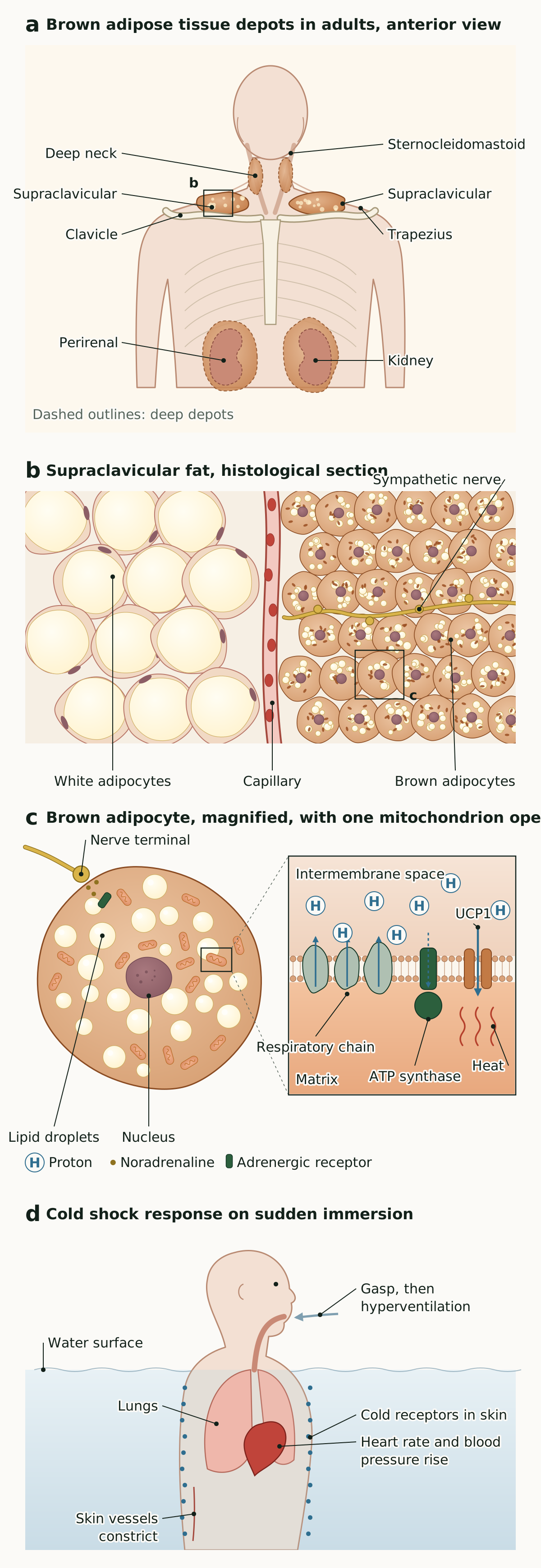
Until 2009, brown fat was thought to be largely absent in adults. That year, two studies in the New England Journal of Medicine changed the view. In one, investigators in Maastricht scanned 24 healthy men by PET-CT after two hours at 16 °C and found active brown fat in 23 of them (96%), with lower activity in men who were overweight or had more body fat.9 In the other, a review of PET-CT scans from 1,972 patients in Boston found substantial depots extending from the anterior neck to the thorax in 7.5% of women and 3.1% of men, a figure lowered by the fact that most scans were done at room temperature for unrelated reasons.10 Biopsies from the neck confirmed UCP1-positive cells with many lipid droplets.10 A small study of six men in Quebec then showed that brown fat takes up oxygen and fuel during cold exposure, rather than simply glucose tracer.11
How much energy brown fat burns is less clear. A 2025 review by 17 brown fat researchers cites an estimate that cold-stimulated brown fat in humans accounts for only 15 to 25 kcal per day, and notes that much of the rise in energy use in the cold may come from muscle and other tissues.15
Can cold exposure help with weight loss or blood sugar?
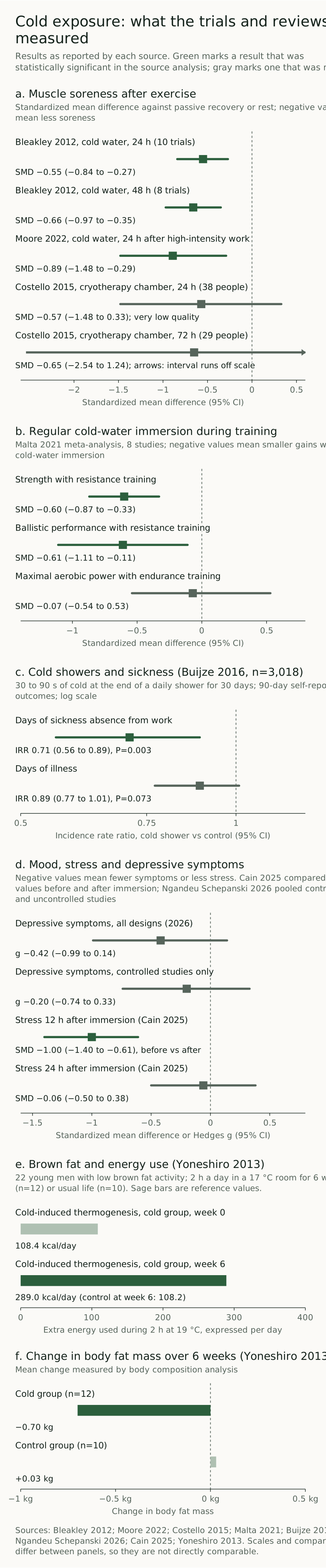
The best evidence on body fat is a small Japanese trial. Yoneshiro and colleagues screened 51 young men and selected 22 with low brown fat activity. Twelve spent two hours a day at 17 °C for six weeks and ten continued their usual lives.12 In the cold group, cold-induced thermogenesis, the extra energy used during two hours at 19 °C expressed per day, rose from 108.4 to 289.0 kcal, while the control group was unchanged at 108.2 kcal. Body fat mass fell by 0.70 kg in the cold group and rose by 0.03 kg in controls.12 The exposure was cold room air, not water. The study was funded by the Japanese education ministry, and one author worked for the food company Ajinomoto; the same paper also tested capsinoid supplements.12
Similar studies in the Netherlands used a cool room rather than water. Ten days of 6 hours a day at 15 to 16 °C in 17 adults increased brown fat activity and nonshivering thermogenesis, without turning subcutaneous white fat brown.13 In 8 people with type 2 diabetes, ten days at 14 to 15 °C raised insulin sensitivity by about 43%, with the changes pointing to glucose uptake in muscle more than in brown fat.14 That study had no control group. Winter swimmers in Denmark, compared with 8 men who did not swim, showed greater cold-induced thermogenesis, but a cross-sectional comparison of 16 people cannot say whether swimming caused the difference.16
None of these studies tested a cold shower or a cold plunge of a few minutes, and none followed participants for longer than six weeks. A loss of under 1 kg of fat after 84 hours in a cold room is a modest return.12
Does an ice bath help recovery after exercise?
Recovery is the oldest use of cold water in sport and has the largest body of trials, although most are small. A 2012 Cochrane review pooled 17 trials with 366 participants, mostly young active men, in which cold-water immersion after exercise was compared with passive rest.3 Soreness was lower with cold water at each time point, with standardized mean differences of −0.55 (95% CI −0.84 to −0.27) at 24 hours, −0.66 (−0.97 to −0.35) at 48 hours and −0.93 (−1.36 to −0.51) at 72 hours. The reviewers rated the trials as low quality, found considerable variation between them and saw no clear advantage of cold over warm water or contrast baths. No trial monitored adverse events actively.3
A 2016 meta-analysis of 9 randomized trials expressed the effect on the 0 to 10 soreness scale. Cold water reduced soreness by 0.29 points immediately and 0.32 points later, an effect the authors called “slightly better” than passive recovery; water at 10 to 15 °C and immersion of 10 to 15 minutes gave the best results.2 A larger 2022 review of 52 studies found that cold water after high-intensity exercise reduced soreness (SMD −0.89, −1.48 to −0.29) and creatine kinase and improved perceived recovery at 24 hours, with small benefits for muscle power but no effect on recovery of strength.5 One of its authors reported a grant from a football club.5
Whole-body cryotherapy, in which a person stands for a few minutes in a chamber of air below −100 °C, has much less support. A 2015 Cochrane review found 4 small trials with 64 participants, all but 4 of them men. Soreness was lower at 1 hour, but the estimates at 24, 48 and 72 hours had wide intervals crossing zero, the evidence was very low quality, and the reviewers concluded that there was insufficient evidence to judge benefit or harm.4
Does regular cold-water immersion interfere with training gains?
Soreness is not the same thing as adaptation, and several trials suggest that regular cold water after strength training reduces the gains that training is meant to produce. In an Australian trial, 21 men did strength training twice a week for 12 weeks and spent 10 minutes after each session either in cold water or on a stationary bike.6 Muscle mass and strength rose more with active recovery; type II muscle fiber area increased by 17% and the number of myonuclei by 26% in that group, with smaller changes after cold water. A second experiment in 9 men showed that cold water dampened the signaling pathways that drive muscle growth.6 In a seven-week trial in 16 men, 15 minutes at 10 °C after each session blunted the growth of type II fibers, although gains in maximal strength were similar.8
A 2021 meta-analysis of 8 controlled studies found that regular cold water during strength training reduced gains in strength (SMD −0.60, −0.87 to −0.33) and in ballistic performance such as jumping (−0.61, −1.11 to −0.11). With endurance training, cold water made no difference to maximal aerobic power (−0.07) or time-trial performance (0.00).7
Do cold showers prevent colds or reduce sick days?
The only large randomized trial of cold showers was run in the Netherlands from January to March 2015.1 It enrolled 3,018 working adults aged 18 to 65 who did not already take cold showers. Participants were assigned to finish their usual warm shower with 30, 60 or 90 seconds of cold water at 10 to 12 °C every day for 30 days, or to shower as usual; the cold shower groups then showered cold at their own discretion for 60 more days. About 79% of those in the cold groups completed the 30 days.1
Over 90 days, the cold shower groups combined reported 29% fewer days of sickness absence from work than controls (incidence rate ratio 0.71, 95% CI 0.56 to 0.89). The number of days they felt ill did not differ significantly (0.89, 0.77 to 1.01; P=0.073).1 The length of the cold spell made no clear difference. In the same analysis, regular physical activity was associated with a similar reduction in sickness absence, a rate ratio of 0.65.1 Both outcomes were self-reported, participants knew which group they were in, and the authors acknowledged that a placebo effect could not be ruled out. They interpreted the result as people feeling well enough to work through an illness rather than becoming ill less often.1 The trial had no specific funding; one author worked for a Dutch health insurer that had no role in the study.1
Claims that cold exposure “boosts the immune system” often cite a 2014 Dutch study in 24 men. Twelve were trained for 10 days by Wim Hof in meditation, a breathing technique of cyclic hyperventilation and breath holding, and immersion in ice-cold water; twelve were not trained.26 When all were then given an intravenous dose of bacterial endotoxin, the trained group had higher levels of the anti-inflammatory cytokine IL-10, lower levels of TNF-α, IL-6 and IL-8 and fewer flu-like symptoms. The effects tracked a large rise in adrenaline driven by the breathing technique, and the design does not allow the contribution of cold to be separated from the breathing.26 Damping an inflammatory response to endotoxin is also not the same as preventing infection. A 2025 meta-analysis of 11 studies with 3,177 participants found no change in immune measures immediately or an hour after immersion, and a rise in markers of inflammation immediately after immersion (SMD 1.03, 0.37 to 1.68).23
Does cold water improve mood, stress or depression?
Many people report feeling alert and cheerful after a cold dip, and small studies agree. In a British study of 33 adults with no experience of cold water, 5 minutes of immersion to the neck at 20 °C raised positive affect on a standard questionnaire by 7 points and lowered negative affect by 4.66 points, along with changes in functional brain connectivity on MRI.21 The study had no control group, so expectation, novelty and the warmth of relief afterward could explain part of the change.21
Pooled data are less encouraging. The 2025 meta-analysis found that perceived stress was lower 12 hours after immersion (SMD −1.00, −1.40 to −0.61) but not at 24 hours or other time points, and that mood did not improve, while sleep and quality of life did. Those estimates compare people before and after immersion rather than against a control group.23 A 2026 meta-analysis of 13 studies with 4,105 participants found a pooled reduction in depressive symptoms of g −0.42 (95% CI −0.99 to 0.14), which shrank to −0.20 (−0.74 to 0.33) when only controlled studies were included; neither estimate was statistically significant.24 Most studies were at high risk of bias. The authors concluded that cold-water exposure “should not currently be regarded as a standalone treatment for psychiatric disorders” and that its safety in that setting has not been established.24
One randomized trial tested a cold-based program in people with symptoms of depression. Researchers in California assigned 84 midlife women with high stress and depressive symptoms to three weeks of the Wim Hof Method, which combines rapid breathing with cold showers, or to slow breathing with warm showers.25 Both groups improved to the same degree, with average falls of about 24% in depressive symptoms, 27% in anxiety and 20% in perceived stress, sustained at three months. All six dropouts were in the Wim Hof group. The trial was funded by foundations and the US National Institute on Aging.25
Who should avoid cold plunges, and what are the risks?
The cold shock response is the main danger, and it is greatest in open water, in water below about 15 °C and in people who are not used to it.191820 The gasp and hyperventilation can lead to inhaling water, and they make swimming and self-rescue harder in the first minutes; drowning in cold water often happens close to safety.1918 The arrhythmias provoked by the combination of cold shock and breath holding are a particular concern for people with heart disease, inherited heart rhythm disorders such as long QT syndrome, or medicines that prolong the QT interval.19 For these reasons, cold-water immersion should not be done alone, the face should not be put under cold water, and entry should be gradual. People with heart disease, high blood pressure or a history of fainting or arrhythmia should discuss it with a doctor first.1918
Raynaud’s phenomenon, in which fingers and toes turn white or blue and go numb, is most often triggered by cold, and staying warm is the main way people with the condition keep attacks under control.27 In the Dutch shower trial, the most common side effect was a lingering feeling of cold in the body (196 participants) or the hands and feet (257 participants), including 3 people with Raynaud’s phenomenon; the trial excluded anyone with serious heart, lung or other disease, so it says little about safety in those groups.1 Trials of soreness and cryotherapy rarely recorded adverse events at all.34 We found no trials of deliberate cold exposure during pregnancy, so its safety is unknown; pregnant readers should not assume that the results above apply to them.
How good is the evidence, and who paid for it?
The physiology of cold shock and brown fat rests on consistent laboratory studies by several independent groups, many of them publicly funded, although most enrolled young men.1920913 The evidence on health outcomes is weaker. The soreness trials are numerous but small, unblinded by necessity and heterogeneous.35 The training trials are small but consistent with each other and with a meta-analysis.687 The sick-day result comes from one large but unblinded trial with self-reported outcomes.1 The fat and insulin studies are short and involved hours of cold room air, not the few minutes in water that most people try.1214 The mood and depression evidence is mostly uncontrolled and at high risk of bias.2423 Industry funding was uncommon among the studies cited here: the Yoneshiro trial included an author from Ajinomoto, an author of the 2022 recovery review held a grant from a football club, authors of the winter-swimming study reported ties to Novo Nordisk and a biotechnology company, and authors of the 2025 brown fat review reported a GlaxoSmithKline-funded chair and a biotechnology advisory role.1251615 We could not check funding statements for several paywalled studies.
What remains uncertain?
No trial has tested a typical cold plunge routine, such as a few minutes in water at 5 to 10 °C several times a week, against a control group for weight, metabolic health or illness over months. It is not known whether repeated short immersions produce the brown fat changes seen after hours in a cold room, or whether any change in brown fat matters for long-term weight or diabetes risk.1512 Women, older adults and people with obesity or heart disease are underrepresented in almost every study cited here.17 Whether the improved mood that people report after a dip lasts, or helps people with clinical depression, remains untested in adequate controlled trials.24
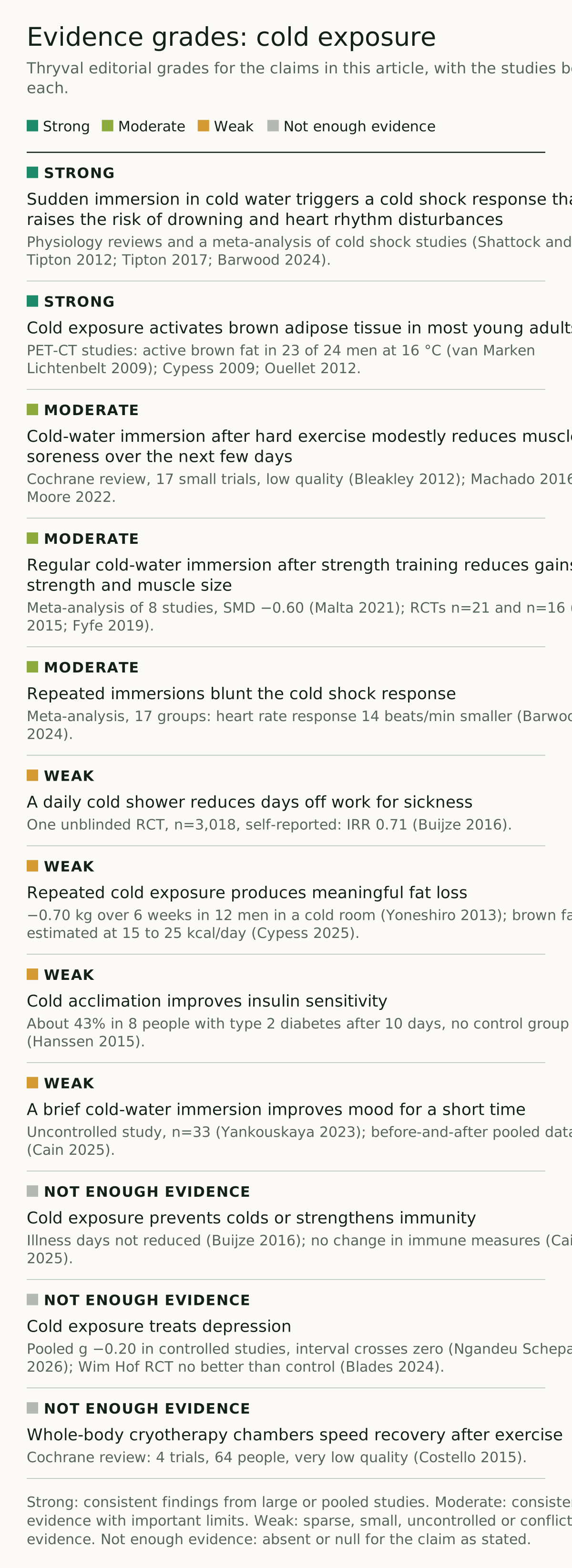
Evidence grades
The grades below are Thryval editorial judgments based on the studies cited in this article. The grading rules are set out on our Research page.
Frequently asked questions
Does a cold plunge burn fat?
Cold activates brown fat, but the energy it adds is small. In the only randomized trial with a fat outcome, two hours a day in a 17 °C room for six weeks reduced fat mass by 0.70 kg in 12 young men.12 No trial has shown fat loss from short cold plunges or cold showers.
Are cold showers good for the immune system?
The large Dutch trial found fewer self-reported sick days off work with cold showers, but no significant reduction in days of illness, and the participants were not blinded.1 Pooled studies found no change in immune measures after immersion.23 There is no good evidence that cold showers prevent infections.
Should I take an ice bath after a workout?
An ice bath after hard exercise reduces soreness modestly over the next few days.35 If the goal is to build strength or muscle, regular use after strength sessions appears to reduce those gains.76 Reviews found the best results with water at 10 to 15 °C for 10 to 15 minutes.2
Can cold water immersion help depression or anxiety?
Studies report short-term improvements in mood and stress, but most were uncontrolled, and controlled studies did not show a significant effect on depressive symptoms.212324 Cold water is not a substitute for treatment of depression or anxiety, including prescribed medication or psychotherapy.24
Is whole-body cryotherapy better than an ice bath?
There is no evidence that it is. A Cochrane review found only 4 small trials of cryotherapy chambers, with very low quality evidence and no clear benefit beyond the first hour.4
Who should not do cold plunges?
People with heart disease, heart rhythm disorders, uncontrolled high blood pressure or Raynaud’s phenomenon should avoid cold immersion or speak to a doctor first, and its safety in pregnancy has not been studied.1927 Nobody should immerse alone, put their face under cold water or enter open water quickly, because the cold shock response can cause drowning.1918
Implications for patients and clinicians
Cold-water immersion can trigger cold shock even in healthy adults, so supervision and gradual entry should not be treated as guarantees of safety.1918 It may ease soreness after hard exercise, though people prioritizing strength gains may want to avoid routine post-training immersion.37 The claims for weight loss, immunity and mental health rest on small, short or uncontrolled studies, and cold exposure should not replace prescribed medication or treatment for depression, diabetes or any other condition.12124 Clinicians asked about cold plunges should focus on safety: the cold shock response, the risk to people with heart disease or Raynaud’s phenomenon, and the rule that nobody should immerse alone.1927 Readers interested in another popular metabolic intervention can find our review of NAD precursors.
This article is for education and is not medical advice.
References
-
Buijze GA, Sierevelt IN, van der Heijden BC, Dijkgraaf MG, Frings-Dresen MH. The effect of cold showering on health and work: a randomized controlled trial. PLoS One. 2016;11(9):e0161749. Pragmatic randomized controlled trial, n=3,018; no specific funding; one author was employed by the insurer Achmea, which had no role in the study. Correction published 2018 (PubMed 30071104). PMC5025014 · PubMed 27631616 ↩↩↩↩↩↩↩↩↩↩↩↩↩
-
Machado AF, Ferreira PH, Micheletti JK, et al. Can water temperature and immersion time influence the effect of cold water immersion on muscle soreness? A systematic review and meta-analysis. Sports Med. 2016;46(4):503–514. Systematic review and meta-analysis of 9 randomized trials; funded by Brazilian public research agencies (FAPESP, CNPq). PMC4802003 · PubMed 26581833 ↩↩↩
-
Bleakley C, McDonough S, Gardner E, Baxter GD, Hopkins JT, Davison GW. Cold-water immersion (cryotherapy) for preventing and treating muscle soreness after exercise. Cochrane Database Syst Rev. 2012;(2):CD008262. Cochrane systematic review: 17 trials, 366 participants; no known conflicts of interest. PMC6492480 · PubMed 22336838 ↩↩↩↩↩↩↩↩
-
Costello JT, Baker PR, Minett GM, Bieuzen F, Stewart IB, Bleakley C. Whole-body cryotherapy (extreme cold air exposure) for preventing and treating muscle soreness after exercise in adults. Cochrane Database Syst Rev. 2015;(9):CD010789. Cochrane systematic review: 4 trials, 64 participants. PMC9579836 · PubMed 26383887 ↩↩↩↩
-
Moore E, Fuller JT, Buckley JD, et al. Impact of cold-water immersion compared with passive recovery following a single bout of strenuous exercise on athletic performance in physically active participants: a systematic review with meta-analysis and meta-regression. Sports Med. 2022;52(7):1667–1688. Systematic review and meta-analysis of 52 studies; one author reported a grant from Norwood Football Club. PMC9213381 · PubMed 35157264 ↩↩↩↩↩↩↩
-
Roberts LA, Raastad T, Markworth JF, et al. Post-exercise cold water immersion attenuates acute anabolic signalling and long-term adaptations in muscle to strength training. J Physiol. 2015;593(18):4285–4301. Randomized trial, n=21, plus a crossover study, n=9; funded by the American College of Sports Medicine, Exercise and Sports Science Australia and Queensland University of Technology; no competing interests. PMC4594298 · PubMed 26174323 ↩↩↩↩↩↩
-
Malta ES, Dutra YM, Broatch JR, Bishop DJ, Zagatto AM. The effects of regular cold-water immersion use on training-induced changes in strength and endurance performance: a systematic review with meta-analysis. Sports Med. 2021;51(1):161–174. Systematic review and meta-analysis of 8 studies; funding statement not available to us. PubMed 33146851 ↩↩↩↩↩↩
-
Fyfe JJ, Broatch JR, Trewin AJ, et al. Cold water immersion attenuates anabolic signaling and skeletal muscle fiber hypertrophy, but not strength gain, following whole-body resistance training. J Appl Physiol (1985). 2019;127(5):1403–1418. Randomized trial, n=16; funding statement not available to us. PubMed 31513450 ↩↩↩
-
van Marken Lichtenbelt WD, Vanhommerig JW, Smulders NM, et al. Cold-activated brown adipose tissue in healthy men. N Engl J Med. 2009;360(15):1500–1508. PET-CT study, n=24 men; funding statement not available to us. PubMed 19357405 ↩↩↩↩
-
Cypess AM, Lehman S, Williams G, et al. Identification and importance of brown adipose tissue in adult humans. N Engl J Med. 2009;360(15):1509–1517. Retrospective PET-CT review, 1,972 patients, with biopsy immunostaining. PMC2859951 · PubMed 19357406 ↩↩↩↩
-
Ouellet V, Labbé SM, Blondin DP, et al. Brown adipose tissue oxidative metabolism contributes to energy expenditure during acute cold exposure in humans. J Clin Invest. 2012;122(2):545–552. PET study, n=6 men. PMC3266793 · PubMed 22269323 ↩↩
-
Yoneshiro T, Aita S, Matsushita M, et al. Recruited brown adipose tissue as an antiobesity agent in humans. J Clin Invest. 2013;123(8):3404–3408. Randomized trial of daily cold exposure, n=22 men (12 cold, 10 control); funded by the Japanese Ministry of Education (MEXT); one author was affiliated with Ajinomoto; the paper also reported a separate capsinoid arm; no conflicts declared. PMC3726164 · PubMed 23867622 ↩↩↩↩↩↩↩↩↩↩↩
-
van der Lans AA, Hoeks J, Brans B, et al. Cold acclimation recruits human brown fat and increases nonshivering thermogenesis. J Clin Invest. 2013;123(8):3395–3403. Uncontrolled acclimation study, n=17; funded by the Netherlands Organisation for Scientific Research and the EU Seventh Framework Programme; no conflicts declared. PMC3726172 · PubMed 23867626 ↩↩
-
Hanssen MJ, Hoeks J, Brans B, et al. Short-term cold acclimation improves insulin sensitivity in patients with type 2 diabetes mellitus. Nat Med. 2015;21(8):863–865. Uncontrolled acclimation study, n=8; funding statement not available to us. PubMed 26147760 ↩↩↩
-
Cypess AM, Cannon B, Nedergaard J, et al. Emerging debates and resolutions in brown adipose tissue research. Cell Metab. 2025;37(1):12–33. Narrative review; one author held a GlaxoSmithKline-funded research chair and one served on the scientific advisory board of Moonwalk Bioscience. PMC11710994 · PubMed 39644896 ↩↩↩↩↩↩
-
Søberg S, Löfgren J, Philipsen FE, et al. Altered brown fat thermoregulation and enhanced cold-induced thermogenesis in young, healthy, winter-swimming men. Cell Rep Med. 2021;2(10):100408. Cross-sectional study, 8 winter swimmers and 8 controls; one author consults for Novo Nordisk and one works for Embark Biotech. PMC8561167 · PubMed 34755128 ↩↩
-
Esperland D, de Weerd L, Mercer JB. Health effects of voluntary exposure to cold water: a continuing subject of debate. Int J Circumpolar Health. 2022;81(1):2111789. Narrative review of 104 studies; no conflicts declared. PMC9518606 · PubMed 36137565 ↩↩
-
Tipton MJ, Collier N, Massey H, Corbett J, Harper M. Cold water immersion: kill or cure? Exp Physiol. 2017;102(11):1335–1355. Narrative review. PubMed 28833689 ↩↩↩↩↩↩↩↩↩
-
Shattock MJ, Tipton MJ. ‘Autonomic conflict’: a different way to die during cold water immersion? J Physiol. 2012;590(14):3219–3230. Narrative review. PMC3459038 · PubMed 22547634 ↩↩↩↩↩↩↩↩↩↩↩↩↩↩↩
-
Barwood MJ, Eglin C, Hills SP, et al. Habituation of the cold shock response: a systematic review and meta-analysis. J Therm Biol. 2024;119:103775. Systematic review and meta-analysis, 17 groups. PubMed 38211547 ↩↩↩↩↩↩↩
-
Yankouskaya A, Williamson R, Stacey C, Totman JJ, Massey H. Short-term head-out whole-body cold-water immersion facilitates positive affect and increases interaction between large-scale brain networks. Biology (Basel). 2023;12(2):211. Uncontrolled before-and-after study, n=33; no external funding. PMC9953392 · PubMed 36829490 ↩↩↩↩
-
Srámek P, Simecková M, Janský L, Savlíková J, Vybíral S. Human physiological responses to immersion into water of different temperatures. Eur J Appl Physiol. 2000;81(5):436–442. Laboratory study in young men. PubMed 10751106 ↩
-
Cain T, Brinsley J, Bennett H, et al. Effects of cold-water immersion on health and wellbeing: a systematic review and meta-analysis. PLoS One. 2025;20(1):e0317615. Systematic review and meta-analysis: 11 studies, 3,177 participants; no competing interests. PMC11778651 · PubMed 39879231 ↩↩↩↩↩↩↩
-
Ngandeu Schepanski S, Batta F, Schröter M, et al. Cold-water exposure and psychological outcomes in adults: a systematic review and meta-analysis. Front Physiol. 2026;17:1926423. Systematic review and meta-analysis: 13 studies, 4,105 participants; no financial support received. PMC13624972 · PubMed 42819812 ↩↩↩↩↩↩↩↩↩
-
Blades R, Mendes WB, Don BP, et al. A randomized controlled clinical trial of a Wim Hof Method intervention in women with high depressive symptoms. Compr Psychoneuroendocrinol. 2024;20:100272. Randomized controlled trial, n=84; funded by foundations and the US National Institute on Aging; no conflicts declared. PMC11599992 · PubMed 39606690 ↩↩↩
-
Kox M, van Eijk LT, Zwaag J, et al. Voluntary activation of the sympathetic nervous system and attenuation of the innate immune response in humans. Proc Natl Acad Sci U S A. 2014;111(20):7379–7384. Randomized study, n=24; funded by the Dutch Arthritis Foundation (Reumafonds); no conflicts declared. PMC4034215 · PubMed 24799686 ↩↩↩
-
National Institute of Arthritis and Musculoskeletal and Skin Diseases. Raynaud’s phenomenon. Last reviewed July 2024. niams.nih.gov ↩↩↩