
Do fermented foods reduce inflammation? What the trials show
Yogurt, kefir, kimchi, sauerkraut and kombucha are sold as gut and immune foods. One small Stanford study found that eating more of them raised microbiome diversity and lowered inflammatory proteins, but pooled trials show little change in CRP or IL-6. The clearest benefit is better lactose digestion from yogurt.
The grade WeakFermented foods for inflammation and gut health
In brief. Fermented foods have not been shown to lower the standard blood markers of inflammation. A meta-analysis of 26 trials with 1,461 adults found no change in C-reactive protein (CRP) (−0.21 mg/L, 95% CI −0.47 to 0.05) or interleukin-6 (IL-6), and a meta-analysis of fermented dairy found a small fall in CRP whose confidence interval nearly reached zero.23 The study behind most headlines is a Stanford trial in which 18 healthy adults raised their intake to about six servings a day for 10 weeks; their microbiome diversity rose and 19 circulating inflammatory proteins fell, but the trial had no control group.1 The best-established effect is narrower: yogurt that still contains live cultures is digested better than milk by people with lactose maldigestion.67 Links between yogurt and lower type 2 diabetes risk come from observational cohorts, and the human evidence for kombucha is limited to a few small, short trials.91011
The International Scientific Association for Probiotics and Prebiotics (ISAPP) defines fermented foods as “foods made through desired microbial growth and enzymatic conversions of food components.”12 That definition covers yogurt and sourdough bread, wine and kimchi, so “fermented foods” is not one exposure. This article reviews what human studies have measured for the fermented foods most often sold for gut health, how large the effects were, and who paid for the research. Our article on dietary fiber covers the fiber arm of the same Stanford study.
What counts as a fermented food, and do they contain live microbes?
Not every fermented food reaches the gut with living microbes. The ISAPP panel classified yogurt, kefir, most cheeses, miso, natto, tempeh, unheated fermented vegetables and most kombuchas as foods in which live microorganisms are present.12 Bread, heat-treated or pasteurized fermented vegetables, some kombuchas, wine and most beers are fermented but contain none. Vegetables pickled in vinegar without a fermentation step are not fermented foods at all.12
The panel also stated that fermented foods “are not equivalent to probiotic foods.” A probiotic is a defined strain shown to provide a health benefit, and most fermented foods have no evidence that their live microbes do so.12 Several panel members reported consulting or speaking fees from food companies, including Danone, Yakult and General Mills.12 Some commercial fermented milks, including the Danone products tested in two trials below, contain added probiotic strains, so their results do not necessarily apply to other fermented foods.
Do microbes from yogurt and other fermented foods survive in the gut?
Some do, at least for a while. In 13 healthy volunteers who ate fresh yogurt for 12 days, viable Streptococcus thermophilus was recovered from 32 of 39 stool samples and Lactobacillus delbrueckii from 37 of 39, at median counts of 6 to 7 × 10⁴ colony-forming units per gram (CFU/g).13 A second study recovered both yogurt species from the stool of 20 volunteers after a week of commercial yogurt; one of its authors worked for Danone.14
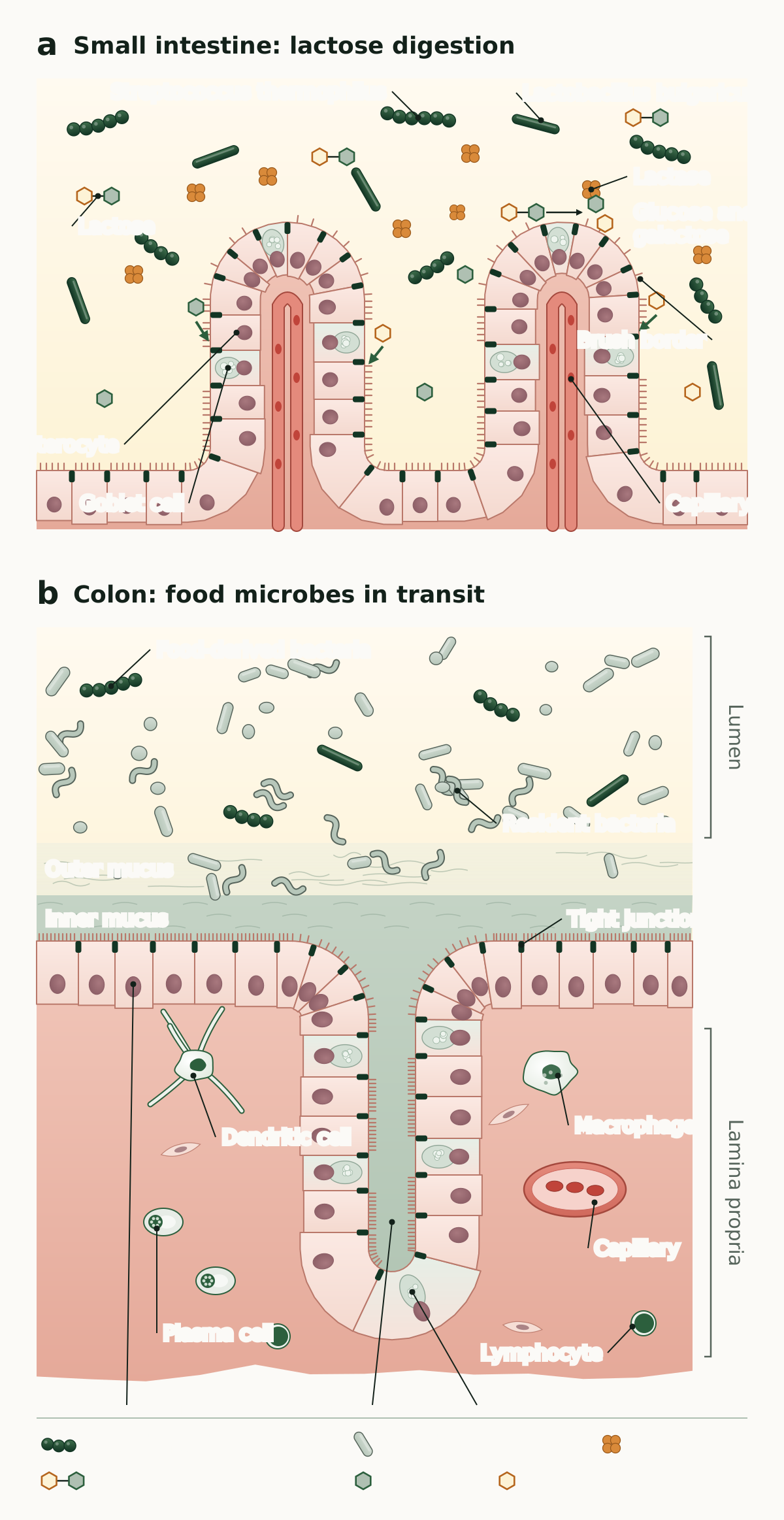
Recovery in stool does not mean the microbes settle in. Pasolli and colleagues searched 9,445 human metagenomes for lactic acid bacteria of food origin and found that their prevalence and abundance in stool were generally low.15 S. thermophilus, the most common, was detected in 33.7% of adults, and where present it averaged 0.6% of the bacterial community. Food and gut strains of the same species were closely related, which suggests that fermented foods are one source of these bacteria.15
Do fermented foods increase gut microbiome diversity?
The evidence rests largely on one study. Wastyk and colleagues at Stanford randomized healthy adults to a high-fiber or a high-fermented-food diet and analyzed 18 people in each arm.1 After a 4-week ramp and a 6-week maintenance phase, participants in the fermented-food arm had gone from 0.4 to 6.3 servings a day, mostly yogurt, kefir, fermented cottage cheese, kombucha, vegetable brine drinks and kimchi. Their microbiota diversity rose steadily over the intervention, whereas diversity was stable in the high-fiber arm.1 Only a small share of the newly detected bacteria matched those sequenced from the foods (at most 5.4%, early in the intervention), and the authors concluded that the rise in diversity “was not primarily due to consumed microbes.”1 The study had no control arm, and the authors note that its size limits generalization. It was funded by philanthropic gifts and federal fellowships, not by food companies; several authors have founded biotechnology companies.1
Observational data are less striking. Among 6,811 participants in the American Gut Project, people who ate fermented plant foods had subtle differences in community composition (beta diversity) compared with non-consumers, but no difference in alpha diversity, the measure that rose in the Stanford trial.16 That analysis was supported in part by Danone Nutricia Research, and several authors worked there.16 Short kombucha trials have found small shifts in particular taxa, discussed below.11
Do fermented foods lower inflammation markers such as CRP and IL-6?
In the Stanford trial, 19 inflammatory proteins measured in serum, including IL-6, fell over the fermented-food intervention, and endogenous signaling in immune cells decreased overall.1 None of the 19 proteins changed in the high-fiber arm, and the falls were no larger in participants who ate more fermented food than in those who ate less. The trial’s primary outcome, a cytokine response score, did not change in either arm.1
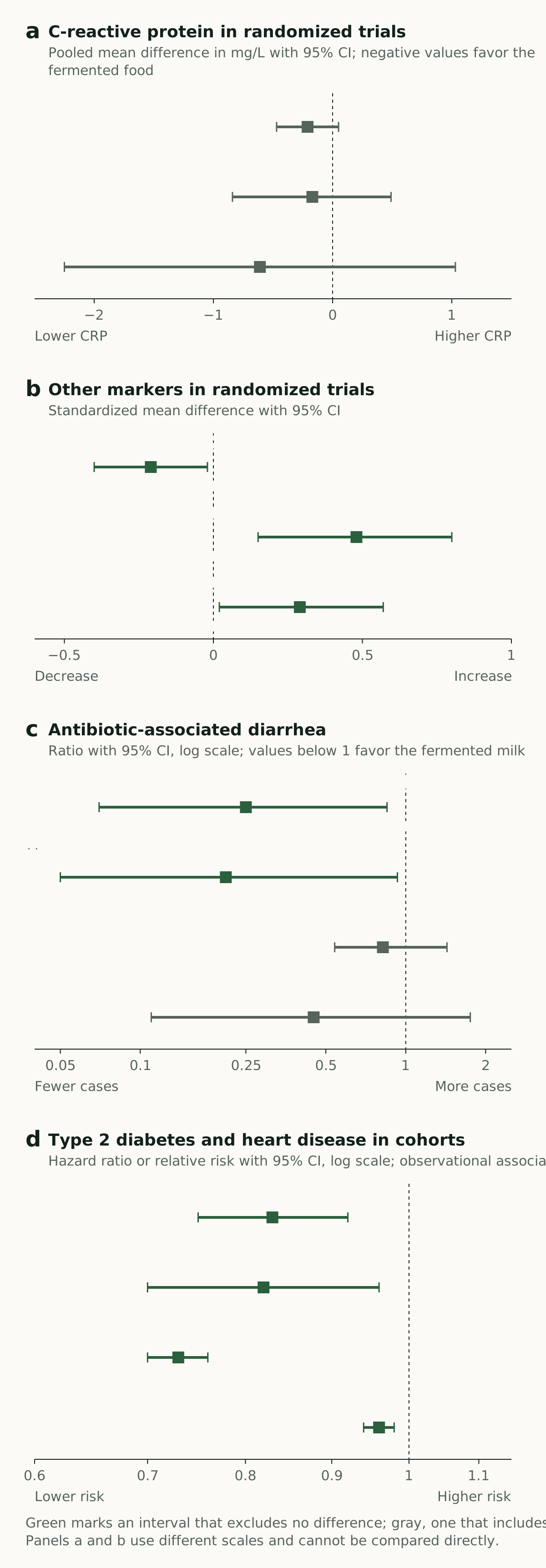
Meta-analyses of randomized trials give a more modest picture. SaeidiFard and colleagues pooled 26 publications with 1,461 adults and found no change in CRP (weighted mean difference −0.21 mg/L, 95% CI −0.47 to 0.05) or IL-6 (0.31, −3.79 to 4.43). Tumor necrosis factor-α fell (−8.26, −14.61 to −1.91), but heterogeneity was extreme (I² 99.9%).2 In 14 trials of yogurt, fermented milk and kefir, Zhang and colleagues found a small fall in CRP (standardized mean difference [SMD] −0.21, −0.40 to −0.02), mainly in people with metabolic disease, and no effect on TNF-α, IL-6, IL-10 or IL-2.3 A 2025 meta-analysis of seven kefir trials found no effect on CRP (−0.17 mg/L, −0.84 to 0.49).4 Trials comparing probiotic yogurt with conventional yogurt found no difference in CRP (−0.61 mg/L, −2.25 to 1.03) and a small rise in the anti-inflammatory cytokine IL-10, with evidence its authors rated as of very low certainty.5 None of these meta-analyses reported competing interests.
Does yogurt help with lactose intolerance?
This is the oldest and most consistent finding. In a 1984 study in the New England Journal of Medicine, lactase-deficient people given 18 g of lactose in yogurt excreted about one third as much breath hydrogen as after the same lactose in milk or water, and reported less diarrhea and flatulence.6 The authors attributed this to lactase released from the yogurt bacteria inside the intestine. In nine lactase-deficient adults, pasteurized yogurt, which had 10-fold less lactase activity, lost the advantage, and buttermilk and sweet acidophilus milk did not share it.7 Kefir behaved like yogurt in 15 adults with lactose maldigestion: breath hydrogen after plain kefir was 87 ppm·h compared with 224 ppm·h after milk, and flatulence was rated 54% to 71% less severe after yogurt or kefir.8 These were small crossover studies and we found no pooled analysis of them, though their results point the same way.
Do fermented foods help IBS or digestive symptoms?
Trials are few and small. Dimidi and colleagues found that, of common fermented foods, only kefir, sauerkraut, natto and sourdough bread had been tested in a randomized trial for gastrointestinal outcomes, and none had tested kombucha, miso, kimchi or tempeh.17 Two authors of that review have received speaker fees from Yakult, and one has consulted for Danone.17
In a trial run by Danone Research, 274 adults with constipation-predominant irritable bowel syndrome (IBS) drank a fermented milk containing Bifidobacterium animalis DN-173 010 or a heat-treated yogurt for six weeks.18 The primary outcome, a discomfort score, improved in both groups. At week 3, more people responded with the probiotic product (65.2% vs 47.7%) and bloating fell slightly more.18 In a Norwegian pilot study, 34 people with IBS ate pasteurized or unpasteurized sauerkraut daily for six weeks. Symptom scores fell in both groups (by 38.6 and 57.0 points) with no difference between them, and the trial had no group that ate no sauerkraut.19 A systematic review of kefir trials found 16 studies, 12 of them at high risk of bias.20 For IBS, the better-tested dietary option is soluble fiber, covered in our article on psyllium.
Do fermented milk drinks prevent antibiotic-associated diarrhea?
The positive trials tested fermented milks with added probiotic strains, and both had dairy industry funding. In a London trial of 135 hospital patients with a mean age of 74, those given Actimel twice a day during and for a week after antibiotics developed diarrhea less often than those given a sterile milkshake (12% vs 34%; number needed to treat 5), and none developed diarrhea from Clostridioides difficile, compared with 17% on placebo.21 The trial was partly funded by Danone Vitapole, three authors had received Danone funding to attend its conferences, and one sat on a Danone UK advisory group.21 In a Norwegian trial sponsored by the dairy company TINE, a multistrain fermented milk reduced antibiotic-associated diarrhea (relative risk 0.21, 0.05 to 0.93), but only 63 of 87 randomized patients completed the protocol.22
Other trials were negative. Among 125 children aged 1 to 5 years in Washington, DC, commercially available kefir did not reduce diarrhea compared with a heat-killed placebo (18% vs 21.9%; RR 0.82, 0.54 to 1.43).23 A meta-analysis of two trials of ordinary yogurt found no consistent effect once heterogeneity was accounted for (RR 0.45, 0.11 to 1.75), and both trials were of low methodological quality.24
Are yogurt and fermented dairy linked to lower diabetes and heart disease risk?
In three large US cohorts followed for up to 30 years (41,436 men and 153,022 women), total dairy was not associated with type 2 diabetes, but each daily serving of yogurt was associated with a 17% lower risk (hazard ratio 0.83, 0.75 to 0.92).9 In a meta-analysis of 14 cohorts with 459,790 participants, the relative risk per daily serving of yogurt was 0.82 (0.70 to 0.96).9 Companys and colleagues, pooling 20 prospective cohort studies, reported associations with yogurt for type 2 diabetes (RR 0.73, 0.70 to 0.76) and metabolic syndrome (0.80, 0.74 to 0.87), and a smaller association between fermented milk and cardiovascular disease (0.96, 0.94 to 0.98).25
These are observational associations. People who eat yogurt regularly may differ in other ways that lower their risk, and cohort studies cannot fully adjust for that. In 2024 FDA, responding to a petition submitted on behalf of Danone North America, allowed a qualified health claim that eating at least 2 cups (3 servings) of yogurt a week “may reduce the risk of type 2 diabetes,” with the statement that FDA “has concluded that there is limited information supporting this claim.”10 No randomized trial has tested whether eating yogurt prevents diabetes.
Do fermented foods help with weight?
In US cohorts, each additional daily serving of yogurt was associated with 0.82 lb less weight gain over four years.26 A systematic review of 10 cohort studies found that most point estimates favored yogurt, but the association with overweight or obesity was not consistent and not always statistically significant.27 In a Korean cohort of 58,290 adults, higher kimchi intake was associated with smaller increases in body mass index, and moderate intake with a return to normal weight among men with overweight.28 Trials are small. In 21 adults with prediabetes, eight weeks each of fresh and fermented kimchi both reduced body weight, and only the fermented kimchi improved insulin resistance, but the study had no group that ate no kimchi.29 In 100 young adults housed together for seven days, 210 g of kimchi a day lowered fasting glucose more than 15 g a day.30 In a 10-week trial, adding green tea kombucha to a calorie-restricted diet did not increase weight loss.31
Is there evidence for kombucha?
Very little. The ISAPP panel described evidence of health benefits for kombucha as “mostly limited to chemical analyses and animal and cell culture models.”12 The human trials we found are small and short. In a trial funded by the kombucha maker GT’s Living Foods, 16 healthy adults drank 16 oz a day for four weeks and 8 served as controls. There were no differences between groups in blood markers or in IL-6, IL-10 or CRP, and within the kombucha group fasting insulin and insulin resistance rose.11 Diarrhea and bloating were the most common complaints, reported by 5 of 16 people drinking kombucha and 1 of 8 controls.11
In 12 adults with type 2 diabetes, fasting glucose fell from 164 to 116 mg/dL after four weeks of kombucha, but the difference from placebo at four weeks was not statistically significant (P=0.265); the drinks were donated by Craft Kombucha and contained 1.5% alcohol.32 In a Brazilian trial of 59 adults with excess weight, IL-6 rose in the control group compared with the kombucha group, and weight loss did not differ.31 In 1995, CDC investigated severe illness, including one death, in two people in Iowa who had been drinking kombucha daily for about two months; the investigation did not establish the role of the tea.33
Are fermented foods safe?
Commercially made fermented foods carry little risk for most people, with some exceptions. The ISAPP panel noted that some contain alcohol (beer, wine, some kombuchas) or much salt (soy sauce, kimchi) and should be eaten in moderation.12 Histamine, tyramine and other biogenic amines form during the fermentation of cheese, meat, vegetables, soybeans and wine and, in people who do not break them down efficiently, can cause effects such as migraine. Some cheeses and low-acid fermented foods can carry Listeria, Salmonella or Clostridium botulinum if contaminated.12 In the kombucha trial above, gastrointestinal complaints were more common with kombucha.11 None of the trials reviewed here tested fermented foods as a replacement for medication for diabetes, IBS or inflammatory disease.
What remains uncertain?
The central question, whether eating more fermented foods lowers inflammation in people who have it, has not been tested in an adequately sized controlled trial. The Stanford findings come from 18 healthy people without a control diet, and meta-analyses of CRP and IL-6 are dominated by small, heterogeneous trials.12 Most trials tested one dairy product, often with an added probiotic strain, so the results do not transfer to kimchi, sauerkraut or kombucha.1217 The yogurt and diabetes association has not been tested in a trial.10 Kombucha has been tested in fewer than 100 people across the controlled trials we found.113231
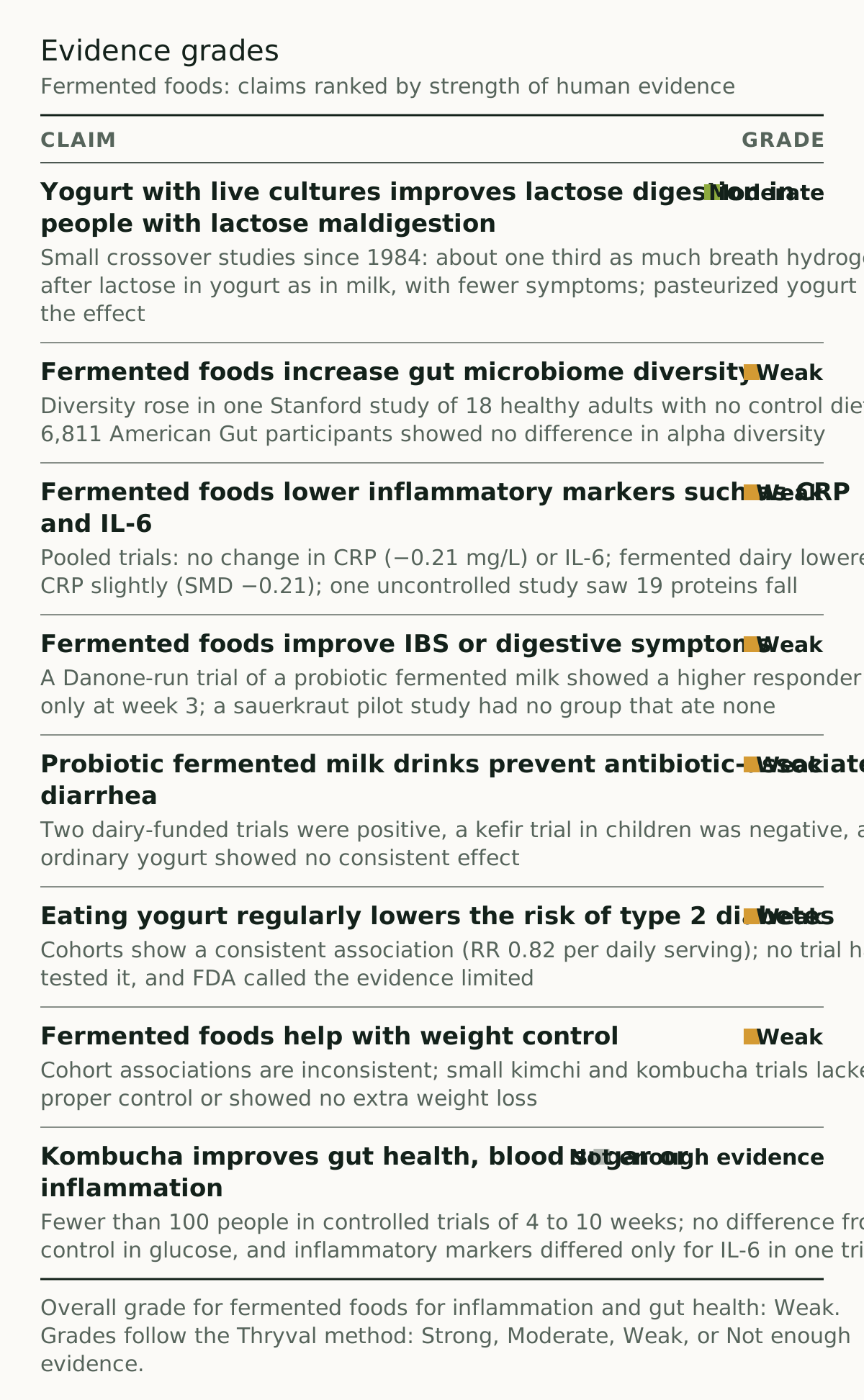
Evidence grades
The grades below are Thryval editorial judgments based on the studies cited in this article. The grading rules are set out on our Research page.
Frequently asked questions
Do fermented foods reduce inflammation?
Pooled randomized trials have not shown a reduction in CRP or IL-6.2 Fermented dairy lowered CRP slightly in one meta-analysis, mainly in people with metabolic disease.3 A Stanford study of 18 healthy adults found falls in 19 inflammatory proteins, but it had no control diet.1
Which fermented foods contain live probiotics?
Yogurt, kefir, most cheeses, unheated sauerkraut and kimchi, miso, tempeh and most kombuchas contain live microbes; bread, pasteurized sauerkraut, wine and most beers do not.12 Live microbes are not the same as probiotics, which are specific strains shown to provide a health benefit.12
Do fermented foods change the gut microbiome?
Microbes from yogurt can be recovered from stool, but food-derived bacteria make up a small share of the gut community.1315 In the Stanford study, diversity rose with about six servings a day, mostly through changes in resident bacteria.1
Is yogurt good for people who are lactose intolerant?
Yogurt with live cultures is digested better than milk by people with lactose maldigestion and causes fewer symptoms; pasteurized yogurt does not have this advantage.67 Kefir behaved similarly in one small study.8
Does kombucha have health benefits?
Human evidence is very limited. In the small controlled trials we found, kombucha did not differ from control in glucose, inflammatory markers were unchanged in one trial and differed only in IL-6 in another, and one trial reported more digestive complaints with kombucha.113231
Can yogurt lower the risk of type 2 diabetes?
Regular yogurt eaters had lower rates of type 2 diabetes in large cohort studies, and FDA allows a qualified claim while stating that the evidence is limited.910 No trial has shown that eating yogurt prevents diabetes, and it does not replace diabetes treatment.
Implications for patients and clinicians
For people with lactose maldigestion, yogurt or kefir with live cultures is a reasonable way to include dairy, and that recommendation rests on consistent if small trials.68 The claim that fermented foods reduce inflammation rests mainly on one small Stanford study; meta-analyses of CRP and IL-6 do not show a reliable effect.12 The associations between yogurt and lower diabetes risk are observational, and several of the positive gut trials were run or funded by Danone or other dairy companies.9182122 Kombucha has too little human evidence to support any health claim.1132 People with diabetes, IBS or an inflammatory disease should not change prescribed treatment on the basis of these studies, which did not test fermented foods as a substitute for it. Clinicians may want to ask about salt and alcohol intake from foods such as kimchi, soy sauce and kombucha when relevant.12
References
-
Wastyk HC, Fragiadakis GK, Perelman D, et al. Gut-microbiota-targeted diets modulate human immune status. Cell. 2021;184(16):4137–4153.e14. Randomized diet study, 18 analyzed per arm, no control arm; philanthropic and NIH funding. PMC9020749 · PubMed 34256014 ↩↩↩↩↩↩↩↩↩↩↩↩↩
-
SaeidiFard N, Djafarian K, Shab-Bidar S. Fermented foods and inflammation: a systematic review and meta-analysis of randomized controlled trials. Clin Nutr ESPEN. 2020;35:30–39. Meta-analysis: 26 publications, 1,461 participants. PubMed 31987119 ↩↩↩↩↩↩
-
Zhang X, Luo Q, Guan X, et al. Effects of fermented dairy products on inflammatory biomarkers: a meta-analysis. Nutr Metab Cardiovasc Dis. 2023;33(3):471–482. Meta-analysis: 14 trials (15 arms). PubMed 36710113 ↩↩↩↩
-
Rashidbeygi E, Samarin MM, Sheikhhossein F, et al. The effect of kefir consumption on blood pressure and C-reactive protein: a systematic review and meta-analysis of randomised controlled trials. Endocrinol Diabetes Metab. 2025;8(6):e70124. Meta-analysis: 7 RCTs, 385 participants. PMC12554242 · PubMed 41139305 ↩
-
Gallo Ruelas M, Gomez-Herrera GP, Albornoz-Pinedo A, et al. Effect of probiotic yogurt on short-chain fatty acids, inflammation, and oxidative stress biomarkers: a systematic review and meta-analysis of randomized controlled trials. J Nutr Biochem. 2026;153:110346. Meta-analysis: 33 trials. PubMed 41802686 ↩
-
Kolars JC, Levitt MD, Aouji M, Savaiano DA. Yogurt: an autodigesting source of lactose. N Engl J Med. 1984;310(1):1–3. Crossover study in lactase-deficient adults. PubMed 6417539 ↩↩↩↩↩
-
Savaiano DA, AbouElAnouar A, Smith DE, Levitt MD. Lactose malabsorption from yogurt, pasteurized yogurt, sweet acidophilus milk, and cultured milk in lactase-deficient individuals. Am J Clin Nutr. 1984;40(6):1219–1223. Crossover study, n=9. PubMed 6439026 ↩↩↩↩
-
Hertzler SR, Clancy SM. Kefir improves lactose digestion and tolerance in adults with lactose maldigestion. J Am Diet Assoc. 2003;103(5):582–587. Randomized crossover study, n=15. PubMed 12728216 ↩↩↩↩
-
Chen M, Sun Q, Giovannucci E, et al. Dairy consumption and risk of type 2 diabetes: 3 cohorts of US adults and an updated meta-analysis. BMC Med. 2014;12:215. Prospective cohort studies and meta-analysis of 14 cohorts; NIH funding. PMC4243376 · PubMed 25420418 ↩↩↩↩↩↩
-
US Food and Drug Administration. FDA announces qualified health claim for yogurt and reduced risk of type 2 diabetes. Constituent update, March 1, 2024; petition submitted on behalf of Danone North America. Regulatory record. fda.gov ↩↩↩↩↩
-
Ecklu-Mensah G, Miller R, Maseng MG, et al. Modulating the human gut microbiome and health markers through kombucha consumption: a controlled clinical study. Sci Rep. 2024;14(1):31647. Controlled trial, n=24 (16 kombucha, 8 control); funded by GT’s Living Foods. PMC11686376 · PubMed 39738315 ↩↩↩↩↩↩↩↩↩
-
Marco ML, Sanders ME, Gänzle M, et al. The International Scientific Association for Probiotics and Prebiotics (ISAPP) consensus statement on fermented foods. Nat Rev Gastroenterol Hepatol. 2021;18(3):196–208. Expert consensus statement; several panel members report fees from food companies including Danone and Yakult. PMC7925329 · PubMed 33398112 ↩↩↩↩↩↩↩↩↩↩↩↩↩
-
Mater DD, Bretigny L, Firmesse O, et al. Streptococcus thermophilus and Lactobacillus delbrueckii subsp. bulgaricus survive gastrointestinal transit of healthy volunteers consuming yogurt. FEMS Microbiol Lett. 2005;250(2):185–187. Human feeding study, n=13. PubMed 16099606 ↩↩
-
Elli M, Callegari ML, Ferrari S, et al. Survival of yogurt bacteria in the human gut. Appl Environ Microbiol. 2006;72(7):5113–5117. Human feeding study, n=20; one author from Danone Vitapole. PMC1489325 · PubMed 16820518 ↩
-
Pasolli E, De Filippis F, Mauriello IE, et al. Large-scale genome-wide analysis links lactic acid bacteria from food with the gut microbiome. Nat Commun. 2020;11(1):2610. Metagenomic analysis of 9,445 human samples. PMC7248083 · PubMed 32451391 ↩↩↩
-
Taylor BC, Lejzerowicz F, Poirel M, et al. Consumption of fermented foods is associated with systematic differences in the gut microbiome and metabolome. mSystems. 2020;5(2):e00901-19. Observational study, n=6,811; supported in part by Danone Nutricia Research. PMC7380580 · PubMed 32184365 ↩↩↩
-
Dimidi E, Cox SR, Rossi M, Whelan K. Fermented foods: definitions and characteristics, impact on the gut microbiota and effects on gastrointestinal health and disease. Nutrients. 2019;11(8):1806. Review; authors report fees from Yakult and Danone among others. PMC6723656 · PubMed 31387262 ↩↩↩
-
Guyonnet D, Chassany O, Ducrotte P, et al. Effect of a fermented milk containing Bifidobacterium animalis DN-173 010 on the health-related quality of life and symptoms in irritable bowel syndrome in adults in primary care: a multicentre, randomized, double-blind, controlled trial. Aliment Pharmacol Ther. 2007;26(3):475–486. Randomized controlled trial, n=274; Danone Research. PubMed 17635382 ↩↩↩↩
-
Nielsen ES, Garnås E, Jensen KJ, et al. Lacto-fermented sauerkraut improves symptoms in IBS patients independent of product pasteurisation: a pilot study. Food Funct. 2018;9(10):5323–5335. Randomized pilot trial, n=34. PubMed 30256365 ↩↩
-
Kairey L, Leech B, El-Assaad F, et al. The effects of kefir consumption on human health: a systematic review of randomized controlled trials. Nutr Rev. 2023;81(3):267–286. Systematic review: 16 studies. PubMed 35913411 ↩
-
Hickson M, D’Souza AL, Muthu N, et al. Use of probiotic Lactobacillus preparation to prevent diarrhoea associated with antibiotics: randomised double blind placebo controlled trial. BMJ. 2007;335(7610):80. Randomized controlled trial, n=135; partly funded by Danone Vitapole. PMC1914504 · PubMed 17604300 ↩↩↩↩
-
Wenus C, Goll R, Loken EB, et al. Prevention of antibiotic-associated diarrhoea by a fermented probiotic milk drink. Eur J Clin Nutr. 2008;62(2):299–301. Randomized controlled trial, n=87; sponsored by TINE BA. PubMed 17356555 ↩↩↩
-
Merenstein DJ, Foster J, D’Amico F. A randomized clinical trial measuring the influence of kefir on antibiotic-associated diarrhea: the measuring the influence of Kefir (MILK) Study. Arch Pediatr Adolesc Med. 2009;163(8):750–754. Randomized controlled trial, n=125 children. PubMed 19652108 ↩↩
-
Patro-Golab B, Shamir R, Szajewska H. Yogurt for treating antibiotic-associated diarrhea: systematic review and meta-analysis. Nutrition. 2015;31(6):796–800. Meta-analysis: 2 RCTs, n=314. A correction (Nutrition. 2015;31(7-8):1060) added an acknowledgment that the review used a scoping review commissioned by Danone Institute International; no results changed. PubMed 25933485 ↩↩
-
Companys J, Pla-Pagà L, Calderón-Pérez L, et al. Fermented dairy products, probiotic supplementation, and cardiometabolic diseases: a systematic review and meta-analysis. Adv Nutr. 2020;11(4):834–863. Systematic review and meta-analysis: 20 prospective cohort studies and 52 RCTs. PMC7360468 · PubMed 32277831 ↩↩
-
Mozaffarian D, Hao T, Rimm EB, Willett WC, Hu FB. Changes in diet and lifestyle and long-term weight gain in women and men. N Engl J Med. 2011;364(25):2392–2404. Prospective cohort studies, n=120,877; NIH funding. PMC3151731 · PubMed 21696306 ↩
-
Sayon-Orea C, Martínez-González MA, Ruiz-Canela M, Bes-Rastrollo M. Associations between yogurt consumption and weight gain and risk of obesity and metabolic syndrome: a systematic review. Adv Nutr. 2017;8(1):146S–154S. Systematic review of 10 cohort studies. PMC5227971 · PubMed 28096138 ↩↩
-
Tan LJ, Yun YR, Hong SW, Shin S. Effect of kimchi intake on body weight of general community dwellers: a prospective cohort study. Food Funct. 2023;14(4):2162–2171. Prospective cohort study, n=58,290. PubMed 36752575 ↩
-
An SY, Lee MS, Jeon JY, et al. Beneficial effects of fresh and fermented kimchi in prediabetic individuals. Ann Nutr Metab. 2013;63(1-2):111–119. Crossover trial, n=21. PubMed 23969321 ↩↩
-
Choi IH, Noh JS, Han JS, et al. Kimchi, a fermented vegetable, improves serum lipid profiles in healthy young adults: randomized clinical trial. J Med Food. 2013;16(3):223–229. Randomized trial, n=100. PMC3598433 · PubMed 23444963 ↩
-
Fraiz GM, Bonifácio DB, Lacerda UV, et al. Green tea kombucha impacts inflammation and salivary microbiota in individuals with excess body weight: a randomized controlled trial. Nutrients. 2024;16(18):3186. Randomized controlled trial, n=59. PMC11435194 · PubMed 39339787 ↩↩↩↩↩↩
-
Mendelson C, Sparkes S, Merenstein DJ, et al. Kombucha tea as an anti-hyperglycemic agent in humans with diabetes: a randomized controlled pilot investigation. Front Nutr. 2023;10:1190248. Randomized crossover pilot trial, n=12; drinks donated by Craft Kombucha. Two authors have financial interests in Synbiotic Health, and one is the unpaid board president of the International Scientific Association for Probiotics and Prebiotics (ISAPP). PMC10426908 · PubMed 37588049 ↩↩↩↩↩
-
Centers for Disease Control and Prevention. Unexplained severe illness possibly associated with consumption of Kombucha tea: Iowa, 1995. MMWR Morb Mortal Wkly Rep. 1995;44(48):892–893, 899–900. Case investigation. PubMed 7476846 ↩