

Do iron supplements help fatigue without anemia? What the trials show
Some people are tired, have a normal hemoglobin and a low ferritin. Placebo-controlled trials in menstruating women found that oral iron reduced fatigue modestly, and infusions gave mixed results. The more important step is finding out why iron stores are low.
The grade ModerateOral iron for unexplained fatigue in non-anemic menstruating women with low ferritin
In brief. In menstruating women with unexplained fatigue, a normal hemoglobin and a ferritin below about 50 µg/L, oral iron reduced fatigue somewhat more than placebo in two randomized trials. In a French primary care trial of 198 women, 80 mg of elemental iron a day for 12 weeks lowered fatigue scores by 47.7%, against 28.8% with placebo.2 A 2018 systematic review pooled four trials in premenopausal women and found a standardized mean difference of −0.38 (95% CI −0.52 to −0.23), a modest effect.3 Every one of those trials was funded by a company that sold the iron product. Intravenous iron has given mixed results, two trials in blood donors (one of oral iron, one of an infusion) found no benefit, and objective exercise capacity has not clearly changed.45893 Oral iron commonly upsets the stomach, and alternate-day dosing appears to be absorbed better and tolerated better.1413 Low iron stores have a cause, and in men and in women after menopause that cause can be bleeding from the gut.1716
Unexplained fatigue is often left untreated or treated with antidepressants.5 Iron deficiency without anemia is a plausible contributor, because iron is a component of enzymes in oxidative phosphorylation as well as of hemoglobin.5 It is common in women with heavy periods; in one study of young women with menorrhagia, more than half had low iron stores but only a quarter were anemic.17 A ferritin result below the reference range in someone with a normal blood count has therefore become a frequent finding, and iron tablets are a frequent response. This article reviews the placebo-controlled trials of that practice, the evidence on dose and schedule, and the reasons a low ferritin result should start an inquiry rather than end one.
What is iron deficiency without anemia?
The body holds about 3 to 4 g of iron, most of it in hemoglobin, and loses only 1 to 2 mg a day, so balance depends on absorption from the duodenum matching losses.21 When losses exceed intake, storage iron, measured in the blood as ferritin, falls first. Hemoglobin falls later, once iron supply to the bone marrow becomes limiting. Iron deficiency without anemia describes the stage in between: depleted stores with a hemoglobin that is still within the normal range.16
Ferritin is the usual test. The World Health Organization’s 2020 guideline defines iron deficiency in apparently healthy adults as a ferritin below 15 µg/L, and below 70 µg/L in people with infection or inflammation, because ferritin rises with inflammation independently of iron stores.18 The British Society of Gastroenterology notes that a ferritin below 15 µg/L is highly specific for iron deficiency (specificity 0.99), while a cutoff of 45 µg/L gives a better balance of sensitivity and specificity (specificity 0.92).17 Most fatigue trials enrolled women with ferritin below 50 µg/L, which includes many women above the WHO cutoff.124
How does the body absorb iron from a supplement?
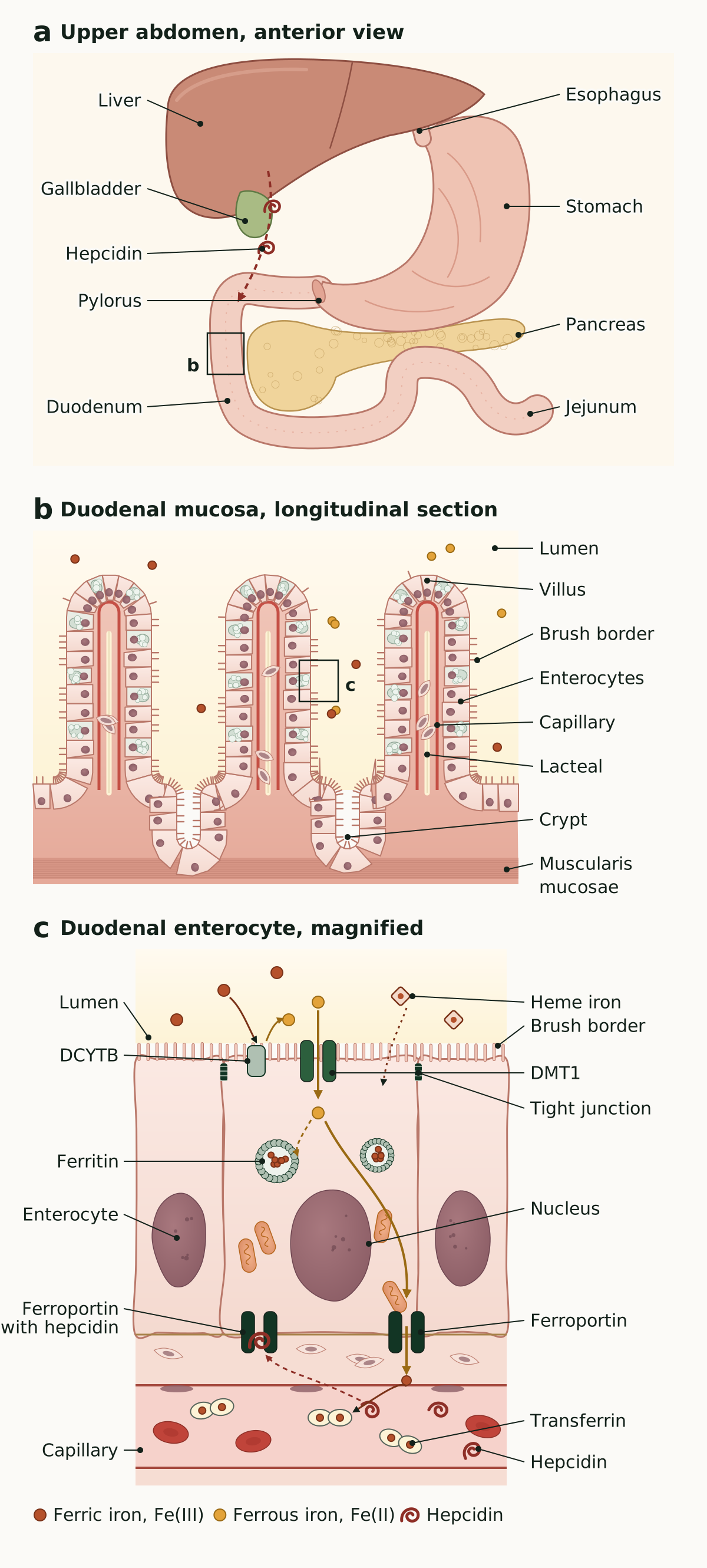
Nonheme iron, the form in most supplements and plant foods, is taken up by enterocytes in the duodenum. On the apical surface, a reductase called duodenal cytochrome b (DCYTB) converts ferric iron to ferrous iron, which the divalent metal transporter DMT1 carries into the cell.2120 Iron that is not needed is stored in ferritin and lost when the enterocyte is shed a few days later. Iron that is exported leaves through ferroportin on the basolateral membrane and binds to transferrin in the blood.20
The liver controls this through hepcidin. When iron stores or inflammation rise, the liver releases more hepcidin, which occludes ferroportin and causes it to be degraded, so less iron leaves the gut.21 This has a practical consequence for supplements. In stable-isotope studies in iron-depleted young women, doses of 60 mg or more raised hepcidin for about 24 hours and reduced fractional absorption from a dose given the next day by 35% to 45%.10 Heme iron from meat is absorbed by a separate route that is less well understood.20
Does oral iron reduce fatigue in women with low ferritin?
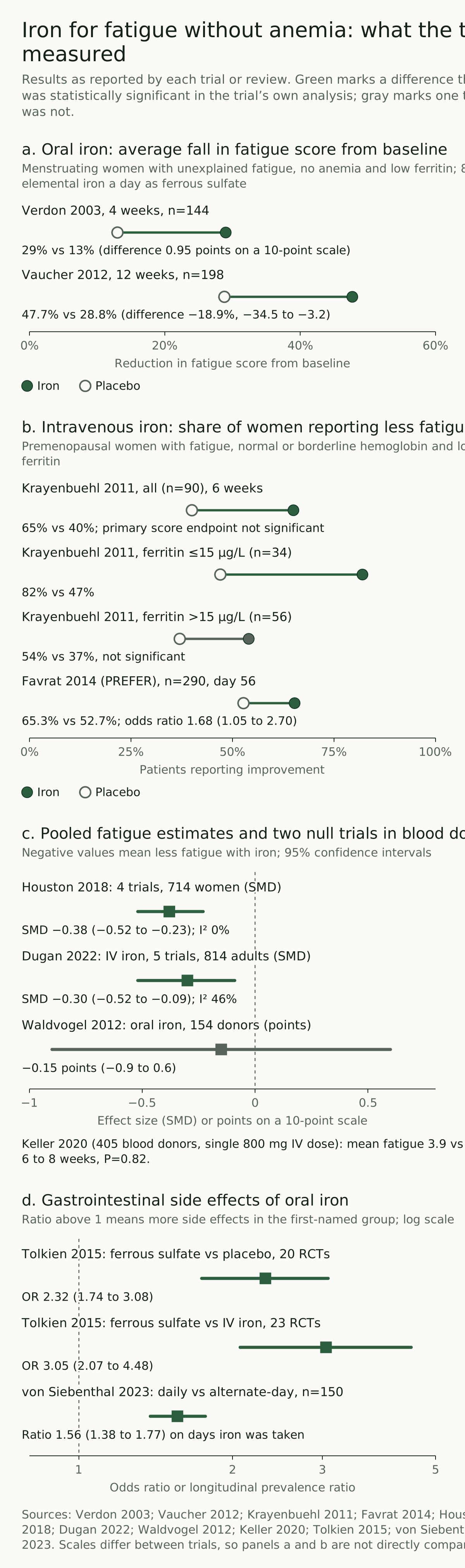
Two placebo-controlled trials from primary care in Switzerland and France address this directly. In the first, published in 2003, Verdon and colleagues randomized 144 women aged 18 to 55 who had unexplained fatigue and a normal hemoglobin to 80 mg of elemental iron a day as ferrous sulfate or to placebo for four weeks.1 Fatigue on a 10-point visual analogue scale fell by 29% with iron and 13% with placebo, a difference of 0.95 points (95% CI 0.32 to 1.62). Ferritin was 20 µg/L or less in 51% of the women, and in a subgroup analysis only women with ferritin of 50 µg/L or less improved. Robapharm, which made the tablets, sponsored the trial; the authors state that the sponsor was not involved in analysis or writing.
The second trial, by Vaucher and colleagues, recruited through 44 general practices in France and enrolled 198 menstruating women aged 18 to 53 with unexplained fatigue, ferritin below 50 µg/L and hemoglobin of at least 12 g/dL, and gave 80 mg of prolonged-release ferrous sulfate a day or placebo for 12 weeks.2 Fatigue scores fell by 47.7% with iron and 28.8% with placebo (difference −18.9%, 95% CI −34.5% to −3.2%). On the 0 to 40 point Current and Past Psychological Scale, the intention-to-treat difference was 3.5 points (0.3 to 6.7), and the per-protocol difference of 2.1 points (−2.6 to 6.7) did not reach significance. Iron made no difference to quality of life, depression or anxiety. Hemoglobin rose by 0.32 g/dL and ferritin by 11.4 µg/L more than with placebo, and the benefit did not depend on whether ferritin was above or below 15 µg/L. The trial was sponsored, funded and designed by Pierre Fabre Médicament, which makes the product used, and the sponsor managed the data.
Houston and colleagues reviewed 18 randomized trials in non-anemic iron-deficient adults (1,170 participants) and pooled the four trials with a fatigue outcome, all in premenopausal women: the two oral trials above and two intravenous trials.3 The standardized mean difference was −0.38 (−0.52 to −0.23), with no statistical heterogeneity (I² 0%), and the authors rated the strength of that evidence moderate. They also noted that oral iron is hard to blind, because it darkens the stool and causes gut symptoms that placebo does not. The review itself had no outside funding.
The placebo response in these trials was large. Women given placebo reported 13% to 29% less fatigue, and the extra improvement with iron was of a size a patient might notice but would not describe as a cure.12
Do iron infusions work better than tablets for fatigue?
Intravenous iron raises ferritin quickly and avoids gut side effects, but the fatigue trials do not show that it relieves fatigue more reliably. Krayenbuehl and colleagues randomized 90 premenopausal women with fatigue, ferritin of 50 µg/L or less and hemoglobin of at least 120 g/L to 800 mg of iron sucrose, given as four infusions, or to placebo.4 The primary endpoint, change in the Brief Fatigue Inventory at six weeks, was −1.1 with iron and −0.7 with placebo (P=0.07). On a secondary measure, 65% of women given iron and 40% given placebo reported improvement. Among the 34 women with ferritin of 15 µg/L or less, the fatigue score fell by 1.8 against 0.4 points (P=0.005), while women with higher ferritin showed no significant difference. Drug-related adverse events occurred in 21% of the iron group and 7% of the placebo group. Vifor, which makes the iron sucrose used, funded the trial and took part in its design.
The PREFER trial gave a single 1,000 mg infusion of ferric carboxymaltose or saline to fatigued premenopausal women with low iron stores and a hemoglobin of at least 115 g/L.5 In the 290 women analyzed, fatigue fell by at least one point on the Piper Fatigue Scale in 65.3% after iron and 52.7% after placebo (odds ratio 1.68, 1.05 to 2.70), and fatigue halved in 33.3% against 16.4%. The trial was single-blinded. Treatment-emergent adverse events occurred in 57.2% and 49.0% of participants. Serum phosphate fell below normal a week after the infusion in 86% of the iron group and 2% of the placebo group, and it recovered by the end of the study in most. Vifor sponsored PREFER and funded the medical writing, and one author was a Vifor employee.
A 2019 Cochrane review of intravenous iron in non-anemic iron-deficient adults found the evidence insufficient to judge effects on most outcomes; the authors’ institutions had received Vifor support.6 An abridged update by Dugan and colleagues, covering 21 trials and 3,514 participants with mixed conditions, estimated a standardized mean difference in fatigue of −0.30 (−0.52 to −0.09) from five trials, which the authors judged moderate certainty, and a small gain in peak oxygen uptake supported by low-quality evidence.7 Two authors reported ties to Vifor, and one of them also to Pharmacosmos, both makers of intravenous iron.
Does iron help blood donors or improve exercise capacity?
Two trials in female or repeat blood donors with low ferritin found no effect on fatigue. Waldvogel and colleagues gave 154 non-anemic, iron-deficient women 80 mg of oral iron a day or placebo for four weeks after a donation. Fatigue on a 10-point scale differed by −0.15 points (−0.9 to 0.6), although hemoglobin rose by 5.2 g/L and ferritin by 14.8 µg/L.8 Keller and colleagues gave 405 repeat donors with ferritin of 50 µg/L or less a single 800 mg infusion of ferric carboxymaltose or placebo. Mean fatigue was 3.9 against 4.0 (P=0.82), even though ferritin rose by 114.2 µg/L.9 Neither trial selected people because they were tired, which may explain part of the difference from the primary care trials. It also suggests that correcting low ferritin does not by itself improve how people feel.
For exercise, Houston’s review pooled nine trials with 235 participants and found no clear change in maximal oxygen uptake (standardized mean difference 0.11, −0.15 to 0.37), with low strength of evidence.3 The Dugan review’s small gain in peak oxygen uptake after intravenous iron came from low-quality evidence.7
What dose and schedule did the trials use, and is every other day better?
The oral fatigue trials used 80 mg of elemental iron a day as ferrous sulfate, for 4 or 12 weeks.12 For comparison, the recommended dietary allowance is 18 mg a day for women aged 19 to 50 and 8 mg for men, and the tolerable upper intake level for adults is 45 mg a day, a limit set to avoid gut side effects in people without a medical reason to take more.19 Doses for treating deficiency are higher than the upper level and are usually given on medical advice.
The hepcidin response suggests that smaller or less frequent doses might be used more efficiently. In Moretti’s studies, raising the dose from 40 to 240 mg increased the amount absorbed from 6.7 to 18.1 mg, so most of the extra iron passed through unabsorbed, and splitting the dose into twice-daily doses did not improve absorption.1011 In a stable-isotope trial of 40 iron-depleted women given 60 mg, fractional absorption was 21.8% on alternate days and 16.3% on consecutive days, and total iron absorbed over the study was 175.3 against 131.0 mg.11 A later study in women with iron-deficiency anemia found 40% to 50% higher fractional absorption on alternate days.12 Both groups of studies were academic, funded by the Swiss National Science Foundation and ETH Zurich respectively.
Whether this matters clinically was tested in a double-blind trial of 150 young Swiss women with ferritin of 30 µg/L or less.13 Women took 100 mg of iron daily for 90 days or on alternate days for 180 days, so both groups received the same total dose. Ferritin ended up the same (43.8 and 44.8 µg/L), and on days when iron was taken, gut side effects were more frequent with daily dosing (longitudinal prevalence ratio 1.56, 1.38 to 1.77). The alternate-day schedule took twice as long to deliver the dose, and at six months iron deficiency was present in 11.4% of the daily group and 3.0% of the alternate-day group. The Swiss National Science Foundation funded the trial. The trial did not measure fatigue.
For iron-deficiency anemia, the British Society of Gastroenterology guideline recommends one tablet a day, and one tablet every other day, another oral preparation or an infusion if that is not tolerated.17
What are the side effects and risks?
Gut symptoms are the main problem with oral iron. A meta-analysis of 43 randomized trials in 6,831 adults found that ferrous sulfate increased gastrointestinal side effects compared with placebo (odds ratio 2.32, 1.74 to 3.08) and compared with intravenous iron (3.05, 2.07 to 4.48), with no clear relation to dose.14 The review was funded by the UK Medical Research Council; two authors hold a patent on a new iron compound.
Some infusions cause low blood phosphate. In two randomized trials in 245 adults with iron-deficiency anemia, hypophosphatemia occurred in 75.0% and 73.7% of patients given ferric carboxymaltose, against 7.9% and 8.1% given ferric derisomaltose.15 Pharmacosmos, which makes ferric derisomaltose, funded and helped design both trials. The PREFER trial found the same effect in non-anemic women.5
Iron is also a poison in overdose, and accidental overdose with iron products has been a leading cause of fatal poisoning in children under six.19 Supplements should be stored out of children’s reach. About 4.4 per 1,000 White people are homozygous for the C282Y variant that causes hereditary hemochromatosis, and the American Association for the Study of Liver Diseases advises people with the condition to avoid iron supplements.19 Iron reduces the absorption of levothyroxine and some other drugs, proton pump inhibitors can reduce the absorption of iron, and calcium might also reduce it, although that effect has not been firmly established.19
Why does the cause of low ferritin matter?
Iron deficiency results from blood loss, poor absorption, low intake or a higher demand such as pregnancy, and a supplement corrects the result without addressing the cause.16 In premenopausal women, heavy menstrual bleeding is the usual explanation. In men and in women after menopause, about a third of those with iron-deficiency anemia have an underlying disease, most often in the gut, and the British Society of Gastroenterology recommends gastroscopy and colonoscopy for these groups when anemia is newly found.17 Celiac disease, which impairs absorption, is found in 3% to 5% of people with iron-deficiency anemia, and the British guideline recommends screening for it routinely.17
For iron deficiency without anemia, the evidence on investigation is thinner. The British guideline found insufficient evidence to support endoscopy unless there are additional indications, and it suggests periodic blood count monitoring; the risk of cancer appears to be low. It also says the threshold for investigating iron deficiency without anemia should be low in men, in women after menopause, and in anyone with gut symptoms or a family history of gut disease.17 Low ferritin without anemia is still a finding to explain, and a supplement does not answer the question of why stores are low. Several of the guideline authors reported ties to iron manufacturers.
How good is the evidence, and who paid for it?
The oral iron evidence for fatigue comes from two moderate-sized trials in menstruating women in Swiss and French primary care, both sponsored by makers of the iron product, with outcomes based on self-reported fatigue and a placebo response that was large.12 The results agree with each other and with the pooled estimate, which supports a modest real effect in that group.3 Oral iron is difficult to blind, and that could inflate the effect.3 The two intravenous trials that found benefit were funded by Vifor, and one of them missed its primary endpoint.45 The dosing studies and the intravenous donor trial were funded by academic or charitable sources, while the oral donor trial was financed by an iron manufacturer.11121398
What remains uncertain?
No trial has enrolled men or postmenopausal women because they had fatigue and low ferritin, so the results do not extend to them; the one donor trial that included men did not select people for fatigue and found no effect. The best ferritin threshold for treatment is unclear: benefit appeared below 50 µg/L in one trial, below 15 µg/L in another, and independent of a 15 µg/L cutoff in a third.142 No fatigue trial has compared alternate-day with daily dosing, and none has followed patients beyond three months. Iron in pregnancy and intravenous iron in heart failure are separate questions with their own trials and are not covered here.
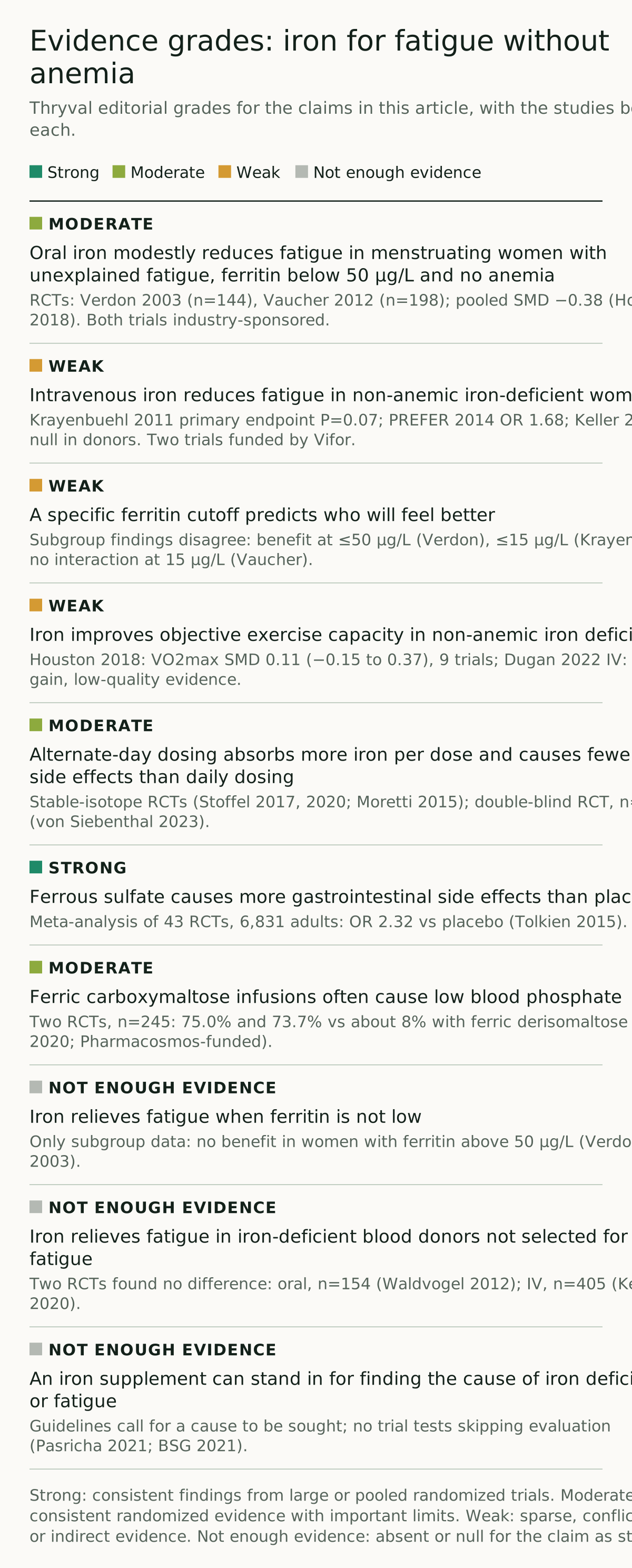
Evidence grades
The grades below are Thryval editorial judgments based on the studies cited in this article. The grading rules are set out on our Research page.
Frequently asked questions
Can low ferritin cause fatigue without anemia?
It may contribute. In two randomized trials of menstruating women with unexplained fatigue and ferritin below 50 µg/L, oral iron reduced fatigue more than placebo, which suggests that low iron stores caused part of the fatigue in some of them.12 The added benefit was modest, and the reason for both the fatigue and the low ferritin still needs to be found.
What ferritin level counts as low?
The WHO defines iron deficiency in healthy adults as a ferritin below 15 µg/L, or below 70 µg/L when infection or inflammation is present.18 A cutoff of 45 µg/L detects more cases at the cost of some false positives, and most fatigue trials enrolled women with ferritin below 50 µg/L.172
What dose and duration were used in the trials?
The oral trials used 80 mg of elemental iron a day as ferrous sulfate, for four weeks in one trial and twelve weeks in the other.12 That is well above the 45 mg daily upper intake level set for people taking iron without medical supervision.19 The dose for treatment should be agreed with a clinician who has confirmed the deficiency.
Is taking iron every other day better?
Alternate-day dosing leads to higher absorption from each dose and, in one trial, fewer gut side effects for the same total dose, but it takes longer to deliver that dose.1113 It has not been tested against daily dosing for fatigue.
Are iron infusions better than tablets for fatigue?
Not on current evidence. Infusions raise ferritin faster and avoid gut symptoms, but fatigue results have been mixed, and ferric carboxymaltose often lowers blood phosphate.45915 Infusions are usually reserved for people who cannot tolerate or absorb oral iron.
Who should not take iron without testing first?
People who have not had their iron status measured, men and women after menopause, whose iron deficiency needs a cause found, and anyone with hemochromatosis or a family history of it should not start iron on their own.1719 People taking levothyroxine or other medicines that interact with iron should ask about timing, and iron does not replace any treatment a clinician has prescribed.19
Implications for patients and clinicians
For a menstruating woman with unexplained fatigue, a normal hemoglobin and a ferritin below about 50 µg/L, a trial of oral iron is reasonable and the evidence suggests a modest benefit, with gut side effects as the main cost.2314 Alternate-day dosing may be easier to tolerate.13 The more important clinical step is to find out why stores are low, which in men and postmenopausal women can mean looking for bleeding from the gut, and to consider the other causes of fatigue.1716 Iron should not be started without testing, and a supplement does not replace medical evaluation or prescribed treatment. Readers interested in another supplement marketed for tiredness can find our review of rhodiola for stress and fatigue.
This article is for education and is not medical advice.
References
-
Verdon F, Burnand B, Stubi CL, et al. Iron supplementation for unexplained fatigue in non-anaemic women: double blind randomised placebo controlled trial. BMJ. 2003;326(7399):1124. Randomized controlled trial, n=144; sponsored by Robapharm, which was not involved in analysis or writing. PMC156009 · PubMed 12763985 ↩↩↩↩↩↩↩↩↩↩↩
-
Vaucher P, Druais PL, Waldvogel S, Favrat B. Effect of iron supplementation on fatigue in nonanemic menstruating women with low ferritin: a randomized controlled trial. CMAJ. 2012;184(11):1247–1254. Randomized controlled trial, n=198; sponsored, funded and designed by Pierre Fabre Médicament, maker of the iron product used. PMC3414597 · PubMed 22777991 ↩↩↩↩↩↩↩↩↩↩↩↩↩
-
Houston BL, Hurrie D, Graham J, et al. Efficacy of iron supplementation on fatigue and physical capacity in non-anaemic iron-deficient adults: a systematic review of randomised controlled trials. BMJ Open. 2018;8(4):e019240. Systematic review and meta-analysis: 18 trials, 1,170 participants; no specific funding, no competing interests declared. PMC5892776 · PubMed 29626044 ↩↩↩↩↩↩↩↩↩
-
Krayenbuehl PA, Battegay E, Breymann C, Furrer J, Schulthess G. Intravenous iron for the treatment of fatigue in nonanemic, premenopausal women with low serum ferritin concentration. Blood. 2011;118(12):3222–3227. Randomized controlled trial, n=90; funded by Vifor, maker of the iron sucrose used, which took part in the design. PubMed 21705493 ↩↩↩↩↩↩↩↩
-
Favrat B, Balck K, Breymann C, et al. Evaluation of a single dose of ferric carboxymaltose in fatigued, iron-deficient women: PREFER a randomized, placebo-controlled study. PLoS One. 2014;9(4):e94217. Single-blinded randomized controlled trial, 290 analyzed; sponsored by Vifor Pharma, which funded the medical writing and employed one author. PMC3994001 · PubMed 24751822 ↩↩↩↩↩↩↩↩↩
-
Miles LF, Litton E, Imberger G, Story D. Intravenous iron therapy for non-anaemic, iron-deficient adults. Cochrane Database Syst Rev. 2019;12(12):CD013084. Systematic review: 11 studies, 1,074 participants; authors’ institutions had received support from Vifor. PMC6924972 · PubMed 31860749 ↩
-
Dugan C, Cabolis K, Miles LF, et al. Systematic review and meta-analysis of intravenous iron therapy for adults with non-anaemic iron deficiency: an abridged Cochrane review. J Cachexia Sarcopenia Muscle. 2022;13(6):2637–2649. Systematic review and meta-analysis: 21 trials, 3,514 participants; two authors reported ties to Vifor (one through study funding), and one of them also to Pharmacosmos. PMC9745472 · PubMed 36321348 ↩↩↩↩
-
Waldvogel S, Pedrazzini B, Vaucher P, et al. Clinical evaluation of iron treatment efficiency among non-anemic but iron-deficient female blood donors: a randomized controlled trial. BMC Med. 2012;10:8. Randomized controlled trial, n=154; financed by Pierre Fabre Médicament, which the authors state left them independent in design, analysis and writing. PMC3292842 · PubMed 22272750 ↩↩↩↩
-
Keller P, von Känel R, Hincapié CA, et al. The effects of intravenous iron supplementation on fatigue and general health in non-anemic blood donors with iron deficiency: a randomized placebo-controlled superiority trial. Sci Rep. 2020;10(1):14219. Randomized controlled trial, n=405; funded by the Humanitarian Foundation of the Swiss Red Cross, with study drug donated by Vifor Pharma, which had no role in the study; one author reported Vifor honoraria. PMC7449957 · PubMed 32848185 ↩↩↩↩↩↩
-
Moretti D, Goede JS, Zeder C, et al. Oral iron supplements increase hepcidin and decrease iron absorption from daily or twice-daily doses in iron-depleted young women. Blood. 2015;126(17):1981–1989. Stable-isotope absorption studies, n=54 non-anemic women with ferritin 20 µg/L or below. PubMed 26289639 ↩↩↩
-
Stoffel NU, Cercamondi CI, Brittenham G, et al. Iron absorption from oral iron supplements given on consecutive versus alternate days and as single morning doses versus twice-daily split dosing in iron-depleted women: two open-label, randomised controlled trials. Lancet Haematol. 2017;4(11):e524–e533. Two open-label randomized trials, n=40 and n=20; funded by the Swiss National Science Foundation. PubMed 29032957 ↩↩↩↩↩
-
Stoffel NU, Zeder C, Brittenham GM, Moretti D, Zimmermann MB. Iron absorption from supplements is greater with alternate day than with consecutive day dosing in iron-deficient anemic women. Haematologica. 2020;105(5):1232–1239. Stable-isotope absorption study, n=19; funded by ETH Zurich. PMC7193469 · PubMed 31413088 ↩↩↩
-
von Siebenthal HK, Gessler S, Vallelian F, et al. Alternate day versus consecutive day oral iron supplementation in iron-depleted women: a randomized double-blind placebo-controlled study. EClinicalMedicine. 2023;65:102286. Double-blind randomized controlled trial, n=150; funded by the Swiss National Science Foundation, no competing interests declared. PMC10659995 · PubMed 38021373 ↩↩↩↩↩↩
-
Tolkien Z, Stecher L, Mander AP, Pereira DIA, Powell JJ. Ferrous sulfate supplementation causes significant gastrointestinal side-effects in adults: a systematic review and meta-analysis. PLoS One. 2015;10(2):e0117383. Meta-analysis: 43 trials, 6,831 adults; funded by the UK Medical Research Council; two authors are inventors on an iron compound patent. PMC4336293 · PubMed 25700159 ↩↩↩↩
-
Wolf M, Rubin J, Achebe M, et al. Effects of iron isomaltoside vs ferric carboxymaltose on hypophosphatemia in iron-deficiency anemia: two randomized clinical trials. JAMA. 2020;323(5):432–443. Two randomized trials, n=245; funded and co-designed by Pharmacosmos, maker of iron isomaltoside (ferric derisomaltose), which employed one author. PMC7042864 · PubMed 32016310 ↩↩↩
-
Pasricha SR, Tye-Din J, Muckenthaler MU, Swinkels DW. Iron deficiency. Lancet. 2021;397(10270):233–248. Narrative review (seminar). PubMed 33285139 ↩↩↩↩↩
-
Snook J, Bhala N, Beales ILP, et al. British Society of Gastroenterology guidelines for the management of iron deficiency anaemia in adults. Gut. 2021;70(11):2030–2051. Clinical guideline; several authors reported ties to Vifor or Pharmacosmos. PMC8515119 · PubMed 34497146 ↩↩↩↩↩↩↩↩↩↩↩
-
World Health Organization. WHO guideline on use of ferritin concentrations to assess iron status in individuals and populations. Geneva: WHO; 2020. ISBN 9789240000124. who.int ↩↩
-
NIH Office of Dietary Supplements. Iron: fact sheet for health professionals. Updated September 4, 2025. ods.od.nih.gov ↩↩↩↩↩↩↩
-
Anderson GJ, Frazer DM. Current understanding of iron homeostasis. Am J Clin Nutr. 2017;106(Suppl 6):1559S–1566S. Narrative review. PMC5701707 · PubMed 29070551 ↩↩↩
-
Nemeth E, Ganz T. Hepcidin-ferroportin interaction controls systemic iron homeostasis. Int J Mol Sci. 2021;22(12):6493. Narrative review; both authors reported industry ties, including Vifor. PMC8235187 · PubMed 34204327 ↩↩↩