

Does zinc help with colds? What the trials show
Zinc lozenges are among the most studied cold remedies. Pooled trials suggest they can shorten colds in adults when started early, but results vary widely with the lozenge and the dose, and the certainty is low. Taking zinc to prevent colds has shown little effect, and zinc nasal gels have been linked to lasting loss of smell.
The grade WeakZinc lozenges for preventing or shortening the common cold
In brief. Zinc lozenges may shorten a cold in adults if they are started within a day of the first symptoms, but the trials disagree and the certainty of the evidence is low. A 2024 Cochrane review of 34 trials found that zinc taken to treat a cold shortened it by 2.37 days on average (95% CI 0.53 to 4.21 days), with very large differences between trials.1 Analyses limited to lozenges that delivered more than 75 mg of zinc a day estimate that colds were about a third shorter, while two trials of natural colds, including a 2020 Finnish trial of a commercial zinc acetate lozenge, found no benefit.2345 Taking zinc regularly made little or no difference to the risk of catching a cold (risk ratio 0.93, 0.85 to 1.01).1 Lozenges often cause a bad taste and nausea.16 In 2009 the FDA told consumers to stop using three zinc nasal cold products after more than 130 reports of lost sense of smell, and taking 50 mg of zinc or more a day for weeks can lower copper status.79
Zinc is an essential trace mineral found in meat, shellfish, dairy, beans, nuts and whole grains. The recommended dietary allowance is 11 mg a day for adult men and 8 mg for adult women, and the tolerable upper intake level for adults is 40 mg a day.9 Interest in zinc lozenges began with an observation by George Eby, whose 3-year-old daughter’s cold symptoms seemed to clear after she let a zinc tablet dissolve in her mouth instead of swallowing it.3 In the trial he then ran, published in 1984, 86% of 37 people who dissolved 23 mg zinc gluconate lozenges every two waking hours had no symptoms after 7 days, compared with 46% of 28 people given placebo.10 Dozens of trials have followed. This article reviews what they found and why their results differ, and then turns to safety.
One widely cited summary should be set aside. A Cochrane review by Singh and Das, published in 2011 and updated in 2013, reported that zinc shortened colds and also prevented them. Cochrane withdrew it in 2015 after errors were reported and an investigation of data plagiarism was inconclusive, and JAMA retracted the authors’ 2014 summary of it.1112 The numbers in this article come from other reviews.
How might zinc lozenges act on a cold?
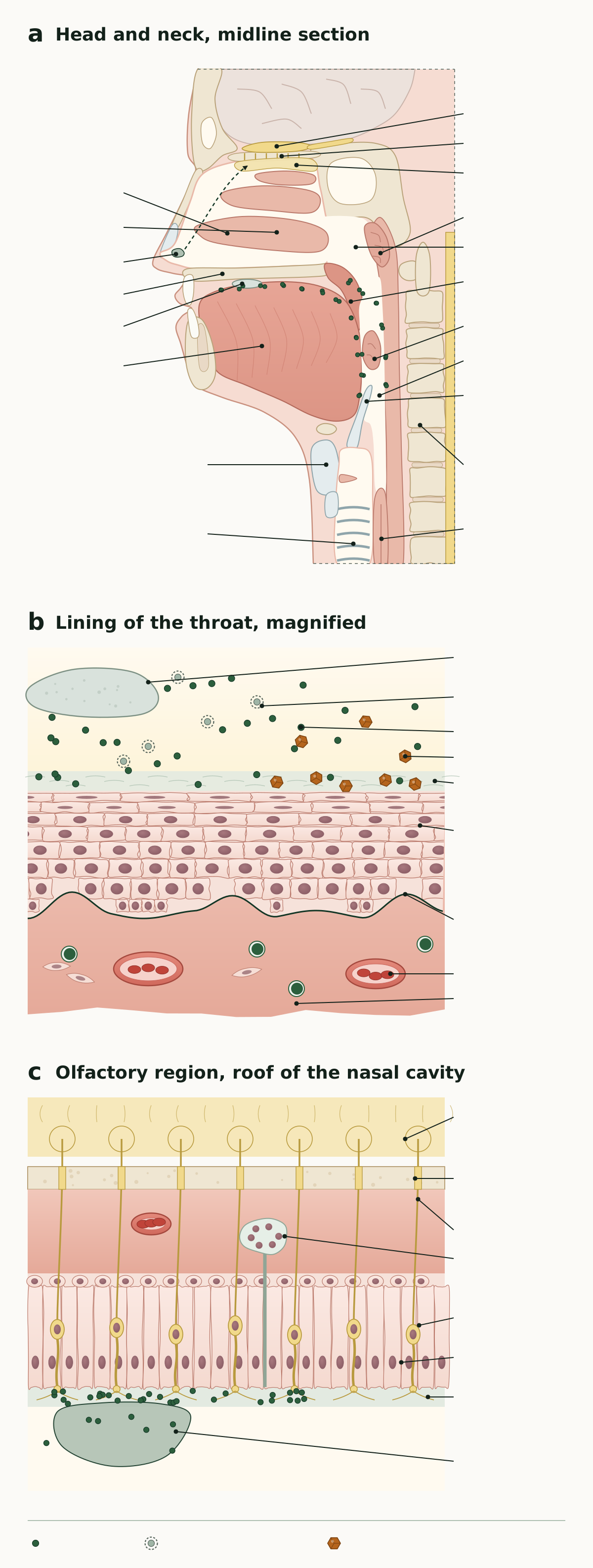
The mechanism is not established. One hypothesis is that zinc inhibits rhinovirus binding and replication in the nasal mucosa and dampens inflammation.9 In most trials zinc was given as a lozenge or syrup that clings to the mouth and throat, which places it in contact with the virus there.9 On this view, what matters is how much zinc a lozenge releases as positively charged ions in saliva. Some lozenge ingredients, such as citric acid and tartaric acid, bind zinc ions so that little is released.2 Using solution chemistry, Eby calculated the dose of positively charged zinc released by the lozenges in 11 trials and found that it correlated with the reduction in cold duration.13 That analysis was done after the trials were finished, and its calculations have not been tested in a trial that compared otherwise identical lozenges. A small trial of a zinc gluconate nasal gel, which delivered about 2.1 mg of zinc a day inside the nose, also found shorter colds, which supports a local effect rather than a nutritional one.143
What did the main zinc lozenge trials find?
The early trials were small and the results ranged from large benefits to none.
| Trial | Participants | Lozenge | Main result |
|---|---|---|---|
| Eby 198410 | 65 people with colds analyzed | Zinc gluconate, 23 mg every 2 waking hours after a double first dose | No symptoms at 7 days: 86% with zinc, 46% with placebo |
| Mossad 199615 | 100 Cleveland Clinic employees within 24 hours of symptoms | Zinc gluconate, 13.3 mg every 2 waking hours | Median time to resolution 4.4 days with zinc, 7.6 with placebo |
| Macknin 199816 | 249 students in grades 1 to 12 within 24 hours of symptoms | Zinc gluconate glycine, 10 mg five or six times a day | Median 9 days in both groups |
| Prasad 200017 | 48 adults analyzed of 50 enrolled within 24 hours | Zinc acetate, 12.8 mg every 2 to 3 waking hours | Mean duration 4.5 days with zinc, 8.1 with placebo |
| Turner 200049 | 273 adults with experimental rhinovirus colds; 281 with natural colds | Zinc gluconate 13.3 mg or zinc acetate 5 or 11.5 mg, six a day | Experimental colds: median 2.5 versus 3.5 days with gluconate, no effect of acetate. Natural colds: no effect of either |
| Hemilä 20205 | 87 adults with colds, of 253 randomized in advance | Zinc acetate, 13 mg six times a day for up to 5 days | No faster recovery (rate ratio 0.68, 0.42 to 1.08) |
In the Mossad trial, side effects were reported by 90% of the zinc group and 62% of the placebo group, mainly bad taste (80% and 30%) and nausea (20% and 4%).15 The Finnish trial in 2020 is notable because it was investigator-initiated, used a commercially available lozenge and disguised the taste of zinc in the placebo. Zinc did not speed recovery during the 5 days of use, and in the 2 days after the lozenges were stopped the zinc group recovered more slowly than the placebo group.5
Do zinc lozenges shorten colds?
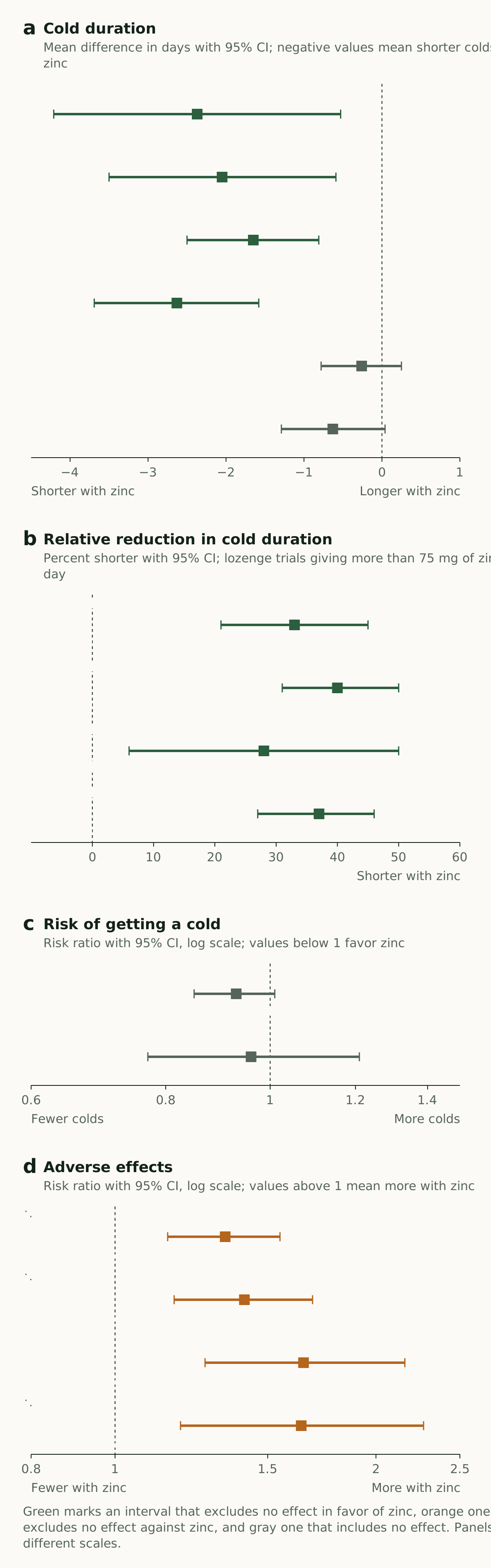
Pooled analyses agree on the direction of the effect and disagree on how much confidence it deserves. The 2024 Cochrane review, by Nault and colleagues, included 19 treatment trials and 15 prevention trials with 8,526 participants in total.1 When zinc was used to treat a cold, the mean duration was 2.37 days shorter (95% CI 0.53 to 4.21; 8 studies, 972 participants), but heterogeneity was extreme (I² 97%) and the certainty of the evidence was rated low. It was uncertain whether fewer people were still ill at the end of follow-up (risk ratio 0.52, 0.21 to 1.27; very low certainty), and overall symptom severity did not clearly differ.1 In the text of the review, the authors judged the evidence insufficient to provide firm conclusions or to recommend zinc for preventing or treating colds.3
Earlier meta-analyses reached similar averages. Science and colleagues, in 2012, pooled 17 trials with 2,121 participants and found colds 1.65 days shorter with zinc (0.81 to 2.50), with heterogeneity again very high (I² 95%).6 The effect was seen in adults (mean difference −2.63 days, −3.69 to −1.58) but not in children (−0.26 days, −0.78 to 0.25). A 2021 review by Hunter and colleagues of 28 trials in adults found symptoms resolved about 2 days earlier with zinc lozenges or nasal zinc (mean difference −2.05 days, −3.50 to −0.59), which it rated as very low certainty.18
Harri Hemilä, a Finnish researcher who has written many of the lozenge-specific analyses, argues that these pooled day counts understate the effect. In a 2017 meta-analysis of seven placebo-controlled trials that gave more than 75 mg of zinc a day as lozenges (575 participants), colds were 33% shorter (95% CI 21% to 45%).2 An analysis of individual patient data from three zinc acetate trials, with 199 patients taking 80 to 92 mg a day, found that 70% of the zinc group had recovered by day 5, compared with 27% of the placebo group.19 That analysis was written with investigators of the pooled trials. In 2024 Hemilä and Chalker criticized the Cochrane review for pooling lozenge and nasal trials, whose daily doses differed by up to 4,300-fold. They also objected that it included a trial in children and left out the Mossad trial. Restricting the Cochrane data to lozenge trials in adults and adding Mossad, they estimated colds 37% shorter (27% to 46%).3
Both readings rest largely on the same small trials. The seven trials in Hemilä’s 2017 analysis had 575 participants between them, most trials in the Cochrane review were funded by organizations with ties to industry or did not report funding, and two trials of natural colds, one of them using a commercially available lozenge, found nothing.2145 A reasonable summary is that lozenges releasing enough zinc may shorten a cold in adults by a day or two, and that this has not been confirmed in a large independent trial.
Does the type of zinc or the dose matter?
It may, although the trials were not designed to show it. In Hemilä’s 2017 analysis, zinc acetate lozenges shortened colds by 40% (31% to 50%) and zinc gluconate lozenges by 28% (6% to 50%), a difference that was not statistically significant.2 Trials using 80 to 92 mg a day and those using 192 to 207 mg a day showed similar effects, so there was no sign that doses above 100 mg a day add anything.2 Most trials that found no benefit used less than 75 mg a day, or lozenges containing citric acid or tartaric acid, which bind zinc.192 Hemilä and Eby have both concluded that many lozenges on the US market contain too little zinc or contain these binders.53 The Finnish trial in 2020, however, used zinc acetate lozenges of 13 mg taken six times a day, 78 mg in total, and still found no benefit, which shows that salt and dose do not fully explain the variation.5
Timing was consistent across the positive trials. Participants started lozenges within 24 hours of their first symptoms and took one every 2 to 3 waking hours.151719 Product labels give the amount of elemental zinc, not the weight of the zinc salt.9
Does taking zinc prevent colds?
There is little evidence that it does. In the Cochrane review, zinc taken regularly made little or no difference to the risk of developing a cold (risk ratio 0.93, 0.85 to 1.01; 9 studies, 1,449 participants; low certainty), and colds that did occur lasted about as long (mean difference −0.63 days, −1.29 to 0.04; moderate certainty).1 In trials in which volunteers were inoculated with rhinovirus, zinc did not prevent colds (risk ratio 0.96, 0.77 to 1.21).18 The Hunter review did estimate 5 fewer respiratory infections per 100 person-months with oral or nasal zinc, which it rated as moderate certainty, but that estimate drew on four prevention trials, two of which tested a nasal spray used for a month.18
Does zinc help children with colds?
For treating colds, the trials in children have not shown a benefit. In the largest, 249 schoolchildren given 10 mg zinc gluconate lozenges five or six times a day took a median of 9 days to recover, the same as with placebo, and reported more bad taste (60.2% versus 37.9%) and nausea (29.3% versus 16.1%).16 Pooled trials in children found no effect on duration.63
Prevention of more serious infection in young children is a separate question. In a Cochrane review of six trials with 5,193 children aged 2 to 59 months, daily zinc reduced the incidence of pneumonia by 13% (risk ratio 0.87, 0.81 to 0.94), with low-quality evidence.20 Those results come from settings where zinc deficiency is common and do not show a benefit in well-nourished children.9
Does zinc boost immunity if you are not deficient?
No trial has shown that extra zinc improves immune outcomes in well-nourished adults. In nursing home residents in Boston, those with low serum zinc had more pneumonia than those with normal levels, but that study was observational and cannot show cause.21 A follow-up trial randomized 31 residents who had low serum zinc to 30 mg or 5 mg of zinc a day for 3 months. Serum zinc rose more with the higher dose, and so did the number of circulating T cells, although not everyone reached a normal zinc level. The trial was not designed to test effects on infection.22
In adults with COVID-19 treated as outpatients, the COVID A to Z trial randomized 214 people to 50 mg of zinc gluconate a day for 10 days, high-dose vitamin C, both, or usual care. The trial was stopped early because a benefit had become unlikely, with no significant difference between groups; symptoms were halved after a mean of 5.9 days with zinc and 6.7 days with usual care.23 Large doses carry their own risk: 50 mg or more of zinc a day for weeks can reduce immune function and interfere with copper absorption.9
Is zinc safe? Side effects, nasal zinc and copper
Lozenges taken for a few days mainly cause taste and stomach complaints. In the Cochrane review, non-serious adverse events were more common with zinc treatment (risk ratio 1.34, 1.15 to 1.55; 16 studies, moderate certainty), and no treatment trial reported serious adverse events.1 Science and colleagues found bad taste (risk ratio 1.65) and nausea (1.64) more often with zinc.6 In the Finnish trial, 37% of the zinc group reported no adverse effects, compared with 69% of the placebo group.5
Zinc applied inside the nose carries a separate risk. On June 16, 2009, the FDA advised consumers to stop using Zicam Cold Remedy Nasal Gel and two Zicam nasal swab products, all containing zinc, after more than 130 reports of loss of the sense of smell, some after a single dose; the agency warned that the loss may be long-lasting or permanent.7 The warning did not apply to zinc tablets and lozenges taken by mouth.8 A clinic case series described 17 people with impaired smell after using a zinc gluconate nasal gel. All reported sniffing deeply as they applied it, followed by burning and then loss of smell within 48 hours, and 7 of the 17 never developed a cold.24 No loss of smell was reported in two prevention trials of a zinc nasal spray in which 1,447 people used it for a month.18
Long-term high intake is the main concern with oral zinc. The adult upper intake level of 40 mg a day was set from the amount that impairs copper status, and doses of 50 mg or more taken for weeks can lower copper, impair immunity and reduce HDL cholesterol.9 A 2026 systematic review of 37 published cases of zinc-induced blood disorders found that daily doses ranged from about 50 mg to more than 1,500 mg, taken for weeks to years, most often from supplements, zinc-containing denture creams or swallowed coins. Serum copper was low in every case, anemia was nearly universal, and neurological damage improved slowly and sometimes incompletely after zinc was stopped.25 The lozenge regimens that shortened colds in trials gave 80 to 92 mg a day for 1 to 2 weeks, well above the upper limit. Hemilä and Chalker consider courses of that length unlikely to cause long-term harm, pointing to the long-term use of 150 mg a day in the treatment of Wilson’s disease.1939
Zinc can bind quinolone and tetracycline antibiotics in the gut and reduce absorption of both; the NIH Office of Dietary Supplements advises taking the antibiotic at least 2 hours before or 4 to 6 hours after zinc.9 Zinc also reduces the absorption of penicillamine, and thiazide diuretics increase zinc loss in the urine.9 Zinc lozenges are not a substitute for any medicine a clinician has prescribed, and people who take regular medicines should check with a health care provider before adding zinc.
How good is the evidence, and who paid for it?
Most of the trials are small, and their results are inconsistent. The Cochrane authors found most trials at unclear or high risk of bias in at least one domain, and reported that most of the included studies were funded by an organization with ties to industry or did not report their funding.1 In the Mossad trial, the Quigley Corporation supplied the zinc and placebo lozenges, and grant support came from Cleveland Clinic research funds.15
The reviews themselves had mixed funding. The Cochrane authors declared no conflicts of interest.1 The 2012 review was supported by the Canadian Institutes of Health Research.6 Several authors of the Hunter review reported payment for advising industry and other organizations on complementary medicine and nutraceuticals, although the review itself had no external funding.18 Hemilä’s 2017 meta-analysis declared no funding, and his 2020 trial was funded by NordForsk and the Academy of Finland, with lozenges donated by the University Pharmacy in Helsinki.25 Hemilä’s complaint led to the withdrawal of the 2013 Cochrane review, and his reanalyses are the main counterweight to the 2024 Cochrane conclusions, so readers should know that the main lozenge-specific analyses and the main critique of the negative one come from the same researcher.113
What remains uncertain?
It is not known which commercial lozenges release enough zinc ions to have an effect, since no trial has compared otherwise identical lozenges with and without binding agents.23 The largest trials of natural colds found no benefit, so the size of any effect in ordinary use is uncertain.45 Whether zinc works for colds caused by viruses other than rhinovirus is unclear, as most trials did not test for the virus.16 For prevention, the trials are few and heterogeneous, and there is no trial evidence that zinc supplements improve immune outcomes in adults who are not deficient.123
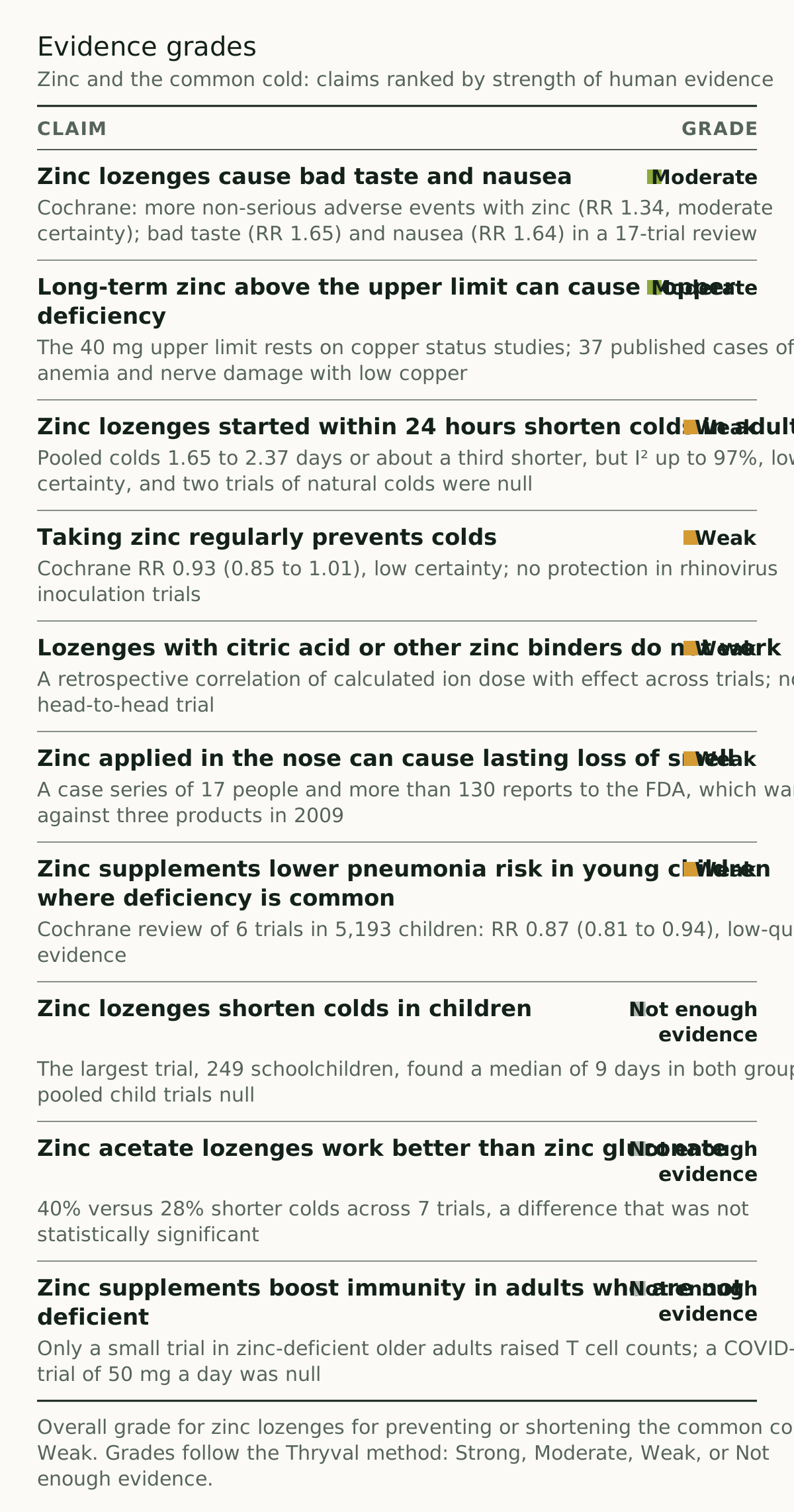
Evidence grades
The grades below are Thryval editorial judgments based on the studies cited in this article. The grading rules are set out on our Research page.
Frequently asked questions
Do zinc lozenges really work for colds?
They may shorten a cold in adults by a day or two when started within 24 hours of the first symptoms, but the trials are inconsistent and the certainty of the evidence is low.12 Two trials of natural colds, one of them in 2020 with a commercial lozenge, found no benefit.45
How much zinc did the lozenge trials use?
The trials that found shorter colds gave lozenges of about 13 mg of zinc every 2 to 3 waking hours for as long as symptoms lasted, more than 75 mg a day in total.15172 That is above the adult upper intake level of 40 mg a day, which applies to long-term intake.9
Does taking zinc every day prevent colds?
The Cochrane review found little or no difference in the risk of catching a cold with regular zinc (risk ratio 0.93, 0.85 to 1.01; low certainty).1
Is zinc acetate better than zinc gluconate?
Acetate lozenges showed a 40% reduction in cold duration and gluconate lozenges 28% in one meta-analysis, but the difference was not statistically significant.2 Lozenges with citric acid or tartaric acid may release less zinc.213
Are zinc nasal sprays and gels safe?
In 2009 the FDA advised consumers to stop using three Zicam zinc nasal products after more than 130 reports of loss of smell, which may be permanent.7 The warning did not apply to zinc lozenges or tablets taken by mouth.8
Can you take too much zinc?
Yes. The adult upper intake level is 40 mg a day; 50 mg or more a day for weeks can lower copper status and impair immune function, and sustained high intake has caused anemia and nerve damage.925
Implications for patients and clinicians
For adults who want to try zinc for a cold, the trial evidence applies to lozenges started within a day of symptoms and taken every few waking hours while symptoms last, and it suggests a modest benefit at best.12 Bad taste and nausea are common, and some people stop for that reason.156 Products for use inside the nose should be avoided given the FDA warning about loss of smell.7 Daily zinc taken to prevent colds has little support, and long-term intake above 40 mg a day risks copper deficiency.1925 Children have not benefited in trials of lozenges.16 People with symptoms that are severe or that do not improve should see a clinician, and zinc does not replace any medicine a clinician has prescribed. Readers interested in another supplement often taken for respiratory infections can find our review of vitamin D in people who are not deficient.
References
-
Nault D, Machingo TA, Shipper AG, et al. Zinc for prevention and treatment of the common cold. Cochrane Database Syst Rev. 2024;5(5):CD014914. Systematic review and meta-analysis (GRADE): 34 trials, 8,526 participants; no conflicts declared apart from one author’s Cochrane editorial role and NIH funding to one author’s institution. PMC11078591 · PubMed 38719213 ↩↩↩↩↩↩↩↩↩↩↩↩↩↩↩↩↩↩
-
Hemilä H. Zinc lozenges and the common cold: a meta-analysis comparing zinc acetate and zinc gluconate, and the role of zinc dosage. JRSM Open. 2017;8(5):2054270417694291. Meta-analysis: 7 randomized trials, 575 participants; no funding declared. PMC5418896 · PubMed 28515951 ↩↩↩↩↩↩↩↩↩↩↩↩↩↩↩↩↩
-
Hemilä H, Chalker E. Shortcomings in the Cochrane review on zinc for the common cold (2024). Front Med (Lausanne). 2024;11:1470004. Commentary with reanalysis; no financial support declared. PMC11521859 · PubMed 39478818 ↩↩↩↩↩↩↩↩↩↩
-
Turner RB, Cetnarowski WE. Effect of treatment with zinc gluconate or zinc acetate on experimental and natural colds. Clin Infect Dis. 2000;31(5):1202–1208. Two randomized controlled trials, n=273 and n=281. PubMed 11073753 ↩↩↩↩↩↩
-
Hemilä H, Haukka J, Alho M, Vahtera J, Kivimäki M. Zinc acetate lozenges for the treatment of the common cold: a randomised controlled trial. BMJ Open. 2020;10(1):e031662. Randomized controlled trial, n=253 randomized, 87 analyzed; funded by NordForsk and the Academy of Finland, lozenges donated by the University Pharmacy, Helsinki. PMC7045205 · PubMed 31980506 ↩↩↩↩↩↩↩↩↩↩↩
-
Science M, Johnstone J, Roth DE, Guyatt G, Loeb M. Zinc for the treatment of the common cold: a systematic review and meta-analysis of randomized controlled trials. CMAJ. 2012;184(10):E551–E561. Systematic review and meta-analysis: 17 trials, 2,121 participants; supported by the Canadian Institutes of Health Research. PMC3394849 · PubMed 22566526 ↩↩↩↩↩↩↩↩↩
-
US Food and Drug Administration. FDA advises consumers not to use certain Zicam cold remedies: intranasal zinc product linked to loss of sense of smell. Press release, June 16, 2009. Archived copy, June 17, 2009. web.archive.org ↩↩↩↩↩
-
US Food and Drug Administration. Warnings on three Zicam intranasal zinc products. Consumer update, posted June 16, 2009. Archived copy, January 5, 2010. web.archive.org ↩↩
-
NIH Office of Dietary Supplements. Zinc: fact sheet for health professionals. Updated January 6, 2026. ods.od.nih.gov ↩↩↩↩↩↩↩↩↩↩↩↩↩↩↩↩
-
Eby GA, Davis DR, Halcomb WW. Reduction in duration of common colds by zinc gluconate lozenges in a double-blind study. Antimicrob Agents Chemother. 1984;25(1):20–24. Randomized controlled trial, 65 participants analyzed. PMC185426 · PubMed 6367635 ↩↩
-
Singh M, Das RR. WITHDRAWN: Zinc for the common cold. Cochrane Database Syst Rev. 2015;(4):CD001364. Withdrawal notice, updated September 2016. PMC6457799 · PubMed 25924708 ↩↩
-
Das RR, Singh M. Notice of retraction: Das RR, Singh M. Oral zinc for the common cold. JAMA. 2014;311(14):1440-1441. JAMA. 2016;316(24):2678. Retraction notice. PubMed 28027374 ↩
-
Eby GA. Zinc lozenges: cold cure or candy? Solution chemistry determinations. Biosci Rep. 2004;24(1):23–39. Reanalysis of published trials using solution chemistry. PMC7087920 · PubMed 15499830 ↩↩↩
-
Mossad SB. Effect of zincum gluconicum nasal gel on the duration and symptom severity of the common cold in otherwise healthy adults. QJM. 2003;96(1):35–43. Randomized controlled trial, n=80. PubMed 12509647 ↩
-
Mossad SB, Macknin ML, Medendorp SV, Mason P. Zinc gluconate lozenges for treating the common cold: a randomized, double-blind, placebo-controlled study. Ann Intern Med. 1996;125(2):81–88. Randomized controlled trial, n=100; lozenges supplied by the Quigley Corporation, grant support from Cleveland Clinic research funds. PubMed 8678384 ↩↩↩↩↩↩↩
-
Macknin ML, Piedmonte M, Calendine C, Janosky J, Wald E. Zinc gluconate lozenges for treating the common cold in children: a randomized controlled trial. JAMA. 1998;279(24):1962–1967. Randomized controlled trial, n=249. PubMed 9643859 ↩↩↩↩↩
-
Prasad AS, Fitzgerald JT, Bao B, Beck FW, Chandrasekar PH. Duration of symptoms and plasma cytokine levels in patients with the common cold treated with zinc acetate: a randomized, double-blind, placebo-controlled trial. Ann Intern Med. 2000;133(4):245–252. Randomized controlled trial, n=50. PubMed 10929163 ↩↩↩
-
Hunter J, Arentz S, Goldenberg J, et al. Zinc for the prevention or treatment of acute viral respiratory tract infections in adults: a rapid systematic review and meta-analysis of randomised controlled trials. BMJ Open. 2021;11(11):e047474. Rapid systematic review and meta-analysis: 28 trials, 5,446 participants; several authors reported paid advisory work on complementary medicine and nutraceuticals. PMC8578211 · PubMed 34728441 ↩↩↩↩↩↩
-
Hemilä H, Fitzgerald JT, Petrus EJ, Prasad A. Zinc acetate lozenges may improve the recovery rate of common cold patients: an individual patient data meta-analysis. Open Forum Infect Dis. 2017;4(2):ofx059. Individual patient data meta-analysis: 3 trials, 199 patients. PMC5410113 · PubMed 28480298 ↩↩↩↩
-
Lassi ZS, Moin A, Bhutta ZA. Zinc supplementation for the prevention of pneumonia in children aged 2 months to 59 months. Cochrane Database Syst Rev. 2016;12(12):CD005978. Systematic review and meta-analysis: 6 trials, 5,193 children. PMC6463931 · PubMed 27915460 ↩↩
-
Meydani SN, Barnett JB, Dallal GE, et al. Serum zinc and pneumonia in nursing home elderly. Am J Clin Nutr. 2007;86(4):1167–1173. Observational analysis within a randomized trial of vitamin E, n=578 at baseline; NIH-funded. PMC2323679 · PubMed 17921398 ↩
-
Barnett JB, Dao MC, Hamer DH, et al. Effect of zinc supplementation on serum zinc concentration and T cell proliferation in nursing home elderly: a randomized, double-blind, placebo-controlled trial. Am J Clin Nutr. 2016;103(3):942–951. Randomized controlled trial, n=31. PubMed 26817502 ↩↩
-
Thomas S, Patel D, Bittel B, et al. Effect of high-dose zinc and ascorbic acid supplementation vs usual care on symptom length and reduction among ambulatory patients with SARS-CoV-2 infection: the COVID A to Z randomized clinical trial. JAMA Netw Open. 2021;4(2):e210369. Open-label randomized controlled trial, n=214. PMC7881357 · PubMed 33576820 ↩↩↩
-
Alexander TH, Davidson TM. Intranasal zinc and anosmia: the zinc-induced anosmia syndrome. Laryngoscope. 2006;116(2):217–220. Case series, n=17. PubMed 16467707 ↩↩
-
Dutta A, Chaudhary V, Kumari S, et al. Zinc-induced hematologic toxicities: a systematic review of descriptive studies. Biol Trace Elem Res. 2026;204(9):6628–6642. Systematic review of case reports: 34 publications, 37 cases; authors declared no competing interests. PubMed 42087025 ↩↩↩↩