
Is testosterone therapy safe for the heart and prostate? What the trials show
In a large trial of men with low testosterone and heart disease or its risk factors, testosterone gel was no worse than placebo for heart attacks and strokes over about two years, and no increase in prostate cancer was detected, though cancers were too few to rule one out. More men had atrial fibrillation, kidney injury and pulmonary embolism, PSA rose slightly, and testosterone raises hematocrit enough that guidelines recommend regular blood tests.
The grade ModerateHeart and prostate safety of testosterone treatment in screened men with confirmed low testosterone
In brief. The TRAVERSE trial randomized 5,246 men aged 45 to 80 with low testosterone and heart disease or a high risk of it. Over a mean follow-up of 33 months, cardiovascular death, heart attack or stroke occurred in 7.0% of men on testosterone gel and 7.3% on placebo, which met the trial’s test for noninferiority.1 Atrial fibrillation, acute kidney injury and pulmonary embolism were more common with testosterone.12 In men screened to exclude those at high risk of prostate cancer, prostate cancer was uncommon and no difference between groups was detected, though there were too few cancers to show the risks were the same, while PSA rose slightly more with testosterone.3 Testosterone raises hematocrit, the proportion of blood made up of red cells, and guidelines tell clinicians to check it before and during treatment.45 The trial was funded by testosterone manufacturers, about 61% of men stopped their study gel early, and the results apply only to men like those enrolled.172
For a decade the main question about testosterone treatment was whether it harms the heart. Small trials and observational studies published between 2010 and 2014 raised the possibility, and in 2015 the US Food and Drug Administration (FDA) required labeling changes on every testosterone product to describe a possible increased cardiovascular risk.8 That warning led to TRAVERSE, the first trial large enough to count heart attacks and strokes. This article reviews what it found, what other trials add, and what is known about the prostate and about red blood cells. The benefits of treatment are covered in the first article in this series.
Why did doctors start worrying about testosterone and the heart?
The first signal came from a trial designed to test something else. The Testosterone in Older Men with Mobility Limitations (TOM) trial gave testosterone gel or placebo to men aged 65 or older who had difficulty walking and low testosterone. Its data and safety monitoring board stopped it early after 209 men had enrolled, because 23 men on testosterone and 5 on placebo had cardiovascular-related adverse events. The men had a mean age of 74 and high rates of hypertension, diabetes and obesity, and the authors cautioned that the small size of the trial limited what could be concluded.10 A 2013 meta-analysis of 27 placebo-controlled trials, with 2,994 mostly older men and 180 cardiovascular-related events, found an odds ratio of 1.54 (95% CI 1.09 to 2.18). The excess appeared in trials not funded by industry (odds ratio 2.06) and not in industry-funded trials (0.89).11
Two observational studies followed. In 8,709 US veterans with low testosterone who had undergone coronary angiography, death, heart attack or stroke at three years was estimated at 25.7% among the 1,223 who started testosterone and 19.9% among those who did not. After a published correction, the 95% confidence interval for the absolute difference ran from −1.4% to 13.1%.12 A second study compared the rate of nonfatal heart attack in the 90 days after a first testosterone prescription with the rate in the year before. The rate ratio was 1.36 (95% CI 1.03 to 1.81) overall and 2.19 in men aged 65 or older, with no similar rise after prescriptions for erectile dysfunction drugs.13 Studies of this kind cannot separate the effect of the drug from the reasons it was prescribed.
The FDA issued a drug safety communication in January 2014 about reported risks of stroke, heart attack and death. In March 2015 it required labeling changes and urged caution in using testosterone for low levels due to aging, and an FDA advisory committee recommended an industry-wide trial of cardiovascular safety.8 Testosterone products are approved only for men with low testosterone and an associated medical condition, such as failure of the testes or disease of the pituitary.7
What did the TRAVERSE trial find?
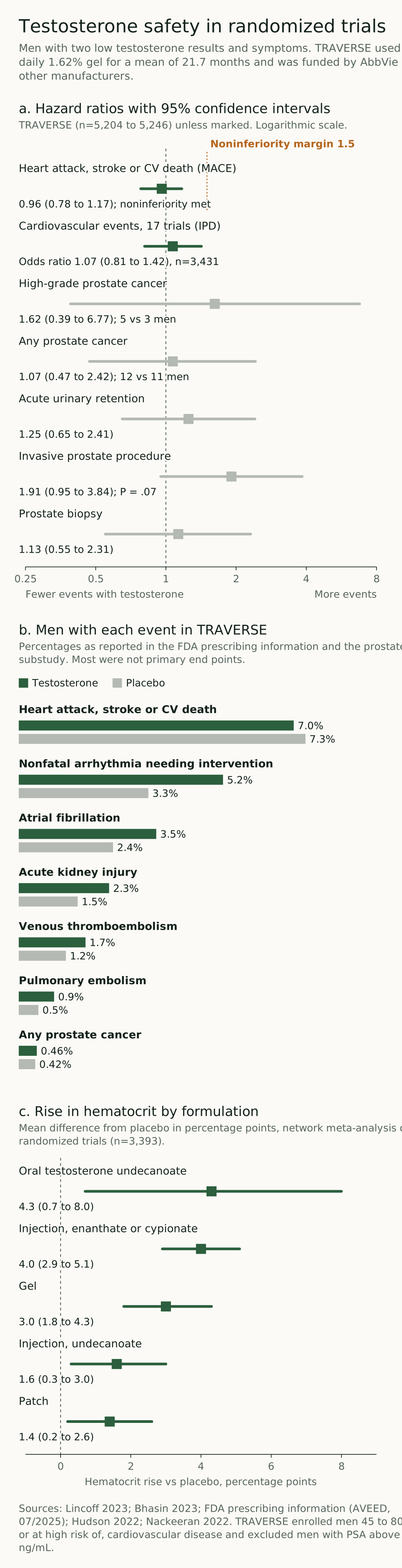
TRAVERSE enrolled 5,246 men at 316 US sites. Each had two fasting testosterone levels below 300 ng/dL, symptoms of low testosterone, and either established cardiovascular disease or several risk factors for it. Men applied a 1.62% testosterone gel, with the dose adjusted to keep testosterone between 350 and 750 ng/dL, or a placebo gel.13 About 55% had preexisting cardiovascular disease, 69% had diabetes and 93% had hypertension, and the mean body mass index was 35.2 The primary end point was the first major adverse cardiac event (MACE), meaning cardiovascular death, nonfatal heart attack or nonfatal stroke. The trial would show noninferiority if the upper limit of the 95% confidence interval for the hazard ratio was below 1.5.1
The mean duration of treatment was 21.7 months and the mean follow-up 33.0 months. A primary event occurred in 182 men (7.0%) on testosterone and 190 men (7.3%) on placebo (hazard ratio 0.96, 95% CI 0.78 to 1.17), which met the noninferiority test. Each component of the composite, and the secondary end point that added coronary revascularization, appeared similar in the two groups. Results were similar when events after stopping treatment were excluded at various time points.1
Several features limit how far this result can be stretched. Only one formulation, a daily gel, was tested. The FDA label summary reports that about 61% of men discontinued the gel or placebo, so much of the follow-up came after treatment had stopped.2 The noninferiority margin of 1.5 means the trial was designed to exclude a 50% increase in risk, not a smaller one, although the observed upper limit of 1.17 was well below that margin.1 The men had confirmed low testosterone and were treated to a normal level, so the result says nothing about higher doses or men with normal testosterone.
Does testosterone cause atrial fibrillation, kidney injury or blood clots?
TRAVERSE found more of these events in the testosterone group, although they were not its primary question. Nonfatal arrhythmias that needed intervention occurred in 5.2% of men on testosterone and 3.3% on placebo, atrial fibrillation in 3.5% and 2.4%, and acute kidney injury in 2.3% and 1.5%.2 Venous thromboembolism occurred in 1.7% and 1.2%, made up of deep vein thrombosis in 0.6% and 0.5% and pulmonary embolism in 0.9% and 0.5%.2 The investigators described the arrhythmia and kidney findings as unexpected.1 In absolute terms, the difference in atrial fibrillation amounts to about one additional case for every 90 men over the course of the trial.
Other trials have not settled whether the atrial fibrillation signal is real. A 2024 meta-analysis of 106 placebo-controlled studies found no difference in major cardiovascular events. When TRAVERSE was set aside, the pooled odds ratios for nonfatal arrhythmia (1.61, 95% CI 0.84 to 3.08) and atrial fibrillation (1.44, 0.46 to 4.46) were not statistically significant, though the intervals were wide.14 A later TRAVERSE analysis found that testosterone raised neutrophil and monocyte counts and that larger increases were associated with venous thromboembolism. That association does not show cause.15
Testosterone also raises blood pressure slightly. In TRAVERSE, mean systolic pressure rose by 1.0 mm Hg on testosterone and fell by 0.5 mm Hg on placebo at 36 months.2 Ambulatory blood pressure studies that the FDA required of every manufacturer confirmed a class-wide increase, and in February 2025 the FDA required a new blood pressure warning for products whose labels lacked one.8
Two boxed warnings remain on testosterone labels. Gels carry a boxed warning that children have developed male characteristics after secondary exposure, so children should avoid contact with unwashed or unclothed application sites, and the AUA asks clinicians to discuss this transfer risk with every man using a gel or cream (strong recommendation).95 The long-acting injection testosterone undecanoate (AVEED) carries a boxed warning for pulmonary oil microembolism and anaphylaxis, and men must be observed for 30 minutes after each injection.2 The separate boxed warnings on blood pressure for some oral and injectable products were removed in 2025, when blood pressure became a warning on all products.8
What do the other trials and meta-analyses add?
The TTrials Cardiovascular Trial used coronary CT angiography to measure plaque directly in 138 men aged 65 or older who completed a year of treatment. Noncalcified plaque volume increased more with testosterone than with placebo (estimated difference 41 mm³, 95% CI 14 to 67).16 Half the men had severe coronary calcification at the start, median baseline plaque volume differed between the groups (204 mm³ versus 317 mm³), and no major cardiac events occurred in either group, so the clinical meaning of the finding is unknown.16 The TTrials were funded mainly by the National Institute on Aging, with funding and donated gel from AbbVie.17
A 2022 meta-analysis pooled individual participant data from 17 placebo-controlled trials with 3,431 men, mean treatment duration 9.5 months, and combined them with published results from 18 more. Cardiovascular events occurred in 7.5% of men on testosterone and 7.2% on placebo (odds ratio 1.07, 95% CI 0.81 to 1.42), and deaths were fewer but not significantly so (0.4% versus 0.8%).18 It was funded by the UK National Institute for Health Research and predates TRAVERSE. The authors concluded that there was no evidence of increased short-term to medium-term risk but too little long-term data.18
In February 2025 the FDA asked manufacturers to add the TRAVERSE results to all testosterone labels and to remove boxed warning language about an increased risk of adverse cardiovascular outcomes.8 In June 2026 it requested further changes, removing the limitation-of-use statement for age-related low testosterone and revising the safety information on prostate cancer and benign prostatic hyperplasia.7
Does testosterone therapy cause prostate cancer?
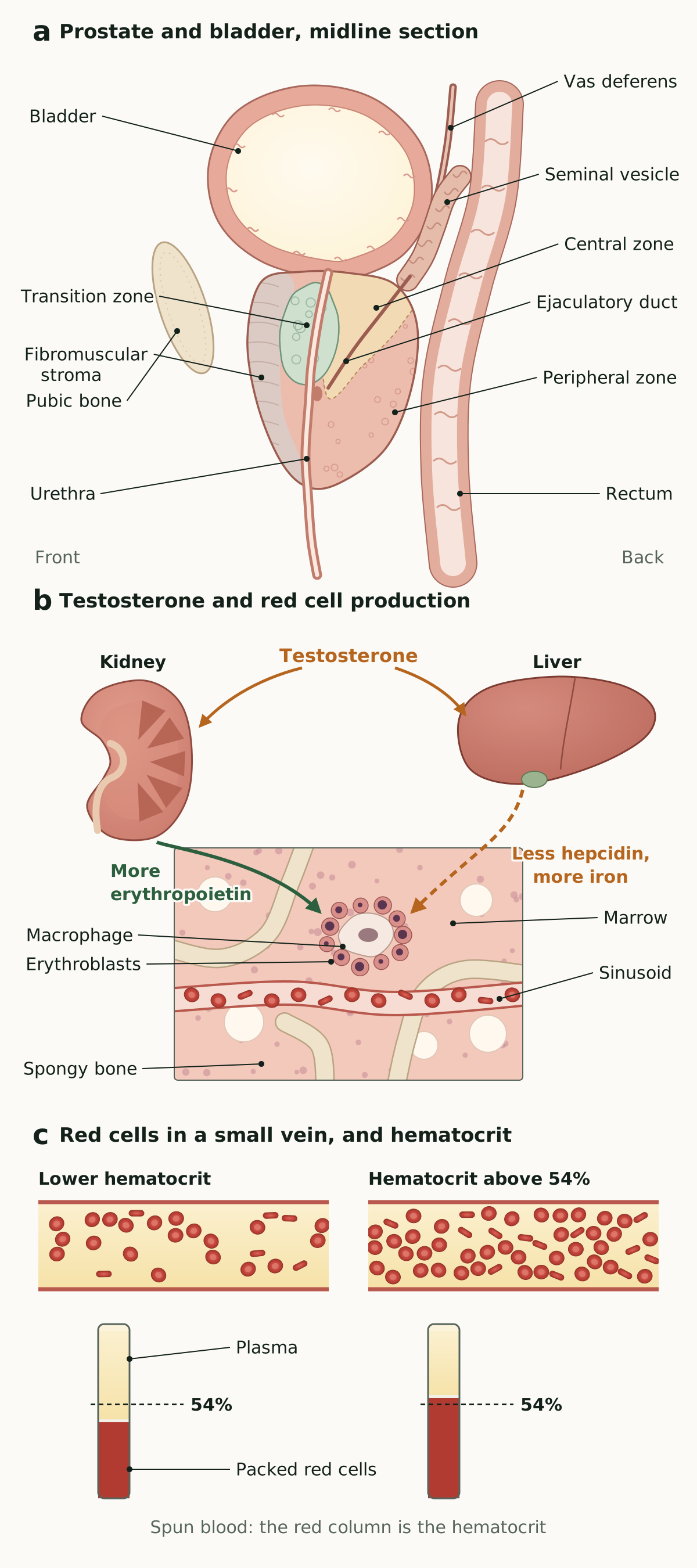
Testosterone plays a central role in prostate cancer biology and promotes the growth of metastatic prostate cancer. Men with genetically higher testosterone levels have a higher incidence of prostate cancer, and men with Klinefelter syndrome, who have low testosterone, have a lower risk. These observations raised the concern that treatment might cause hidden, low-grade cancers to grow.3 The prostate has distinct zones. About 70% of its glandular tissue lies in the peripheral zone at the back and sides of the gland, where about 70% of prostate cancers arise. Benign enlargement starts in the transition zone around the upper urethra.1920
TRAVERSE was the first trial to adjudicate prostate events prospectively. Men with prostate cancer, a PSA above 3.0 ng/mL (above 1.5 ng/mL if taking a 5-alpha reductase inhibitor), a prostate nodule or severe urinary symptoms (International Prostate Symptom Score above 19) were excluded. Of 32,152 men screened, 1,201 were excluded for PSA alone. The mean baseline PSA of those enrolled was 0.92 ng/mL.3 During 14,304 person-years of follow-up, high-grade prostate cancer (Gleason score 4+3 or higher) was diagnosed in 5 of 2,596 men on testosterone (0.19%) and 3 of 2,602 on placebo (0.12%), a hazard ratio of 1.62 with a 95% confidence interval of 0.39 to 6.77. Any prostate cancer was found in 12 men (0.46%) and 11 men (0.42%).3 Acute urinary retention, prostate biopsy and new drug treatment for urinary symptoms did not differ significantly. Invasive prostate procedures for benign enlargement were more frequent with testosterone (0.89% versus 0.46%), a difference that did not reach statistical significance (P = .07).3
The small number of cancers is the main limitation. A confidence interval that runs from 0.39 to 6.77 cannot rule out a meaningful increase in high-grade cancer, and the trial was short for a disease that develops over many years. The authors write that the findings should not be applied to men with known prostate cancer, higher PSA values or unconfirmed low testosterone.3 The AUA guideline, written before TRAVERSE, advises clinicians to tell patients that there is no evidence linking testosterone therapy to the development of prostate cancer, and that the evidence is inadequate to quantify risk and benefit in men who have had prostate cancer.5
What happens to PSA and urinary symptoms?
Testosterone raises PSA modestly. The Endocrine Society guideline cites an average rise of 0.3 ng/mL in young men with low testosterone and 0.44 ng/mL in older men after treatment starts.4 In the TTrials, PSA rose by more than 1.4 ng/mL in 2.4% of men at 3 months and 4.7% at 12 months on testosterone, compared with 1.6% and 0.6% on placebo.4 In TRAVERSE, PSA rose more with testosterone, but the difference between groups did not widen after the first year. Men met the trial’s prespecified criteria for urology referral twice as often on testosterone (2.2% versus 1.1%). Those referred were given a risk estimate and a video on the benefits and risks of biopsy. Sixteen of the 85 chose biopsy, and biopsy rates were similar in the two groups.3
Urinary symptoms did not worsen. Change in the International Prostate Symptom Score did not differ between groups in TRAVERSE.3 A systematic review commissioned for the Endocrine Society guideline found no significant difference in lower urinary tract symptoms (mean difference 0.38 points, 95% CI −0.67 to 1.43).21 A 2024 network meta-analysis of 21 trials found no worsening with gel, injection or oral testosterone.22 Men with severe symptoms were excluded from most of these trials.3
Why does testosterone raise hematocrit?
The AUA guideline describes a rise in hemoglobin and hematocrit as the most frequent adverse event of testosterone therapy.5 In a trial that gave graded weekly doses of testosterone enanthate, serum hepcidin, the liver hormone that limits iron absorption and release, fell within a week. The fall was dose-dependent and greater in older men, who also had the larger rise in hemoglobin.23 In the TOM trial, testosterone gel raised hemoglobin by about 7% and hematocrit by about 10%. Erythropoietin rose and hepcidin and ferritin fell during the first three months. By six months erythropoietin had returned toward baseline but was not suppressed despite the higher hemoglobin, which the authors interpreted as a new set point.24
How common is erythrocytosis, and does the formulation matter?
The Endocrine Society defines erythrocytosis during treatment as a hematocrit above 54%. The AUA defines polycythemia as a hematocrit above 52% and treats 54% or more as the level that warrants intervention.45 In the systematic review commissioned for the Endocrine Society guideline, testosterone increased the risk of a hematocrit above 54% by a relative risk of 8.14 (95% CI 1.87 to 35.40).214 In T4DM, which used injections of testosterone undecanoate every three months, a hematocrit above 54% occurred in 22% of men on testosterone and 1% on placebo.25 In the TTrials, which used a gel, 7 men on testosterone and none on placebo reached a hemoglobin of 17.5 g/dL or more.17
The rise appears to depend on dose and on how much testosterone levels swing between doses. A network meta-analysis of 29 randomized trials with 3,393 men found that every formulation raised mean hematocrit compared with placebo, by 3.0 percentage points for gel, 4.0 for injections of testosterone enanthate or cypionate, 1.6 for injections of testosterone undecanoate and 1.4 for patches. Only the difference between enanthate or cypionate injections and patches was statistically significant.26 Observational series report larger gaps. One retrospective series of 175 men cited by the AUA found erythrocytosis in 19% of men using intramuscular testosterone, 12.5% using pellets and 5.4% using gels.5 A review of the literature described rates approaching 40% with short-acting injections.27 These are uncontrolled comparisons in which dose and patient selection differ.
Whether testosterone-induced erythrocytosis causes strokes or clots is not known. The Endocrine Society guideline states that the hematocrit at which the risk of such events rises has not been established and that such events were very rare in randomized trials.4 FDA labeling notes that an increase in red cell mass may increase the risk of thromboembolic events.2
Who should not take testosterone?
Testosterone is a prescription medicine, and whether to start, adjust or stop it is a decision for a man and his clinician. The Endocrine Society recommends against starting testosterone in men who are planning fertility in the near term or who have any of the following:4
- breast or prostate cancer
- a palpable prostate nodule or induration
- a PSA above 4 ng/mL, or above 3 ng/mL in men at higher risk such as Black men and men with a first-degree relative with prostate cancer, without further urological evaluation
- an elevated hematocrit, listed in the guideline’s table as above 48%, or above 50% for men living at high altitude
- untreated severe obstructive sleep apnea
- severe lower urinary tract symptoms (AUA symptom score above 19)
- uncontrolled heart failure
- a heart attack or stroke within the last 6 months
- thrombophilia
The AUA guideline sets the baseline threshold differently. It advises clinicians to consider withholding testosterone if hematocrit exceeds 50% until the cause is explained, not to start testosterone in men trying to conceive, and not to start it for three to six months after a cardiovascular event.5 The AUA confirmed the validity of its guideline on review in 2024.6
How do guidelines tell clinicians to monitor treatment?
The Endocrine Society’s monitoring plan asks clinicians to review symptoms and side effects 3 to 12 months after starting and then annually. It recommends checking hematocrit at baseline, 3 to 6 months after starting and then annually. If hematocrit exceeds 54%, the guideline advises clinicians to stop therapy until it falls to a safe level, to look for low oxygen levels and sleep apnea, and to restart at a reduced dose.4 For men aged 55 to 69, and men aged 40 to 69 at higher risk, who choose prostate monitoring, it recommends a PSA test and rectal examination before treatment and 3 to 12 months after starting, then routine screening by age and race. It recommends urology referral for a confirmed PSA rise of more than 1.4 ng/mL within the first year, a confirmed PSA above 4 ng/mL, an abnormal rectal examination or substantially worse urinary symptoms.4
The AUA recommends measuring hemoglobin and hematocrit before treatment and informing patients about the risk of polycythemia. During stable treatment it recommends measuring hematocrit every 6 to 12 months to keep it below 54%, and it treats a hematocrit of 54% or more as a level that warrants intervention. It recommends measuring PSA before treatment in men over 40.5 FDA labeling also tells prescribers to check hematocrit before treatment, 3 to 6 months after starting and then annually, and to monitor blood pressure periodically.2 These are instructions for prescribers; the frequency of testing for any individual is set by the treating clinician.
How good is the evidence, and who paid for it?
For major cardiovascular events, the evidence rests mainly on one large, well-conducted randomized trial, supported by meta-analyses of smaller trials that point the same way.118 For prostate cancer, the same trial provides the only adjudicated data, with few events.3 The early harms came from a small trial stopped early, a meta-analysis of trials not designed to measure cardiovascular events, and observational studies open to confounding.10111213
TRAVERSE was required by the FDA and conducted by a consortium of testosterone manufacturers led by the makers of AndroGel and Androderm.7 The NEJM report lists funding by AbbVie and others, and several authors were AbbVie employees.1 The independent 2013 meta-analysis found larger estimated harms in trials without industry funding.11 TRAVERSE also reported results that went against testosterone, including the arrhythmia, kidney and clot findings and, in a substudy covered in the first article, more fractures.12
What remains uncertain?
TRAVERSE followed men for about three years, and most stopped treatment before the end. It is not known whether risks change with a decade of use, with injections, or with doses that push testosterone above the normal range. Fewer than half of the men (47%) were 65 or older, and all had cardiovascular disease or several risk factors for it.2 The atrial fibrillation, kidney and pulmonary embolism signals came from a trial not designed to test them, and other trials are too small to confirm or refute them.14 For the prostate, the trial cannot exclude a modest increase in high-grade cancer, and it does not apply to men with prior prostate cancer or a PSA above 3 ng/mL.3 It is also unknown at what hematocrit the risk of clots or stroke begins to rise.4
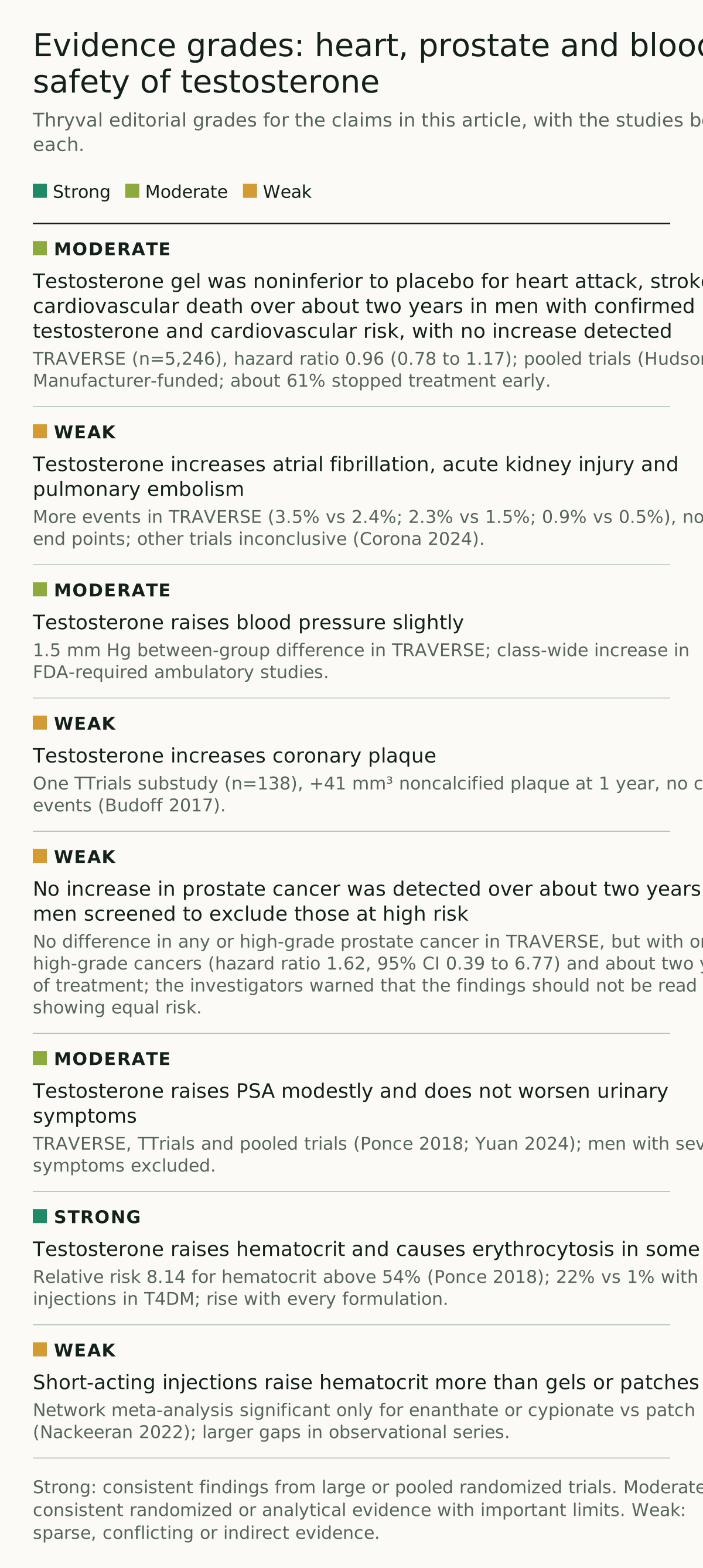
Evidence grades
The grades below are Thryval editorial judgments based on the studies cited in this article. The grading rules are set out on our Research page.
Frequently asked questions
Does testosterone therapy increase the risk of heart attack or stroke?
In TRAVERSE, men with low testosterone and heart disease or its risk factors had similar rates of cardiovascular death, heart attack and stroke on testosterone gel and placebo over about three years (7.0% versus 7.3%).1 The trial tested one gel, and most men stopped treatment before the end.2
Can testosterone therapy cause atrial fibrillation or blood clots?
In TRAVERSE, atrial fibrillation occurred in 3.5% of men on testosterone and 2.4% on placebo, and pulmonary embolism in 0.9% and 0.5%.2 These were not the trial’s main outcomes, and smaller trials have not confirmed them.14
Does testosterone therapy cause prostate cancer?
In men screened to exclude high prostate cancer risk, TRAVERSE found similar rates of prostate cancer on testosterone and placebo (0.46% versus 0.42%), but the number of cancers was small and follow-up was short.3
Why does PSA go up on testosterone?
The prostate responds to testosterone, and PSA rises modestly after treatment starts, on average by 0.3 to 0.44 ng/mL according to the Endocrine Society guideline. A rise of more than 1.4 ng/mL in the first year is one of its criteria for urology referral.4
What hematocrit level is too high on testosterone?
The Endocrine Society and the AUA both treat a hematocrit above 54% during treatment as a level that needs action by the prescribing clinician. Before treatment, the Endocrine Society lists a hematocrit above 48% and the AUA above 50% as reasons to evaluate further before starting.45
What blood tests are needed during testosterone therapy?
Guidelines recommend hematocrit before treatment, at 3 to 6 months and then annually or every 6 to 12 months, and PSA before treatment and in the first year for men in the age groups where prostate monitoring applies.45
Implications for patients and clinicians
For men with confirmed low testosterone who were screened as carefully as those in TRAVERSE, about two years of treatment with a gel was noninferior to placebo for heart attacks and strokes, and no increase in prostate cancer was detected, although the prostate findings rest on few cancers.13 The trial did find more atrial fibrillation, kidney injury and pulmonary embolism, and testosterone reliably raises hematocrit and slightly raises blood pressure and PSA.221 These effects are why the guideline contraindications and monitoring plans exist.45 Men with prior prostate cancer or a PSA above 3 ng/mL were excluded from the trial, and any decision to start, change or stop testosterone belongs with the prescribing clinician.
This article is for education and is not medical advice.
References
-
Lincoff AM, Bhasin S, Flevaris P, et al; TRAVERSE Study Investigators. Cardiovascular safety of testosterone-replacement therapy. N Engl J Med. 2023;389(2):107–117. Randomized double-blind noninferiority trial, n=5246; funded by AbbVie and others; several authors were AbbVie employees. PubMed 37326322 ↩↩↩↩↩↩↩↩↩↩↩↩↩↩
-
US Food and Drug Administration. AVEED (testosterone undecanoate) injection, prescribing information, revised 07/2025, including the class-wide TRAVERSE adverse reaction summary (sections 5.3, 5.4, 5.6 and 6.1). FDA label PDF ↩↩↩↩↩↩↩↩↩↩↩↩↩↩↩↩↩↩
-
Bhasin S, Travison TG, Pencina KM, et al. Prostate safety events during testosterone replacement therapy in men with hypogonadism: a randomized clinical trial. JAMA Netw Open. 2023;6(12):e2348692. Prespecified prostate safety analysis of TRAVERSE, n=5204; TRAVERSE was funded by AbbVie, and three authors were AbbVie employees. PMC10753401 · PubMed 38150256 ↩↩↩↩↩↩↩↩↩↩↩↩↩↩↩↩
-
Bhasin S, Brito JP, Cunningham GR, et al. Testosterone therapy in men with hypogonadism: an Endocrine Society clinical practice guideline. J Clin Endocrinol Metab. 2018;103(5):1715–1744. Clinical practice guideline using GRADE methods; contraindications in Table 7 and monitoring in Table 9. PubMed 29562364 ↩↩↩↩↩↩↩↩↩↩↩↩↩↩↩
-
Mulhall JP, Trost LW, Brannigan RE, et al. Evaluation and management of testosterone deficiency: AUA guideline. J Urol. 2018;200(2):423–432. Clinical guideline based on a systematic review; full text and follow-up laboratory table on the AUA website. PubMed 29601923 · AUA guideline PDF ↩↩↩↩↩↩↩↩↩↩↩↩
-
American Urological Association. Testosterone deficiency guideline (published 2018, reviewed and validity confirmed 2024). AUA guideline page ↩
-
US Food and Drug Administration. Testosterone information (postmarket drug safety information for patients and providers), including the June 2026 labeling update. Accessed Nov 11, 2026. FDA page ↩↩↩↩
-
US Food and Drug Administration. FDA issues class-wide labeling changes for testosterone products. Feb 28, 2025; summarizes the January 2014 and March 2015 drug safety communications. FDA page ↩↩↩↩↩↩
-
Endo USA. TESTIM (testosterone gel) 1%, prescribing information, boxed warning: secondary exposure to testosterone. DailyMed set ID 9f2aae1f-898d-4955-be31-678e0cf85395, effective Jul 15, 2025. DailyMed ↩
-
Basaria S, Coviello AD, Travison TG, et al. Adverse events associated with testosterone administration. N Engl J Med. 2010;363(2):109–122. Randomized controlled trial stopped early, n=209; funded by the National Institute on Aging. PMC3440621 · PubMed 20592293 ↩↩
-
Xu L, Freeman G, Cowling BJ, Schooling CM. Testosterone therapy and cardiovascular events among men: a systematic review and meta-analysis of placebo-controlled randomized trials. BMC Med. 2013;11:108. Meta-analysis of 27 trials, n=2994. PMC3648456 · PubMed 23597181 ↩↩↩
-
Vigen R, O’Donnell CI, Barón AE, et al. Association of testosterone therapy with mortality, myocardial infarction, and stroke in men with low testosterone levels. JAMA. 2013;310(17):1829–1836 (erratum in JAMA. 2014;311(9):967). Retrospective cohort of US veterans, n=8709. PubMed 24193080 ↩↩
-
Finkle WD, Greenland S, Ridgeway GK, et al. Increased risk of non-fatal myocardial infarction following testosterone therapy prescription in men. PLoS One. 2014;9(1):e85805. Cohort study in a health-care database, n=55,593 testosterone prescriptions. PMC3905977 · PubMed 24489673 ↩↩
-
Corona G, Rastrelli G, Sparano C, et al. Cardiovascular safety of testosterone replacement therapy in men: an updated systematic review and meta-analysis. Expert Opin Drug Saf. 2024;23(5):565–579. Meta-analysis of 106 placebo-controlled studies. PubMed 38553429 ↩↩↩↩
-
Gagliano-Jucá T, Pencina KM, Shang YV, et al. Association of testosterone-induced increase in neutrophil and monocyte counts with thromboembolic events: the TRAVERSE trial. Am Heart J. 2025;288:77–88. Secondary analysis of TRAVERSE, n=5204; four authors were AbbVie employees. PMC12145252 · PubMed 40246046 ↩
-
Budoff MJ, Ellenberg SS, Lewis CE, et al. Testosterone treatment and coronary artery plaque volume in older men with low testosterone. JAMA. 2017;317(7):708–716. Randomized controlled trial within the TTrials, n=170 (138 analyzed); funded by the National Institute on Aging and AbbVie. PMC5465430 · PubMed 28241355 ↩↩↩
-
Snyder PJ, Bhasin S, Cunningham GR, et al; Testosterone Trials Investigators. Effects of testosterone treatment in older men. N Engl J Med. 2016;374(7):611–624. Coordinated randomized controlled trials, n=790; funded by the National Institute on Aging and others, with funding and donated gel from AbbVie. PMC5209754 · PubMed 26886521 ↩↩
-
Hudson J, Cruickshank M, Quinton R, et al. Adverse cardiovascular events and mortality in men during testosterone treatment: an individual patient and aggregate data meta-analysis. Lancet Healthy Longev. 2022;3(6):e381–e393. Meta-analysis of 35 trials (17 with individual participant data, n=3431); funded by the National Institute for Health Research. PMC9184259 · PubMed 35711614 ↩↩↩↩
-
Bhavsar A, Verma S. Anatomic imaging of the prostate. Biomed Res Int. 2014;2014:728539. Narrative review. PMC4160650 · PubMed 25243174 ↩
-
Aaron L, Franco OE, Hayward SW. Review of prostate anatomy and embryology and the etiology of benign prostatic hyperplasia. Urol Clin North Am. 2016;43(3):279–288. Narrative review. PMC4968575 · PubMed 27476121 ↩
-
Ponce OJ, Spencer-Bonilla G, Alvarez-Villalobos N, et al. The efficacy and adverse events of testosterone replacement therapy in hypogonadal men: a systematic review and meta-analysis of randomized, placebo-controlled trials. J Clin Endocrinol Metab. 2018 (online ahead of print, Mar 17). Systematic review commissioned for the Endocrine Society guideline, 4 trials, n=1779. PubMed 29562341 ↩↩↩↩↩
-
Yuan X, Xiong X, Xue J. Effect of testosterone replacement therapy on lower urinary tract symptoms: a systematic review and network meta-analysis. J Evid Based Med. 2024;17(3):490–502. Network meta-analysis of 21 trials, n=2453. PubMed 39004879 ↩↩
-
Bachman E, Feng R, Travison T, et al. Testosterone suppresses hepcidin in men: a potential mechanism for testosterone-induced erythrocytosis. J Clin Endocrinol Metab. 2010;95(10):4743–4747. Dose-response trial, n=109. PMC3050108 · PubMed 20660052 ↩
-
Bachman E, Travison TG, Basaria S, et al. Testosterone induces erythrocytosis via increased erythropoietin and suppressed hepcidin: evidence for a new erythropoietin/hemoglobin set point. J Gerontol A Biol Sci Med Sci. 2014;69(6):725–735. Secondary analysis of the TOM randomized trial. PMC4022090 · PubMed 24158761 ↩
-
Wittert G, Bracken K, Robledo KP, et al. Testosterone treatment to prevent or revert type 2 diabetes in men enrolled in a lifestyle programme (T4DM): a randomised, double-blind, placebo-controlled, 2-year, phase 3b trial. Lancet Diabetes Endocrinol. 2021;9(1):32–45. Randomized controlled trial, n=1007; funded by the National Health and Medical Research Council, Bayer, Eli Lilly, the University of Adelaide and WW. PubMed 33338415 ↩↩
-
Nackeeran S, Kohn T, Gonzalez D, et al. The effect of route of testosterone on changes in hematocrit: a systematic review and Bayesian network meta-analysis of randomized trials. J Urol. 2022;207(1):44–51. Network meta-analysis of 29 trials, n=3393. PubMed 34445892 ↩↩↩
-
Ohlander SJ, Varghese B, Pastuszak AW. Erythrocytosis following testosterone therapy. Sex Med Rev. 2018;6(1):77–85. Narrative review; one author reported advisory and consulting roles with Endo Pharmaceuticals. PMC5690890 · PubMed 28526632 ↩↩