
Does glutamine heal leaky gut? What the trials show
L-glutamine is marketed to repair "leaky gut." One trial in post-infectious IBS with measured hyperpermeability found large symptom and permeability gains, but Crohn's and pooled permeability data are largely null, and high-dose glutamine in critically ill patients with multiorgan failure was linked to higher mortality.
The grade Not enough evidenceOral glutamine supplements for healing leaky gut
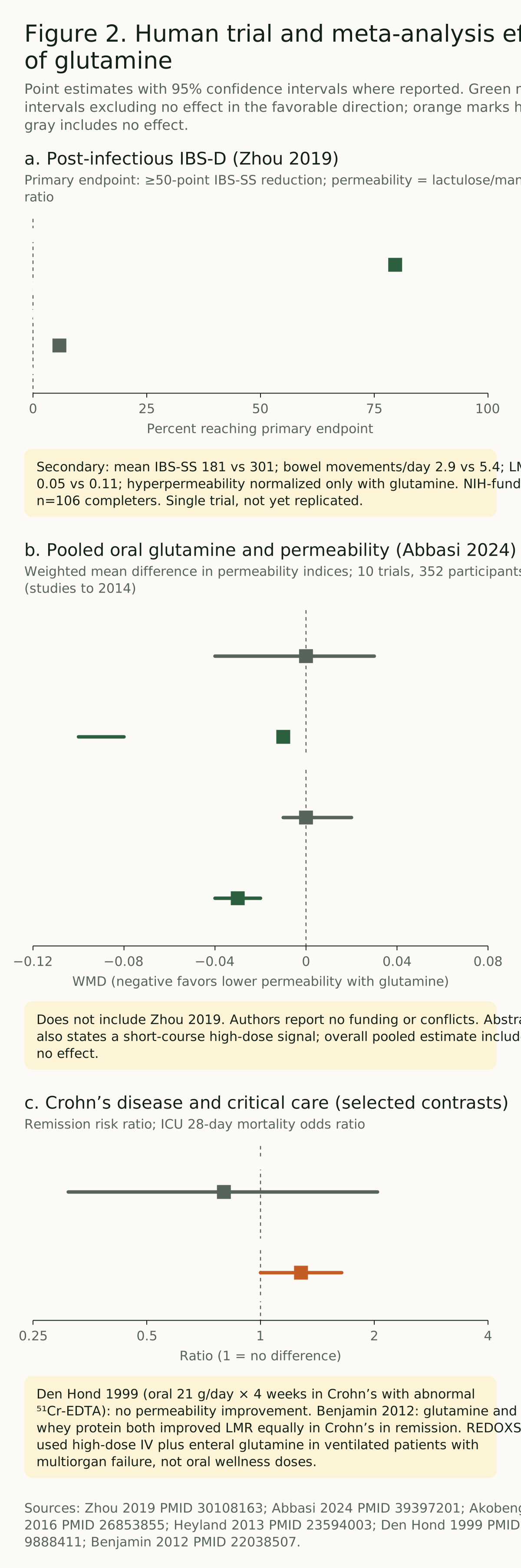
In brief. L-glutamine is a nonessential amino acid that enterocytes use as fuel, and it is widely sold to “heal leaky gut.” Human evidence does not support that marketing claim in general use. In one randomized trial of adults with post-infectious, diarrhea-predominant irritable bowel syndrome (IBS-D) and measured intestinal hyperpermeability, oral glutamine 5 g three times daily for eight weeks produced a large benefit: 79.6% met the primary symptom endpoint versus 5.8% on placebo, and the lactulose-to-mannitol ratio normalized only with glutamine.1 That trial has not been replicated. A 2024 meta-analysis of earlier oral glutamine trials found no overall change in permeability indices (weighted mean difference [WMD] −0.00, 95% CI −0.04 to 0.03), with high heterogeneity, and it did not include the Zhou trial.2 In Crohn’s disease, oral glutamine did not restore permeability in a small placebo-controlled study,3 improved permeability no more than whey protein in another trial,4 and a Cochrane review found insufficient evidence that glutamine induces remission.5 High-dose glutamine given intravenously and enterally in ventilated intensive care patients with multiorgan failure was associated with higher mortality in the REDOXS trial (28-day mortality 32.4% vs 27.2%; adjusted odds ratio 1.28, 1.00 to 1.64).9 That setting is not the same as an oral wellness supplement. Our companion article covers what intestinal permeability testing does and does not show.
Glutamine is abundant in meat, fish, eggs, dairy and some plant foods, and the body can synthesize it. Under catabolic stress it may become conditionally essential for some tissues, including the gut epithelium.15 Supplement makers translate that physiology into a repair product for people who feel bloated, fatigued or inflamed and who have been told they have leaky gut. The barrier concept is real; the leap from enterocyte fuel to a capsule that heals systemic disease is not. This article reviews oral glutamine trials that measured permeability or gastrointestinal symptoms, distinguishes them from critical-care glutamine, and grades the claims.
What is L-glutamine, and why is it linked to the gut barrier?
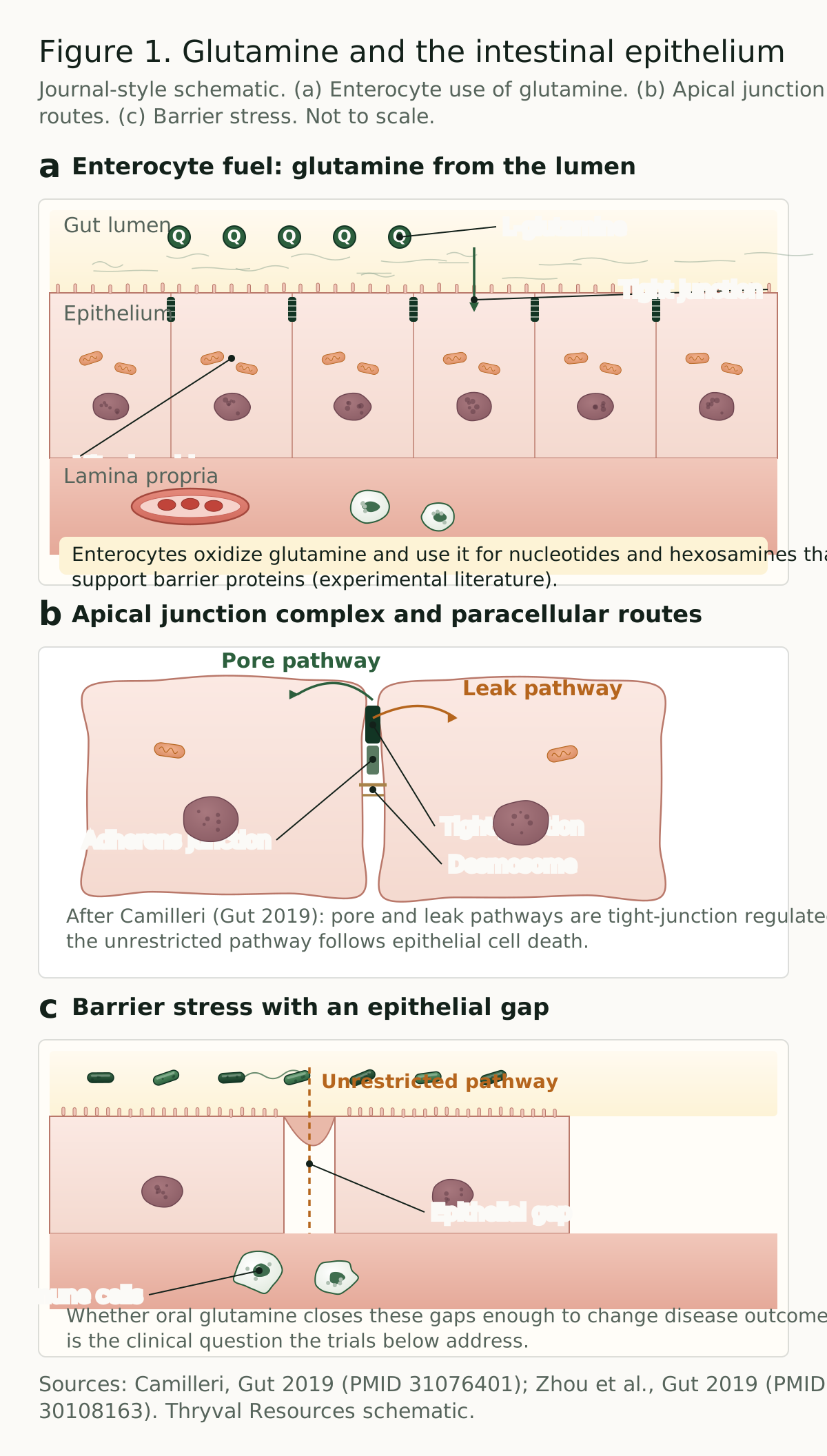
L-glutamine is the amide of glutamic acid and the most abundant amino acid circulating in human plasma and present in muscle under usual conditions. Small-intestinal enterocytes take it up from the lumen and the blood and oxidize it; experimental work also ties glutamine to nucleotide and hexosamine synthesis used in mucus and junction proteins.152 Popular articles therefore call it the preferred fuel of the gut lining.
That mechanism sketch is not a clinical proof. Intestinal permeability, as clinicians measure it, mainly reflects paracellular passage regulated by tight junctions (the pore and leak pathways) or, when epithelium dies, an unrestricted pathway independent of junctions.15 Sugar-probe tests such as the lactulose-to-mannitol ratio estimate that physiology imperfectly, and commercial zonulin kits have their own validity problems, as we discuss in the leaky gut science article.16 A change in a probe ratio after glutamine is interesting; it is not, by itself, evidence that eczema, autoimmunity or “toxins” have been fixed.
Does oral glutamine heal leaky gut in everyday use?
No adequate randomized trial has tested oral glutamine as a general “leaky gut heal” product in people without a defined gastrointestinal diagnosis and without baseline permeability testing. Expert clinical review still treats restoration of barrier function as unproven for treating gastrointestinal or systemic disease.15 The wellness claim therefore sits ahead of the evidence and is graded Not enough evidence in this article.
What did the main IBS trials find?
The strongest single trial is Zhou and colleagues’ 2019 randomized, double-blind, placebo-controlled study in adults who developed IBS-D after an enteric infection and who had elevated urinary lactulose-to-mannitol ratios.1 Participants took glutamine 5 g three times daily or placebo for eight weeks. Among 106 completers, the primary endpoint (a drop of at least 50 points on the IBS Severity Scoring System) occurred in 43 of 54 on glutamine (79.6%) versus 3 of 52 on placebo (5.8%).1 Mean IBS severity, daily stool frequency and Bristol stool form all favored glutamine, and the lactulose-to-mannitol ratio fell from a hyperpermeable range to 0.05 with glutamine versus 0.11 with placebo.1 Adverse events were similar and no serious adverse events were reported.1 The trial was supported by NIH grants (including NIDDK and NCCIH) and by the Department of Veterans Affairs; the authors declared no competing interests.1 The effect size is large for IBS research, but it comes from one selected population, and the authors called for larger confirmatory trials.1
A second randomized trial, by Rastgoo and colleagues in Iran, added glutamine 15 g/day or placebo to a low-FODMAP diet for six weeks in 50 adults with IBS (44 completers in the published analysis of the protocol completers).8 Improvement in IBS severity of more than 45% occurred in 22 of 25 in the glutamine arm (88%) versus 15 of 25 in the diet-plus-placebo arm (60%).8 The study was funded by Shahid Beheshti University of Medical Sciences; authors reported no commercial conflicts.8 It does not isolate glutamine from the diet, was single-center and small, and did not report permeability.
Neither trial supports unlabeled online claims that glutamine repairs leaky gut in healthy people. Both are graded Weak for their stated IBS endpoints.
What do Crohn’s disease and IBD trials show?
In Crohn’s disease with abnormal small-intestinal permeability to ⁵¹Cr-EDTA, Den Hond and colleagues randomized 14 patients to oral glutamine 7 g three times daily or glycine placebo for four weeks.3 Permeability did not improve with glutamine (mean excretion rose from 2.32% to 3.26% of dose) or placebo, and Crohn’s disease activity index, C-reactive protein and nutritional markers were unchanged.3
Benjamin and colleagues randomized adults with Crohn’s disease in remission and abnormal lactulose-mannitol ratios to oral glutamine or whey protein at 0.5 g/kg ideal body weight/day for two months.4 Permeability and villous-crypt morphology improved in both arms, with no between-group difference at two months (lactulose-mannitol ratio medians 0.029 vs 0.033; permeability normalized in 8 of 14 completers in each arm).4 Glutamine was not superior to another protein source.
For induction of remission, the 2016 Cochrane review by Akobeng, Elawad and Gordon included two small randomized trials (42 patients total).5 In children, a glutamine-enriched polymeric diet (42% of amino acid composition) produced remission in 4 of 9 versus 5 of 9 on a low-glutamine polymeric diet (risk ratio 0.80, 0.31 to 2.04; low-quality evidence).56 No clear permeability advantage appeared in either included study.5 The authors concluded there is insufficient evidence that glutamine induces remission in Crohn’s disease.5 A later systematic review of glutamine in inflammatory bowel disease similarly found no consistent effect on disease course, permeability or inflammatory markers across seven clinical trials.7
What about critically ill and surgical patients?
Critical-care glutamine is a different exposure from drugstore capsules. Early parenteral glutamine trials suggested fewer infections in selected ICU populations, and some modern meta-analyses still report lower infection rates or shorter stays under narrow conditions, with low or very low certainty and substantial heterogeneity.1112
REDOXS changed practice for high-dose use in the sickest patients. Heyland and colleagues randomized 1,223 mechanically ventilated adults with multiorgan failure in 40 ICUs to glutamine, antioxidants, both or placebo, started within 24 hours, given both intravenously and enterally, separate from routine nutrition.9 Twenty-eight-day mortality was 32.4% with glutamine versus 27.2% without (adjusted odds ratio 1.28, 1.00 to 1.64; P=0.05 under the trial’s threshold).9 In-hospital and six-month mortality were significantly higher with glutamine.9 Antioxidants did not help. The trial was funded by the Canadian Institutes of Health Research.9 The intravenous glutamine was Fresenius Kabi Dipeptiven; some investigators later disclosed Fresenius research or speaker support.10 A post hoc analysis reported arm-specific 28-day mortality of 25% (placebo), 32% (glutamine), 29% (antioxidants) and 33% (combination).10 These data apply to early, high-dose combined-route glutamine in multiorgan failure. They do not prove that a few grams of oral glutamine for IBS are dangerous, and they do not support using ICU literature to market barrier repair.
Did permeability meta-analyses find a benefit?
Abbasi and colleagues (2024) pooled randomized placebo-controlled trials of oral glutamine that reported gut permeability.2 Ten studies (1998 to 2014) contributed 352 participants; overall WMD was −0.00 (−0.04 to 0.03) with I² 83.6%.2 A dose subgroup of ≥30 g/day and a duration subgroup under four weeks were reported as statistically favoring lower permeability, still with high heterogeneity; doses under 30 g/day were null.2 The authors declared no funding and no conflicts of interest.2 Important limits: the search window ends before Zhou 2019; populations mixed burns, HIV, pancreatitis, surgery and IBD; and probe methods differed. The overall pooled estimate does not show a reliable permeability effect for typical supplement doses.
Small exercise studies are sometimes cited separately. In a crossover trial of 10 runners, Pugh and colleagues found that acute oral glutamine (0.25 to 0.9 g/kg fat-free mass before running in the heat) lowered the serum lactulose-to-rhamnose ratio relative to placebo.13 Symptoms were low and unchanged. That is a short-term biomarker signal in athletes, graded Weak, not a leaky-gut treatment trial.
What doses were used in the trials?
Zhou used 15 g/day (5 g three times daily) for eight weeks.1 Rastgoo used 15 g/day for six weeks with a low-FODMAP diet.8 Den Hond used 21 g/day for four weeks.3 Benjamin used 0.5 g/kg ideal body weight/day for two months.4 Abbasi’s permeability subgroup that favored glutamine used ≥30 g/day, often for short courses in hospitalized or stressed patients, not months of outpatient capsules.2 REDOXS delivered high combined intravenous and enteral doses early in ICU care.9 Product labels should be read as elemental L-glutamine grams, and none of these regimens is a substitute for prescription therapy a clinician has recommended for IBD, infection or critical illness.
Is glutamine safe? Who should be careful?
In the outpatient IBS and Crohn’s trials summarized here, serious adverse events attributable to oral glutamine were not reported at the doses studied.1834 Common consumer doses are far below REDOXS exposures, but people with advanced liver disease are often advised to discuss any glutamine supplement with a clinician because glutamine contributes to ammonia metabolism; we did not find a large oral-supplement RCT that quantifies encephalopathy risk, so that caution rests on physiology and clinical judgment rather than a graded trial endpoint in this article.
Cancer care is a separate literature. Tumor cells can be glutamine avid in laboratory models, which has motivated drug development against glutamine metabolism, while oral glutamine has been studied to ease chemotherapy- or radiotherapy-related oral mucositis. A 2022 meta-analysis of randomized trials found glutamine did not clearly reduce mucositis incidence but reduced mucositis severity and some related adverse outcomes.14 That is not evidence that glutamine heals intestinal permeability in cancer patients, and people receiving active cancer treatment should not start glutamine without oncology advice. Glutamine is not a substitute for prescribed cancer, IBD or IBS medicines.
How good is the evidence, and who paid for it?
Zhou’s trial is NIH-supported with no declared industry conflicts and a large effect in a narrow phenotype; it remains unreplicated.1 Rastgoo was university-funded without commercial conflicts but small.8 Abbasi reported no funding or conflicts; its null overall permeability result and exclusion of Zhou are both material.2 Cochrane IBD authors included an investigator of one of the pediatric diet trials; they declared no known financial conflicts related to the review.5 REDOXS was publicly funded by the Canadian Institutes of Health Research; the intravenous product was Fresenius Kabi Dipeptiven, and some investigators disclosed Fresenius research or speaker support in a later analysis.910 It is the main reason guidelines pulled back from routine high-dose glutamine in unstable multiorgan failure. Industry sponsorship is less dominant here than in some probiotic markets, but small samples, heterogeneous probes and one standout unreplicated IBS trial still limit confidence.
What remains uncertain?
It is unknown whether Zhou’s post-infectious IBS-D result will hold in larger multicenter trials or in IBS without documented hyperpermeability.1 Whether ordinary 5 to 15 g/day consumer products change validated permeability measures in primary care populations is unproven.215 Head-to-head comparisons of glutamine against other amino acids (beyond whey or glycine placebos) are few.43 Long-term safety of high oral doses in people with liver disease or active malignancy is not settled by the outpatient trials reviewed here. Critical-care dosing rules should not be copied from wellness blogs, and wellness blogs should not cite REDOXS as proof that glutamine repairs the barrier.
Evidence grades
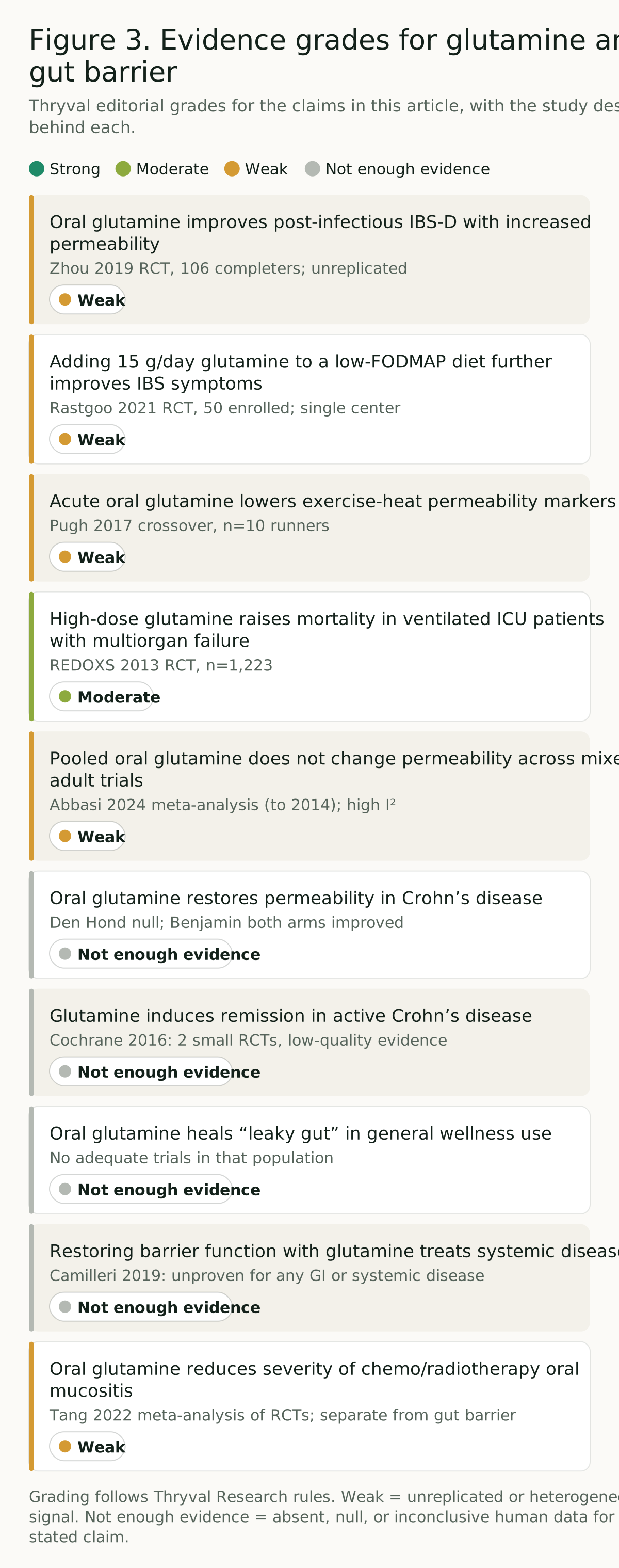
The grades below are Thryval editorial judgments based on the studies cited in this article. Weak indicates a signal from studies that have not yet been replicated or that remain highly heterogeneous. The grading rules are set out on our Research page.
Frequently asked questions
Can glutamine heal a leaky gut?
Not on present evidence for the usual online meaning of that phrase. One trial in post-infectious IBS-D with measured hyperpermeability found large benefits; broader permeability and Crohn’s data do not show a reliable repair effect, and barrier restoration remains unproven as a treatment for systemic disease.1215
What dose of glutamine was studied for IBS?
Zhou used 5 g three times daily (15 g/day) for eight weeks.1 Rastgoo used 15 g/day for six weeks with a low-FODMAP diet.8
Does glutamine help Crohn’s disease?
Available randomized data do not show that glutamine induces remission or uniquely restores permeability compared with control proteins or standard polymeric diets.534
Is glutamine safe to take every day?
Outpatient IBS and Crohn’s trials at 15 to 21 g/day for weeks did not report serious drug-related events.13 High-dose combined intravenous and enteral glutamine early in ICU multiorgan failure increased mortality.9 People with liver disease or active cancer should ask their clinician before using supplements.
How is this different from the ICU glutamine studies?
Wellness products are oral, usually 5 to 15 g/day, in stable outpatients. REDOXS tested early high-dose intravenous plus enteral glutamine in ventilated patients with multiorgan failure and found harm.9 Those results should not be used either to scare every capsule user or to market barrier healing.
Should I use a zonulin blood test to decide on glutamine?
A widely used commercial zonulin ELISA does not appear to measure zonulin itself; it is a poor basis for supplement decisions. See our leaky gut article.16
Implications for patients and clinicians
Treat “glutamine heals leaky gut” as a marketing sentence, not a graded indication. The one impressive outpatient signal is Zhou’s post-infectious IBS-D trial with documented hyperpermeability; until it is replicated, that remains a Weak, niche finding rather than a general therapy.1 Crohn’s and pooled permeability evidence argue against expecting barrier repair from typical oral doses.3425 Critical-care glutamine is a separate risk-benefit problem and is not a template for supplement use.9 Clinicians who discuss glutamine for IBS should define the phenotype, avoid substituting it for indicated drugs, and revisit the plan if symptoms persist. Readers comparing barrier claims may also find our reviews of dietary fiber, fermented foods and probiotics with antibiotics useful.
This article is for education and is not medical advice.
References
-
Zhou Q, Verne ML, Fields JZ, et al. Randomised placebo-controlled trial of dietary glutamine supplements for postinfectious irritable bowel syndrome. Gut. 2019;68(6):996–1002. RCT, 106 completers; NIH-funded. PubMed 30108163 · PMC9549483 ↩↩↩↩↩↩↩↩↩↩↩↩↩↩↩↩
-
Abbasi F, Haghighat Lari MM, Khosravi GR, et al. A systematic review and meta-analysis of clinical trials on the effects of glutamine supplementation on gut permeability in adults. Amino Acids. 2024;56(1):60. Meta-analysis of 10 trials (to 2014), 352 participants; authors report no funding or conflicts. PubMed 39397201 · PMC11471693 ↩↩↩↩↩↩↩↩↩↩↩↩
-
Den Hond E, Hiele M, Peeters M, et al. Effect of long-term oral glutamine supplements on small intestinal permeability in patients with Crohn’s disease. JPEN J Parenter Enteral Nutr. 1999;23(1):7–11. RCT, n=14. PubMed 9888411 ↩↩↩↩↩↩↩↩↩↩
-
Benjamin J, Makharia G, Ahuja V, et al. Glutamine and whey protein improve intestinal permeability and morphology in patients with Crohn’s disease: a randomized controlled trial. Dig Dis Sci. 2012;57(4):1000–1012. RCT, n=30. PubMed 22038507 ↩↩↩↩↩↩↩↩↩
-
Akobeng AK, Elawad M, Gordon M. Glutamine for induction of remission in Crohn’s disease. Cochrane Database Syst Rev. 2016;(2):CD007348. Systematic review, 2 RCTs (42 patients). PubMed 26853855 · PMC10405219 ↩↩↩↩↩↩↩↩↩
-
Akobeng AK, Miller V, Stanton J, et al. Double-blind randomized controlled trial of glutamine-enriched polymeric diet in the treatment of active Crohn’s disease. J Pediatr Gastroenterol Nutr. 2000;30(1):78–84. RCT, n=18 children. PubMed 10630444 ↩
-
Severo JS, da Silva Barros VJ, Alves da Silva AC, et al. Effects of glutamine supplementation on inflammatory bowel disease: A systematic review of clinical trials. Clin Nutr ESPEN. 2021;42:53–64. Systematic review, 7 trials; authors report no conflict of interest. PubMed 33745622 ↩
-
Rastgoo S, Ebrahimi-Daryani N, Agah S, et al. Glutamine supplementation enhances the effects of a low FODMAP diet in irritable bowel syndrome management. Front Nutr. 2021;8:746703. RCT, 50 enrolled; university funding. PubMed 34977110 · PMC8716871 ↩↩↩↩↩↩↩↩
-
Heyland D, Muscedere J, Wischmeyer PE, et al. A randomized trial of glutamine and antioxidants in critically ill patients. N Engl J Med. 2013;368(16):1489–1497. RCT, n=1,223; CIHR-funded. PubMed 23594003 ↩↩↩↩↩↩↩↩↩↩↩
-
Heyland DK, Elke G, Cook D, et al. Glutamine and antioxidants in the critically ill patient: a post hoc analysis of a large-scale randomized trial. JPEN J Parenter Enteral Nutr. 2015;39(4):401–409. Post hoc analysis of REDOXS. PubMed 24803474 · PMC6800175 ↩↩↩
-
Apostolopoulou A, et al. Effects of glutamine supplementation on critically ill patients: Focus on efficacy and safety. An overview of systematic reviews. Nutrition. 2020;78:110960. Overview of 17 systematic reviews. PubMed 32877810 ↩
-
Sun Y, Zhu S, Li S, Liu H. Glutamine on critical-ill patients: a systematic review and meta-analysis. Ann Palliat Med. 2021;10(2):1503–1520. Meta-analysis of RCTs in critically ill adults. PubMed 33222464 ↩
-
Pugh JN, Sage S, Hutson M, et al. Glutamine supplementation reduces markers of intestinal permeability during running in the heat in a dose-dependent manner. Eur J Appl Physiol. 2017;117(12):2569–2577. Randomized crossover, n=10. PubMed 29058112 · PMC5694515 ↩↩
-
Tang G, Huang W, Zhang L, Wei Z. Role of glutamine in the management of oral mucositis in patients with cancer: a meta-analysis of randomized controlled trials. Nutr Cancer. 2022;74(2):482–495. Meta-analysis, 15 RCTs, 988 participants. PubMed 33605813 ↩↩
-
Camilleri M. Leaky gut: mechanisms, measurement and clinical implications in humans. Gut. 2019;68(8):1516–1526. Review; NIH support. PubMed 31076401 · PMC6790068 ↩↩↩↩↩↩↩↩
-
Scheffler L, Crane A, Heyne H, et al. Widely used commercial ELISA does not detect precursor of haptoglobin2, but recognizes properdin as a potential second member of the zonulin family. Front Endocrinol (Lausanne). 2018;9:22. Human cohort and lab analysis. doi.org/10.3389/fendo.2018.00022 · PubMed 29459849 ↩↩