
Which supplements interact with common prescription medicines? What the evidence shows
A small number of supplements have well-documented effects on prescription medicines. St John's wort lowers blood levels of many drugs, minerals taken at the same time block absorption of some antibiotics and thyroid hormone, and vitamin K counteracts warfarin. For many other combinations the evidence is thin, and decisions about medicines belong with a clinician or pharmacist.
The grade StrongA small set of supplements has well-documented interactions with prescription medicines (St John's wort with drugs cleared by CYP3A4; iron, calcium and magnesium with some antibiotics and thyroid hormone)
In brief. A few supplements have well-documented interactions with prescription medicines, and some of the effects are large. St John’s wort extracts that contain hyperforin speed up the breakdown of many drugs: in human studies, blood levels of the HIV drug indinavir fell by 57%, the transplant drug cyclosporine by 52% and the active form of simvastatin by 52%, and two heart-transplant patients had acute rejection after starting the herb.9181017 Iron, calcium, magnesium and zinc taken at the same time as quinolone or tetracycline antibiotics bind the drug in the gut; iron cut ciprofloxacin absorption by 63% in one crossover study.243 Calcium and iron taken with levothyroxine reduce its absorption and raised TSH in small patient studies.2931 Vitamin K, even 10 to 45 micrograms a day of vitamin K2, lowered the INR in volunteers taking a warfarin-type drug.34 For ginkgo and fish oil with warfarin, controlled studies found no change in clotting tests.3942 Red yeast rice can contain the same molecule as lovastatin, and high-dose biotin distorts some laboratory tests.4654 No supplement discussed here has been shown to replace a prescribed medicine. Anyone who takes a prescription medicine and wants to add, stop or change a supplement should check with their clinician or pharmacist first.
Supplement use is common among people who take prescription drugs. In a national survey of US adults aged 62 to 85, supplement use rose from 51.8% in 2005 to 2006 to 63.7% in 2010 to 2011, and the share at risk of a potential major drug interaction, counting prescription drugs, over-the-counter medicines and supplements, rose from 8.4% to 15.1%.1 In a national US survey, only about a third of adults who used herbs or supplements had told a physician about it.2 This article explains how interactions happen, then reviews the human evidence for the combinations that come up most often, and ends with how to check a supplement against your own prescriptions.
Why do some supplements change how medicines work?
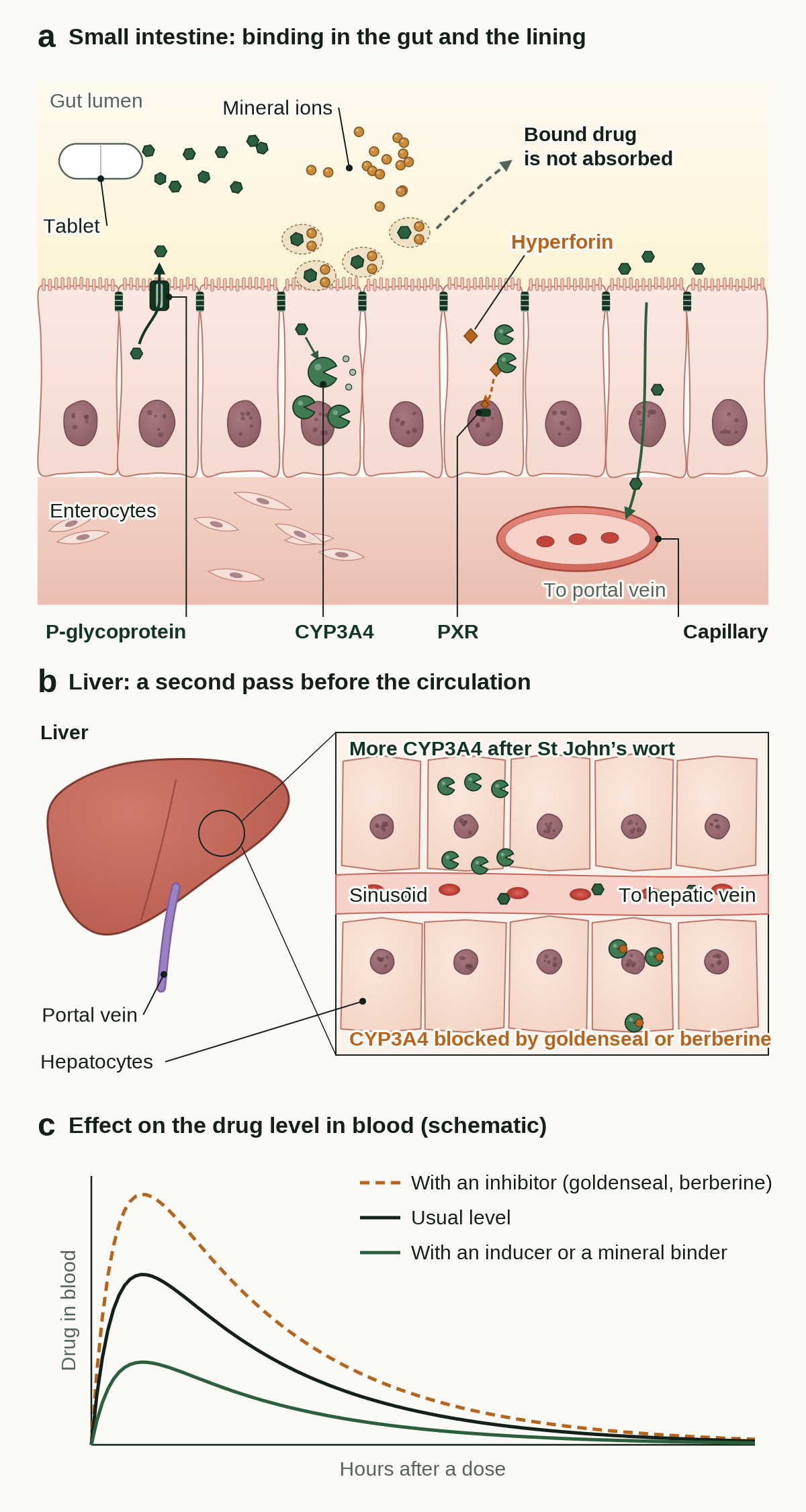
Most interactions happen in one of two places. The first is the gut, before a drug is absorbed. Minerals such as iron, calcium, magnesium and zinc can bind some drugs into complexes that pass through without being absorbed. A 1970 study in The BMJ found that ferrous sulfate taken with tetracycline, oxytetracycline, methacycline or doxycycline seriously impaired absorption of the antibiotic.3 The same binding affects quinolone antibiotics and levothyroxine.2429
The second is the machinery that clears drugs from the body. The enzyme CYP3A4, found in the cells lining the small intestine and in the liver, breaks down a large share of medicines; one research group estimated that its substrates make up at least half of marketed drugs.11 The pump P-glycoprotein pushes many drugs back out of intestinal cells into the gut. A supplement can induce these proteins, so the drug is cleared faster and blood levels fall, or inhibit them, so blood levels rise. Grapefruit juice is the best-known inhibitor: in a 1991 study in six men, it raised the bioavailability of the blood pressure drug felodipine to 284% of that with water, and later work traced the effect to inhibition of intestinal CYP3A4.54 Hyperforin, a constituent of St John’s wort, works the other way. Researchers at Glaxo Wellcome showed that it binds the pregnane X receptor (PXR), a nuclear receptor that switches on the CYP3A4 gene, with high affinity, and that St John’s wort extract induced CYP3A4 in human liver cells.6
Which medicines does St John’s wort interact with?
St John’s wort is the supplement with the strongest and most consistent interaction evidence. In a study at Vanderbilt University, 21 young healthy volunteers took St John’s wort for 12 days; clearance of oral midazolam, a test drug for CYP3A4, increased about 2.7-fold, and exposure to fexofenadine, which depends on P-glycoprotein, and to cyclosporine also fell.7 A 2006 systematic review of 31 prospective trials found that all 19 studies of products delivering more than 10 mg of hyperforin a day showed CYP3A induction, while the three studies of products delivering under 4 mg a day showed none.8
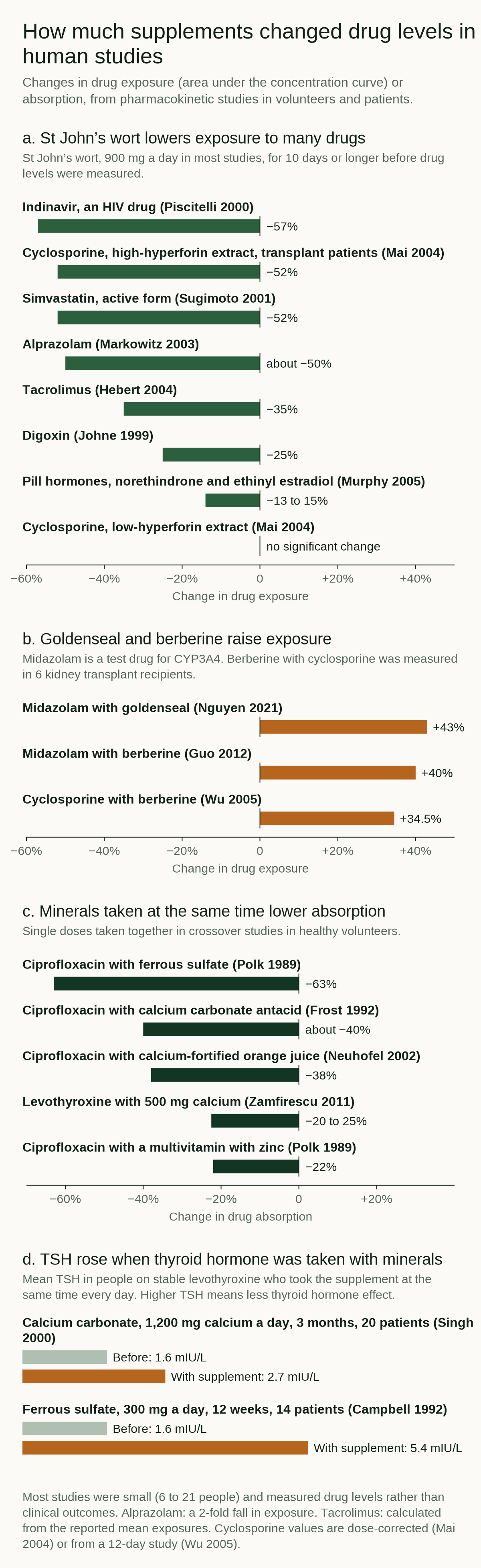
The drugs affected cover several areas of medicine. In healthy volunteers, St John’s wort lowered exposure to indinavir by 57% and its trough level by 81%, enough, the authors wrote, to risk HIV drug resistance.9 In a double-blind crossover study in 16 men in Japan, exposure to simvastatin hydroxy acid, the active form of simvastatin, fell by 52%, while pravastatin, which is not cleared by CYP3A4, was unaffected.10 Exposure to alprazolam halved and its half-life fell from 12.4 to 6.0 hours in 12 volunteers.11 Tacrolimus exposure fell by 35% in 10 volunteers, and digoxin exposure by 25% after 10 days of 900 mg a day.1213 In 12 healthy men given a single dose of warfarin, St John’s wort increased clearance of the more potent S-enantiomer by 29% and reduced the INR response.14 In 18 men in China, bupropion exposure fell from 1.4 to 1.2 µg·h/mL.15 NCCIH lists antidepressants including amitriptyline and bupropion, birth control pills, cyclosporine, the antiseizure drugs phenytoin and carbamazepine, digoxin, some HIV and cancer drugs, and warfarin among the medicines whose effects St John’s wort can weaken.16
The clinical consequences have been documented in transplant medicine. Two heart-transplant recipients developed acute rejection that their physicians attributed to a metabolic interaction between St John’s wort and cyclosporine.17 In a randomized crossover study in 10 kidney-transplant recipients in Berlin, who took 900 mg a day of each of two extracts for 14 days, the high-hyperforin extract lowered dose-corrected cyclosporine exposure by 52%, and patients needed a 65% higher daily dose to stay in range; a low-hyperforin extract had no significant effect.18
Does St John’s wort affect birth control pills?
Two trials suggest it can make combined pills less reliable. At Indiana University, 12 women taking a norethindrone and ethinyl estradiol pill took St John’s wort 300 mg three times a day. Norethindrone clearance rose from 8.2 to 9.5 L/h, the half-life of ethinyl estradiol fell from 23.4 to 12.2 hours, and breakthrough bleeding occurred in 7 of 12 women compared with 2 of 12 in control cycles.19 In a second trial in 16 women taking a low-dose pill, hormone exposure fell by 13% to 15%, breakthrough bleeding increased, and there was evidence of follicle growth and probable ovulation in the St John’s wort cycles.20 Neither trial measured pregnancies.
Do low-hyperforin St John’s wort products interact less?
The evidence points that way. In a trial at the University of Rostock, 96 volunteers taking digoxin were randomized to placebo or one of 10 St John’s wort products for 14 days. The standard extract lowered digoxin exposure by 24.8%, a half-hyperforin product by 17.7%, and products with little or no hyperforin, including tea, juice, oil and an extract without hyperforin, had no significant effect.21 A 2019 review concluded that products giving less than 1 mg of hyperforin a day were less likely to cause important interactions, without ruling them out.22 Hyperforin content varies between products, and the low-hyperforin findings apply only to the specific extracts tested.
Can you take St John’s wort with antidepressants?
Two different problems apply. St John’s wort can lower levels of some antidepressants, as described above for amitriptyline and bupropion.1615 It also has serotonergic effects of its own, and a 1999 report described five older adults with clinically diagnosed serotonin syndrome after combining St John’s wort with a prescription antidepressant.23 There are no controlled studies of how often this happens, but NCCIH warns that combining it with antidepressants or other drugs that affect serotonin may lead to serotonin-related side effects, which can be serious.16 Combining St John’s wort with any antidepressant is a decision for the prescriber.
Can you take supplements with antibiotics?
For two classes of antibiotics, the timing of mineral supplements matters. Tetracyclines, such as doxycycline, and quinolones, such as ciprofloxacin and levofloxacin, bind iron, calcium, magnesium and zinc in the gut. In a crossover study in 12 healthy men, ciprofloxacin exposure was 14.5 mg·h/L alone, 5.4 with ferrous sulfate and 11.3 with a multivitamin containing zinc, falls of about 63% and 22%.24 A calcium carbonate antacid reduced ciprofloxacin bioavailability to about 60% of the value without it, in a study run by the drug’s manufacturer.25 Calcium-fortified orange juice lowered ciprofloxacin exposure by 38% and peak level by 41% in 15 volunteers.26 The magnesium fact sheet from the NIH Office of Dietary Supplements (ODS) states that tetracyclines and quinolones should be taken at least 2 hours before or 4 to 6 hours after a magnesium-containing supplement, and the calcium fact sheet gives similar timing for quinolones.2728 Our article on magnesium for sleep notes the same separation. Most other antibiotics have no documented mineral interaction of this kind, and a pharmacist can say which applies to a given prescription.
Do calcium and iron interfere with thyroid medicine?
Yes, when they are taken at the same time as levothyroxine. At a Veterans Affairs center in Los Angeles, 20 patients on stable levothyroxine took 1,200 mg of calcium a day as calcium carbonate with their tablet for 3 months. Mean TSH rose from 1.6 to 2.7 mIU/L, 4 of the 20 had TSH above the normal range, and TSH fell back to 1.4 mIU/L after the calcium was stopped.29 In a crossover study in 8 healthy adults at Stony Brook, 500 mg of calcium as carbonate, citrate or acetate each reduced levothyroxine absorption by about 20% to 25%.30 In an uncontrolled study of 14 patients, 300 mg of ferrous sulfate a day taken with levothyroxine for 12 weeks raised mean TSH from 1.6 to 5.4 mU/L, and 9 patients reported more hypothyroid symptoms.31 ODS notes that the FDA-approved levothyroxine label tells patients to avoid taking it within 4 hours of calcium carbonate, and that simultaneous iron can cause clinically significant reductions in levothyroxine efficacy.2832 Our article on iron supplements and fatigue covers iron dosing itself.
Biotin raises a different question. We found no human study showing that biotin changes levothyroxine absorption. Its documented effect is on thyroid blood tests, described below.
Does vitamin K affect warfarin?
Warfarin, acenocoumarol and phenprocoumon work by blocking the recycling of vitamin K, so a change in vitamin K intake changes their effect. ODS describes this as a serious and potentially dangerous interaction and advises that people on these drugs keep their vitamin K intake from food and supplements consistent.33 The amounts needed are small. In a study at Maastricht University, 18 healthy volunteers took acenocoumarol for 4 weeks, and 15 reached the target INR of 2.0. They then took increasing doses of menaquinone-7 (MK-7, a form of vitamin K2) over 6 weeks while continuing acenocoumarol. A dose of 45 µg a day lowered the INR by about 40%, and 10 and 20 µg a day produced clinically relevant falls in at least 40% and 60% of participants.34 The authors noted that 45 µg is a usual retail dose. An earlier study by the same group found that MK-7 has a very long half-life and accumulated to 7- to 8-fold higher levels with prolonged intake, and the authors warned that preparations supplying 50 µg a day or more could interfere with anticoagulant treatment.35 Both studies came from VitaK, a Maastricht University spin-off company that carried out contract research on vitamin K.
Vitamin K has also been studied under supervision. In a double-blind trial at Newcastle University, 70 patients with unstable warfarin control were randomized to 150 µg of vitamin K1 a day or placebo for 6 months; the standard deviation of the INR fell more with vitamin K (−0.24 compared with −0.11).36 That trial shows how sensitive warfarin control is to vitamin K. It is not a basis for anyone to add vitamin K on their own.
The studies above involved vitamin K antagonists. We found no human studies of vitamin K supplements with apixaban, rivaroxaban or other direct oral anticoagulants, which do not act through vitamin K.
Do ginkgo and fish oil raise bleeding risk with blood thinners?
The controlled evidence is mostly reassuring, though limited. In a randomized, double-blind crossover trial in Denmark, 24 outpatients on stable long-term warfarin took ginkgo 100 mg a day, coenzyme Q10 100 mg a day or placebo for 4 weeks each; the warfarin dose needed to keep the INR in range did not change (36.7, 36.5 and 36.0 mg a week).3738 In 12 healthy men given a single dose of warfarin in Sydney, ginkgo and ginger did not change the INR response or warfarin levels.39 A meta-analysis of 18 randomized trials with 1,985 participants, most of them patients with dementia, peripheral artery disease or diabetes, found no effect of standardized ginkgo extract on platelet aggregation or clotting times.40 The one signal comes from an analysis of Veterans Affairs health records, which used text processing to find ginkgo use in clinical notes; people taking warfarin with ginkgo had a higher rate of bleeding events (hazard ratio 1.38, 95% CI 1.20 to 1.58).41 That analysis was observational and published in conference proceedings, and records of this kind cannot establish dose or rule out other differences between groups.
For fish oil, a double-blind randomized trial in 16 patients on warfarin found no difference in INR with 3 or 6 g a day for 4 weeks compared with placebo, although 5 patients did not complete it.42 In the OPERA trial, 1,516 cardiac surgery patients were randomized to high-dose fish oil or placebo around the time of surgery; major perioperative bleeding was not increased (odds ratio 0.81, 95% CI 0.53 to 1.24) and fewer units of blood were transfused in the fish oil group.43 A Danish systematic review of 52 publications found that fish oil reduced platelet aggregation in laboratory tests without increasing surgical bleeding.44 Our article on omega-3 for depression and anxiety covers fish oil doses. We found no controlled studies of fish oil with apixaban.
Is it safe to take red yeast rice with a statin?
There are no studies of the combination, but the reason for concern is well documented. Red yeast rice can contain monacolin K, which is chemically identical to lovastatin, and NCCIH states that red yeast rice products can have the same types of drug interactions as statins.45 The amount varies widely. In an analysis of 12 products, monacolin K ranged from 0.10 to 10.09 mg per capsule, 4 products had elevated levels of citrinin, a mycotoxin that damages the kidneys in animals, and monacolin levels were generally not stated on labels.46 In 28 brands bought from US retailers, 2 contained no monacolin K and the rest provided 0.09 to 10.94 mg a day at the recommended dose.47 Italy’s surveillance system for natural products received 52 reports of suspected adverse reactions to red yeast rice, including muscle pain or raised creatine kinase in 19 people, rhabdomyolysis in one and liver injury in 10; 13 were hospitalized.48 Taking red yeast rice with a statin would mean taking two doses of similar drugs, one of them unmeasured. That decision belongs with the prescriber.
Do goldenseal and berberine interact with medicines?
Both inhibit drug-clearing enzymes in people. In an NIH-funded study at the University of Arkansas, 12 volunteers took goldenseal for 28 days, and the activity of CYP2D6 and CYP3A4/5, measured with test drugs, fell by about 40%.49 In a more recent NCCIH-funded crossover study in 16 healthy adults, goldenseal raised midazolam exposure by 43% and lowered metformin exposure by 23%.50 In a follow-up study in adults with type 2 diabetes, the average effect on metformin was small (geometric mean ratio 0.93, 90% CI 0.86 to 1.01), with larger falls at lower metformin doses.51
Berberine, a component of goldenseal that is also sold on its own, behaved similarly. In a randomized crossover study in 18 healthy men in China, 300 mg three times a day for two weeks raised midazolam exposure by 40% and increased the CYP2D6 test ratio about ninefold.52 In 52 kidney-transplant recipients given berberine 0.2 g three times a day for 3 months, cyclosporine trough levels rose by 88.9% compared with 64.5% in 52 patients not given berberine, and in a pharmacokinetic substudy of 6 patients cyclosporine exposure rose by 34.5%.53 Our berberine article reviews its effects on blood sugar.
Can biotin affect blood test results?
Yes. Many laboratory tests use biotin as part of the assay chemistry, and high blood levels of biotin from supplements can distort the result. In a study at the University of Minnesota, 6 healthy adults took 10 mg of biotin a day for a week. Results were affected in 9 of 23 biotin-based assays: competitive assays, which include some tests for thyroid hormones, gave falsely high results, and sandwich assays, which include some tests for TSH and other hormones, gave falsely low ones.54 Results of this kind have mimicked Graves’ disease in patients treated with high-dose biotin.55 The FDA has received reports of falsely low troponin results, which are used to diagnose heart attacks, in people taking biotin, including one death, and keeps a list of troponin assays subject to biotin interference.5657 The 10 mg dose in that study was chosen because it is common in over-the-counter biotin supplements.54 People scheduled for blood tests can tell the clinician or laboratory about any biotin they take.
Does potassium interact with blood pressure medicines?
ACE inhibitors such as benazepril, angiotensin receptor blockers such as losartan, and potassium-sparing diuretics such as spironolactone reduce the amount of potassium the kidneys excrete. ODS notes that they can cause high blood potassium and that experts recommend monitoring potassium in people taking them, especially with reduced kidney function.58 For magnesium, ODS notes that loop and thiazide diuretics increase magnesium loss in urine while potassium-sparing diuretics reduce it.27 We found no controlled trials of potassium or magnesium supplements in people on these drugs, which is a reason to discuss them with the prescriber rather than to assume they are harmless or harmful.
How can you check a supplement against your prescriptions?
Interactions depend on the ingredients in a product rather than on its brand. A product sold for mood may contain St John’s wort, a cholesterol product may contain red yeast rice, and a hair or nail supplement may contain high-dose biotin, so the place to start is the ingredient list on the label. Multi-ingredient products can contain more than one ingredient of concern.
The Thryval app (App Store, Google Play) lets you search for an herb or other substance and open its page to see flagged interactions with FDA-approved medicines, drawn from clinical pharmacology references. A flag means that a reference source lists a possible interaction; it does not show how large the effect is, and the absence of a flag does not mean a combination has been studied. The most reliable check is to bring the full list of supplements and medicines, with doses, to a pharmacist or prescriber, who can look at the specific drugs and decide whether anything needs to change. In one US survey, only about a third of adults who used herbs or supplements had told a physician about them.2
How good is the evidence, and who paid for it?
The evidence is strongest where mechanism, pharmacokinetic studies and clinical reports agree: St John’s wort with CYP3A4 and P-glycoprotein substrates, and minerals with quinolones, tetracyclines and levothyroxine.82429 Even there, most studies enrolled 6 to 21 healthy volunteers, measured drug levels rather than outcomes such as transplant rejection or treatment failure, and lasted days to weeks. Only 3 of the 31 trials in the St John’s wort systematic review were double-blind and placebo-controlled.8 For ginkgo and fish oil with warfarin, the controlled studies were small, and the observational signal for ginkgo cannot separate the herb from other differences between users.374241 For red yeast rice with statins, the concern rests on product analyses and adverse event reports, not on studies of the combination.4648
Most of the work was academic or government-funded. The goldenseal and berberine studies by Gurley, Nguyen and Guo were supported by the NIH, with NCCIH funding for the Nguyen studies; the Guo study used berberine from a Chinese pharmaceutical company and its authors declared no conflicts.49505152 The biotin study was funded by the National Center for Advancing Translational Sciences, and some authors reported grants or fees from diagnostics companies that make the affected assays.54 The PXR study was carried out by Glaxo Wellcome scientists, and the calcium antacid and ciprofloxacin study by employees of Miles Inc., the manufacturer of ciprofloxacin.625 The OPERA trial was funded by the NIH, GlaxoSmithKline, Sigma Tau and Pronova BioPharma, and two authors reported ties to the omega-3 industry, including one who leads a blood omega-3 testing company.43 The vitamin K2 studies came from VitaK, a Maastricht University spin-off company that carried out contract research on vitamin K.3435 The red yeast rice product testing by Gordon and colleagues was done with ConsumerLab.46 We could not find funding statements for several older pharmacokinetic studies in the records we could access.
What remains uncertain?
How often these interactions cause harm in practice is not known, because few studies have followed patients rather than drug levels.8 We found no human studies of vitamin K or fish oil with direct oral anticoagulants, no studies of red yeast rice combined with statins, and no controlled studies of potassium or magnesium supplements in people taking blood pressure drugs. Hyperforin and monacolin K content vary widely between products, and monacolin levels were generally not on labels in one analysis, so similar-looking products can carry very different risk.224746 Many herbs have only laboratory data or isolated case reports, which this article has not graded. The supplements discussed here are a starting point and not a complete list.
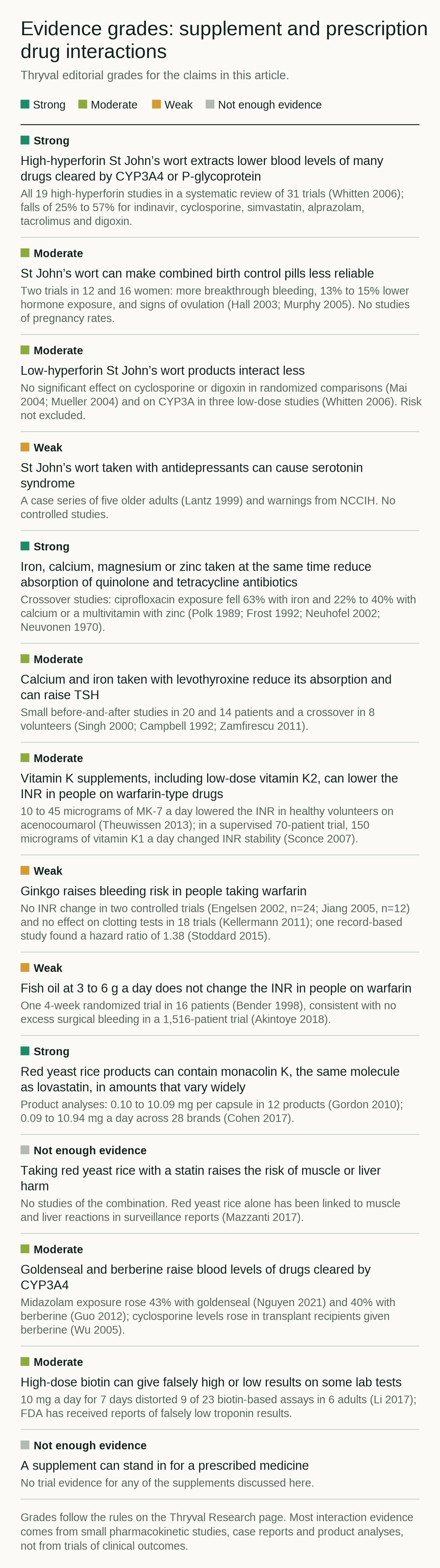
Evidence grades
The grades below are Thryval editorial judgments based on the studies cited in this article. The grading rules are set out on our Research page.
Frequently asked questions
Can I take supplements with prescription medication?
Many combinations have no documented interaction, but some do, and a few are serious: St John’s wort lowers levels of many drugs, minerals block absorption of some antibiotics and thyroid hormone, and vitamin K counteracts warfarin.8242934 Because the answer depends on the specific drug and supplement, the safest approach is to give a pharmacist or prescriber the full list before adding, stopping or changing anything.
How can I check whether a supplement is safe with my prescriptions?
Start with the ingredients on the label rather than the brand name, because interactions depend on the ingredients. Tools such as the Thryval app can flag known interactions between a substance and FDA-approved medicines, and a pharmacist can then check those flags against your actual drugs and doses. Only about a third of US supplement users in one survey had told a physician about their supplements.2
Can you take supplements with antibiotics?
For tetracyclines and quinolones, minerals taken at the same time can block absorption: iron cut ciprofloxacin exposure by 63% and a multivitamin with zinc by 22% in one study.24 ODS states that these antibiotics should be taken at least 2 hours before or 4 to 6 hours after a magnesium-containing supplement.27 A pharmacist can say whether a particular antibiotic is affected.
Can you take biotin with levothyroxine?
We found no study showing that biotin changes how levothyroxine is absorbed. The documented problem is with thyroid blood tests: 10 mg of biotin a day gave falsely high results on some thyroid hormone assays and falsely low results on some TSH assays.54 Anyone taking biotin should tell the clinician who orders their thyroid tests.
Can you take St John’s wort with Wellbutrin or other antidepressants?
St John’s wort lowered bupropion (Wellbutrin) levels in a study of 18 men, and NCCIH lists bupropion and amitriptyline among antidepressants whose effects it can weaken.1516 With serotonergic antidepressants, case reports describe serotonin syndrome.23 This combination should be discussed with the prescriber.
Can you take red yeast rice with a statin?
No study has tested the combination. Red yeast rice can contain monacolin K, the same molecule as lovastatin, in amounts that vary more than 60-fold between products, and NCCIH says it can have the same types of drug interactions as statins.4745 Taking both would mean an unmeasured extra statin dose, which is a question for the prescriber.
Implications for patients and clinicians
For patients, the best-documented interactions involve a small number of supplements, and the ingredient list matters more than the product name. Bringing a complete list of supplements and medicines to each appointment or pharmacy visit allows a clinician to check it; changing a prescribed medicine to make room for a supplement, or adding a supplement to a medicine, should not happen without that conversation.21 For clinicians, asking specifically about St John’s wort, mineral supplements, vitamin K2, red yeast rice, goldenseal, berberine and high-dose biotin covers the combinations with the best evidence of harm or test interference, and the evidence for many other herbs is too limited to rule interactions in or out.85446
This article is for education and is not medical advice.
References
-
Qato DM, Wilder J, Schumm LP, Gillet V, Alexander GC. Changes in prescription and over-the-counter medication and dietary supplement use among older adults in the United States, 2005 vs 2011. JAMA Intern Med. 2016;176(4):473–482. Nationally representative surveys, n=2,351 (2005 to 2006) and n=2,206 (2010 to 2011); NIH-funded; one author disclosed consulting for IMS Health and Pain Navigator. PMC5024734 · PubMed 26998708 ↩↩
-
Kennedy J, Wang CC, Wu CH. Patient disclosure about herb and supplement use among adults in the US. Evid Based Complement Alternat Med. 2008;5(4):451–456. Analysis of the 2002 National Health Interview Survey, n=5,196 herb users; no extramural support reported. PMC2586312 · PubMed 18955213 ↩↩↩↩
-
Neuvonen PJ, Gothoni G, Hackman R, af Björksten K. Interference of iron with the absorption of tetracyclines in man. Br Med J. 1970;4(5734):532–534. Human absorption study; funding not stated in the record we accessed. PMC1820021 · PubMed 5483323 ↩↩↩
-
Bailey DG, Dresser G, Arnold JM. Grapefruit–medication interactions: forbidden fruit or avoidable consequences? CMAJ. 2013;185(4):309–316. Narrative review, including the 1991 felodipine study in six men. PMC3589309 · PubMed 23184849 ↩
-
Bailey DG, Spence JD, Munoz C, Arnold JM. Interaction of citrus juices with felodipine and nifedipine. Lancet. 1991;337(8736):268–269. Crossover study, n=6 men with borderline hypertension, plus a nifedipine study in 6 healthy men. PubMed 1671113 ↩
-
Moore LB, Goodwin B, Jones SA, et al. St. John’s wort induces hepatic drug metabolism through activation of the pregnane X receptor. Proc Natl Acad Sci U S A. 2000;97(13):7500–7502. Laboratory study in cell systems and human hepatocytes; all authors were Glaxo Wellcome employees. PMC16574 · PubMed 10852961 ↩↩
-
Dresser GK, Schwarz UI, Wilkinson GR, Kim RB. Coordinate induction of both cytochrome P4503A and MDR1 by St John’s wort in healthy subjects. Clin Pharmacol Ther. 2003;73(1):41–50. Pharmacokinetic study, n=21; funded by the US National Institutes of Health (NIGMS GM31304, GM54724; NCRR RR00095). PubMed 12545142 ↩
-
Whitten DL, Myers SP, Hawrelak JA, Wohlmuth H. The effect of St John’s wort extracts on CYP3A: a systematic review of prospective clinical trials. Br J Clin Pharmacol. 2006;62(5):512–526. Systematic review of 31 studies; academic authors. PMC1885170 · PubMed 17010103 ↩↩↩↩↩↩↩↩
-
Piscitelli SC, Burstein AH, Chaitt D, Alfaro RM, Falloon J. Indinavir concentrations and St John’s wort. Lancet. 2000;355(9203):547–548. Pharmacokinetic study in healthy volunteers; funding not stated in the record we accessed. PubMed 10683007 ↩↩↩
-
Sugimoto K, Ohmori M, Tsuruoka S, et al. Different effects of St John’s wort on the pharmacokinetics of simvastatin and pravastatin. Clin Pharmacol Ther. 2001;70(6):518–524. Double-blind crossover, n=16 men; funding not stated in the abstract we accessed. PubMed 11753267 ↩↩
-
Markowitz JS, Donovan JL, DeVane CL, et al. Effect of St John’s wort on drug metabolism by induction of cytochrome P450 3A4 enzyme. JAMA. 2003;290(11):1500–1504. Open-label crossover with fixed treatment order, n=12; funded by the US National Institutes of Health (NCRR M01 RR01070; NCCIH R21 AT00511). PubMed 13129991 ↩↩
-
Hebert MF, Park JM, Chen YL, Akhtar S, Larson AM. Effects of St. John’s wort (Hypericum perforatum) on tacrolimus pharmacokinetics in healthy volunteers. J Clin Pharmacol. 2004;44(1):89–94. Pharmacokinetic study, n=10; funded by the US National Institutes of Health (NCRR M01-RR-00037). PubMed 14681346 ↩
-
Johne A, Brockmöller J, Bauer S, et al. Pharmacokinetic interaction of digoxin with an herbal extract from St John’s wort (Hypericum perforatum). Clin Pharmacol Ther. 1999;66(4):338–345. Single-blind placebo-controlled parallel study, n=25; funding not stated in the abstract we accessed. PubMed 10546917 ↩
-
Jiang X, Williams KM, Liauw WS, et al. Effect of St John’s wort and ginseng on the pharmacokinetics and pharmacodynamics of warfarin in healthy subjects. Br J Clin Pharmacol. 2004;57(5):592–599. Open-label randomized crossover, n=12 men; academic authors. PMC1884493 · PubMed 15089812 ↩
-
Lei HP, Yu XY, Xie HT, et al. Effect of St. John’s wort supplementation on the pharmacokinetics of bupropion in healthy male Chinese volunteers. Xenobiotica. 2010;40(4):275–281. Before-and-after pharmacokinetic study, n=18 men; funding not stated in the abstract we accessed. PubMed 20102294 ↩↩↩
-
National Center for Complementary and Integrative Health. St. John’s Wort. Last updated May 2025. Accessed November 16, 2026. nccih.nih.gov ↩↩↩↩↩
-
Ruschitzka F, Meier PJ, Turina M, Lüscher TF, Noll G. Acute heart transplant rejection due to Saint John’s wort. Lancet. 2000;355(9203):548–549. Case report, 2 patients. PubMed 10683008 ↩↩↩
-
Mai I, Bauer S, Perloff ES, et al. Hyperforin content determines the magnitude of the St John’s wort–cyclosporine drug interaction. Clin Pharmacol Ther. 2004;76(4):330–340. Randomized crossover in kidney-transplant recipients, n=10; funding not stated in the abstract we accessed. PubMed 15470332 ↩↩↩↩
-
Hall SD, Wang Z, Huang SM, et al. The interaction between St John’s wort and an oral contraceptive. Clin Pharmacol Ther. 2003;74(6):525–535. Pharmacokinetic study over three cycles, n=12 women; funded by the US Food and Drug Administration (FD-T-001756-01) and the National Institutes of Health (NCRR MO1-RR00750; NIGMS T32GM08425). PubMed 14663455 ↩↩
-
Murphy PA, Kern SE, Stanczyk FZ, Westhoff CL. Interaction of St. John’s Wort with oral contraceptives: effects on the pharmacokinetics of norethindrone and ethinyl estradiol, ovarian activity and breakthrough bleeding. Contraception. 2005;71(6):402–408. Single-blind sequential trial, n=16 women; funded by the US National Institutes of Health (NCCIH R21 AT000836; NCRR RR00645). PubMed 15914127 ↩↩
-
Mueller SC, Uehleke B, Woehling H, et al. Effect of St John’s wort dose and preparations on the pharmacokinetics of digoxin. Clin Pharmacol Ther. 2004;75(6):546–557. Randomized placebo-controlled parallel study of 10 preparations, n=96; funding not stated in the abstract we accessed. PubMed 15179409 ↩↩
-
Chrubasik-Hausmann S, Vlachojannis J, McLachlan AJ. Understanding drug interactions with St John’s wort (Hypericum perforatum L.): impact of hyperforin content. J Pharm Pharmacol. 2019;71(1):129–138. Narrative review. PubMed 29411879 ↩↩
-
Lantz MS, Buchalter E, Giambanco V. St. John’s wort and antidepressant drug interactions in the elderly. J Geriatr Psychiatry Neurol. 1999;12(1):7–10. Case series, 5 patients. PubMed 10447148 ↩↩↩
-
Polk RE, Healy DP, Sahai J, Drwal L, Racht E. Effect of ferrous sulfate and multivitamins with zinc on absorption of ciprofloxacin in normal volunteers. Antimicrob Agents Chemother. 1989;33(11):1841–1844. Randomized crossover, n=12 men; funding not stated in the record we accessed. PMC172774 · PubMed 2610494 ↩↩↩↩↩↩↩
-
Frost RW, Lasseter KC, Noe AJ, Shamblen EC, Lettieri JT. Effects of aluminum hydroxide and calcium carbonate antacids on the bioavailability of ciprofloxacin. Antimicrob Agents Chemother. 1992;36(4):830–832. Crossover study, n=12; authors from Miles Inc., the manufacturer of ciprofloxacin. PMC189440 · PubMed 1503446 ↩↩↩
-
Neuhofel AL, Wilton JH, Victory JM, Hejmanowsk LG, Amsden GW. Lack of bioequivalence of ciprofloxacin when administered with calcium-fortified orange juice: a new twist on an old interaction. J Clin Pharmacol. 2002;42(4):461–466. Randomized crossover, n=15; funding not stated in the abstract we accessed. PubMed 11936572 ↩↩
-
NIH Office of Dietary Supplements. Magnesium: Fact Sheet for Health Professionals. Updated January 6, 2026. Accessed November 16, 2026. ods.od.nih.gov ↩↩↩
-
NIH Office of Dietary Supplements. Calcium: Fact Sheet for Health Professionals. Updated June 22, 2026. Accessed November 16, 2026. ods.od.nih.gov ↩↩↩
-
Singh N, Singh PN, Hershman JM. Effect of calcium carbonate on the absorption of levothyroxine. JAMA. 2000;283(21):2822–2825. Prospective cohort, n=20, with an in vitro binding study; funding not stated in the abstract we accessed. PubMed 10838651 ↩↩↩↩↩↩
-
Zamfirescu I, Carlson HE. Absorption of levothyroxine when coadministered with various calcium formulations. Thyroid. 2011;21(5):483–486. Single-dose crossover, n=8 healthy adults; academic authors. PMC3092723 · PubMed 21595516 ↩↩
-
Campbell NR, Hasinoff BB, Stalts H, Rao B, Wong NC. Ferrous sulfate reduces thyroxine efficacy in patients with hypothyroidism. Ann Intern Med. 1992;117(12):1010–1013. Uncontrolled before-and-after study, n=14, with an in vitro study; funding not stated in the abstract we accessed. PubMed 1443969 ↩↩↩
-
NIH Office of Dietary Supplements. Iron: Fact Sheet for Health Professionals. Updated September 4, 2025. Accessed November 16, 2026. ods.od.nih.gov ↩
-
NIH Office of Dietary Supplements. Vitamin K: Fact Sheet for Health Professionals. Updated October 22, 2026. Accessed November 16, 2026. ods.od.nih.gov ↩↩
-
Theuwissen E, Teunissen KJ, Spronk HM, et al. Effect of low-dose supplements of menaquinone-7 (vitamin K2) on the stability of oral anticoagulant treatment: dose-response relationship in healthy volunteers. J Thromb Haemost. 2013;11(6):1085–1092. Dose-ranging study, n=18 healthy volunteers on acenocoumarol; authors from VitaK and the Cardiovascular Research Institute Maastricht; funding not stated in the abstract we accessed. PubMed 23530987 ↩↩↩↩↩
-
Schurgers LJ, Teunissen KJ, Hamulyák K, et al. Vitamin K-containing dietary supplements: comparison of synthetic vitamin K1 and natto-derived menaquinone-7. Blood. 2007;109(8):3279–3283. Pharmacokinetic and dose-response study in healthy volunteers; authors from VitaK and the Cardiovascular Research Institute Maastricht; funding not stated in the abstract we accessed. PubMed 17158229 ↩↩
-
Sconce E, Avery P, Wynne H, Kamali F. Vitamin K supplementation can improve stability of anticoagulation for patients with unexplained variability in response to warfarin. Blood. 2007;109(6):2419–2423. Double-blind randomized trial, n=70; funding not stated in the abstract we accessed. PubMed 17110451 ↩↩
-
Engelsen J, Nielsen JD, Winther K. Effect of coenzyme Q10 and Ginkgo biloba on warfarin dosage in stable, long-term warfarin treated outpatients. A randomised, double blind, placebo-crossover trial. Thromb Haemost. 2002;87(6):1075–1076. Randomized crossover, n=24 (letter). PubMed 12083489 ↩↩↩
-
Engelsen J, Nielsen JD, Hansen KF. Effect of coenzyme Q10 and Ginkgo biloba on warfarin dosage in patients on long-term warfarin treatment. A randomized, double-blind, placebo-controlled cross-over trial [in Danish]. Ugeskr Laeger. 2003;165(18):1868–1871. Full report of the same trial. PubMed 12772396 ↩
-
Jiang X, Williams KM, Liauw WS, et al. Effect of ginkgo and ginger on the pharmacokinetics and pharmacodynamics of warfarin in healthy subjects. Br J Clin Pharmacol. 2005;59(4):425–432. Open-label randomized crossover, n=12 men; academic authors. PMC1884814 · PubMed 15801937 ↩↩↩
-
Kellermann AJ, Kloft C. Is there a risk of bleeding associated with standardized Ginkgo biloba extract therapy? A systematic review and meta-analysis. Pharmacotherapy. 2011;31(5):490–502. Meta-analysis of 18 randomized trials, n=1,985; funding not stated in the abstract we accessed. PubMed 21923430 ↩↩
-
Stoddard GJ, Archer M, Shane-McWhorter L, et al. Ginkgo and warfarin interaction in a large Veterans Administration population. AMIA Annu Symp Proc. 2015;2015:1174–1183. Retrospective analysis of health records; conference proceedings. PMC4765589 · PubMed 26958257 ↩↩↩
-
Bender NK, Kraynak MA, Chiquette E, Linn WD, Clark GM, Bussey HI. Effects of marine fish oils on the anticoagulation status of patients receiving chronic warfarin therapy. J Thromb Thrombolysis. 1998;5(3):257–261. Double-blind randomized placebo-controlled trial, n=16; funding not stated in the abstract we accessed. PubMed 10767122 ↩↩↩↩
-
Akintoye E, Sethi P, Harris WS, et al. Fish oil and perioperative bleeding. Circ Cardiovasc Qual Outcomes. 2018;11(11):e004584. Secondary analysis of the OPERA randomized trial, n=1,516; OPERA funded by the NIH, GlaxoSmithKline, Sigma Tau and Pronova BioPharma; one author is president of OmegaQuant and another reported fees from omega-3 and food companies. PMC6376981 · PubMed 30571332 ↩↩↩
-
Begtrup KM, Krag AE, Hvas AM. No impact of fish oil supplements on bleeding risk: a systematic review. Dan Med J. 2017;64(5):A5366. Systematic review of 52 publications. PubMed 28552094 ↩
-
National Center for Complementary and Integrative Health. Red Yeast Rice. Last updated November 2022. Accessed November 16, 2026. nccih.nih.gov ↩↩↩
-
Gordon RY, Cooperman T, Obermeyer W, Becker DJ. Marked variability of monacolin levels in commercial red yeast rice products: buyer beware! Arch Intern Med. 2010;170(19):1722–1727. Laboratory analysis of 12 products, performed by ConsumerLab.com. PubMed 20975018 ↩↩↩↩↩↩↩
-
Cohen PA, Avula B, Khan IA. Variability in strength of red yeast rice supplements purchased from mainstream retailers. Eur J Prev Cardiol. 2017;24(13):1431–1434. Laboratory analysis of 28 brands. PubMed 28641460 ↩↩↩↩
-
Mazzanti G, Moro PA, Raschi E, Da Cas R, Menniti-Ippolito F. Adverse reactions to dietary supplements containing red yeast rice: assessment of cases from the Italian surveillance system. Br J Clin Pharmacol. 2017;83(4):894–908. Analysis of 52 spontaneous reports from the Italian national surveillance system. PMC5346868 · PubMed 28093797 ↩↩↩
-
Gurley BJ, Gardner SF, Hubbard MA, et al. In vivo effects of goldenseal, kava kava, black cohosh, and valerian on human cytochrome P450 1A2, 2D6, 2E1, and 3A4/5 phenotypes. Clin Pharmacol Ther. 2005;77(5):415–426. Open-label probe-drug study, n=12; NIH-funded (NIH author manuscript). PMC1894911 · PubMed 15900287 ↩↩↩
-
Nguyen JT, Tian DD, Tanna RS, et al. Assessing transporter-mediated natural product-drug interactions via in vitro-in vivo extrapolation: clinical evaluation with a probe cocktail. Clin Pharmacol Ther. 2021;109(5):1342–1352. Open-label crossover, n=16; funded by NCCIH and ODS; no competing interests declared. PMC8058163 · PubMed 33174626 ↩↩↩
-
Nguyen JT, Arian CM, Tanna RS, et al. The pharmacokinetic interaction between metformin and the natural product goldenseal is metformin dose-dependent: a three-arm crossover study in adults with type 2 diabetes. Clin Transl Sci. 2025;18(2):e70120. Crossover study in adults with type 2 diabetes; NCCIH-funded. PMC11821731 · PubMed 39943692 ↩↩
-
Guo Y, Chen Y, Tan ZR, Klaassen CD, Zhou HH. Repeated administration of berberine inhibits cytochromes P450 in humans. Eur J Clin Pharmacol. 2012;68(2):213–217. Randomized crossover, n=18 men (17 completed); NIH and Chinese government grants; berberine supplied by a Chinese pharmaceutical company; no conflicts declared. PMC4898966 · PubMed 21870106 ↩↩↩
-
Wu X, Li Q, Xin H, Yu A, Zhong M. Effects of berberine on the blood concentration of cyclosporin A in renal transplanted recipients: clinical and pharmacokinetic study. Eur J Clin Pharmacol. 2005;61(8):567–572. Randomized controlled clinical study, n=104, with a pharmacokinetic substudy, n=6; funding not stated in the abstract we accessed. PubMed 16133554 ↩↩
-
Li D, Radulescu A, Shrestha RT, et al. Association of biotin ingestion with performance of hormone and nonhormone assays in healthy adults. JAMA. 2017;318(12):1150–1160. Nonrandomized crossover study, n=6 adults, 37 immunoassays on 4 diagnostic systems; funded by the National Center for Advancing Translational Sciences; some authors reported grants or fees from diagnostics companies. PMC5818818 · PubMed 28973622 ↩↩↩↩↩↩↩
-
Kummer S, Hermsen D, Distelmaier F. Biotin treatment mimicking Graves’ disease. N Engl J Med. 2016;375(7):704–706. Correspondence with case reports. PubMed 27532849 ↩↩
-
US Food and Drug Administration. Biotin interference with troponin lab tests: assays subject to biotin interference. Accessed November 16, 2026. fda.gov ↩↩
-
NIH Office of Dietary Supplements. Biotin: Fact Sheet for Health Professionals. Updated January 10, 2022. Accessed November 16, 2026. ods.od.nih.gov ↩
-
NIH Office of Dietary Supplements. Potassium: Fact Sheet for Health Professionals. Updated June 2, 2022. Accessed November 16, 2026. ods.od.nih.gov ↩